
The Education Law That Changed the Playing Field
Title IX was not written simply as a sports law. Its broader challenge to sex discrimination helped change who could study, compete and imagine a future in athletics.
The law now associated with women’s sports did not begin as a promise to produce championship teams. Title IX, enacted as part of the Education Amendments of 1972, prohibited sex discrimination in education programs receiving federal financial assistance. Its reach was broader than the playing field. Athletics became one of the most visible places where an institution’s claim to offer opportunity could be compared with what it actually provided.
Before that change, access to education and its benefits was often uneven in ways that could look routine to the people administering them. Opportunities to compete, obtain support and pursue certain paths were not distributed equally. A student’s ambitions could run into an institutional limit before ability had much chance to matter. Changing a rule about discrimination meant asking institutions to examine those arrangements, rather than treating them as natural differences.

Keep reading in Yester
Coming soon to the App Store
Keep following the story


Sources
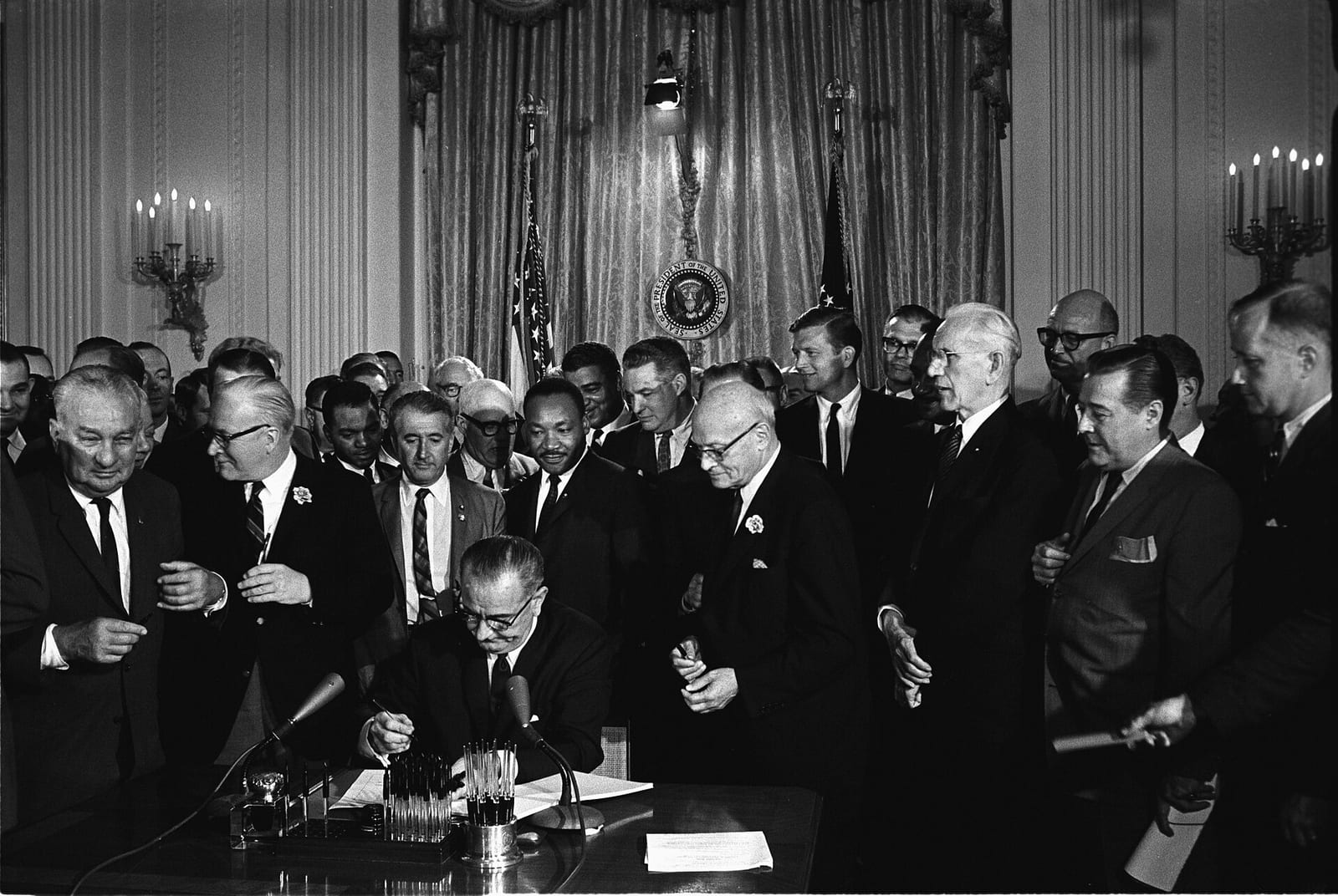
Image: Series: Master File Photographs of U.S. and Foreign Personalities, World Events, and American Economic, Social, and Cultural Life, ca. 1953 - ca. 1994 Record Group 306: Records of the U.S. Information Agency, 1900 - 2003