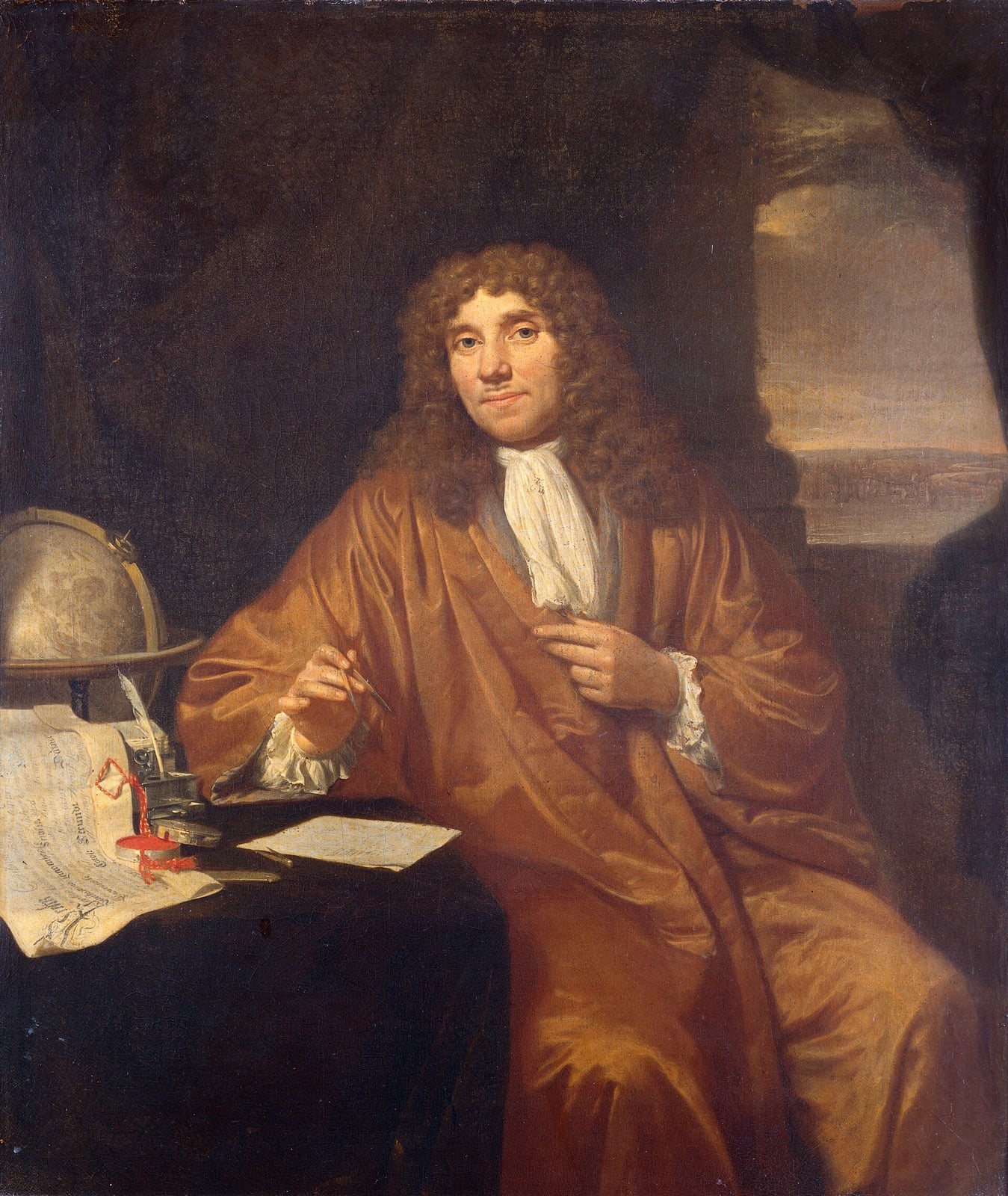
Leeuwenhoek Reports Life Too Small to See
Microscopic observations brought previously unseen organisms into scientific correspondence.
In the autumn of 1676, Antonie van Leeuwenhoek dispatched a lengthy missive from Delft to the Royal Society in London, detailing minute living entities he had witnessed in standing water. A draper and municipal official with no formal university training, Leeuwenhoek had developed a private technique for crafting tiny, high-powered single-lens microscopes. Through these instruments, he observed microscopic organisms moving about, which he described in his native Dutch as dierkens or small animals. His letter reported forms of life entirely unsuspected by contemporary European scholars, who initially received the descriptions with profound doubt.
Leeuwenhoek had entered municipal service in Delft as chamberlain to the city hall sheriffs in 1660, later adding duties as a land surveyor and official wine tax gauger. His interest in lenses began while inspecting the weave of fabrics for his drapery business. Finding standard commercial magnifying glasses insufficient, he developed a technique of melting soda-lime glass rods over a flame and drawing them out into fine whiskers. Reheating the tips produced minute spherical beads of glass with exceptional optical clarity. Rather than using bulky compound microscopes, he mounted each tiny bead inside a flat plate of silver or copper, positioning the sample on a pin directly in front of the lens.

Keep reading in Yester
Coming soon to the App Store
Keep following the story
Sources
Image: Jan Verkolje