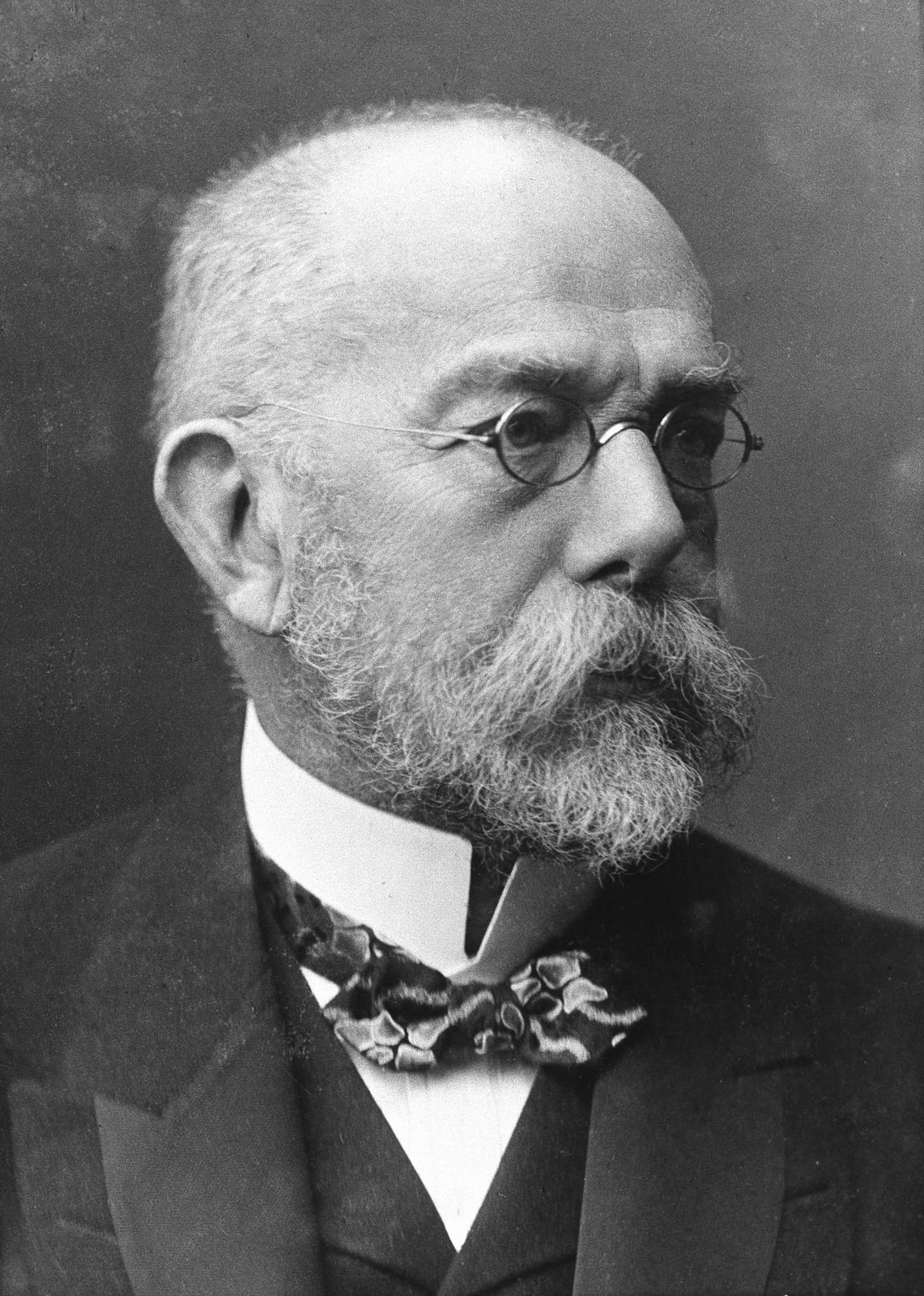
Robert Koch Identifies the Bacterium Behind Tuberculosis
Laboratory methods helped connect a widespread disease with a specific microorganism.
On 24 March 1882, German physician and microbiologist Robert Koch addressed the Berlin Physiological Society to announce that he had identified the microorganism responsible for tuberculosis. At the time, the widespread and fatal affliction was frequently believed to be an inherited disorder rather than an infectious disease. Koch presented evidence demonstrating that a slow-growing rod-shaped bacterium, later classified as Mycobacterium tuberculosis, was the true causative agent behind the condition.
Koch had joined the Imperial Health Office in Berlin as a government advisor in 1880, bringing innovative laboratory techniques developed during his earlier career as a district physician. To visualize the pathogen, he utilized specialized staining methods, exposing tubercular matter to methylene blue in an alkaline potash solution before counterstaining with a brown dye. Under the microscope, the distinct blue bacilli stood out clearly against the surrounding tissue.

Keep reading in Yester
Coming soon to the App Store
Keep following the story
Sources
- Historical Perspectives Centennial: Koch's Discovery of the Tubercle Bacillus (CDC, MMWR)
- Robert Koch, Biographical (NobelPrize.org)
- The Legacy of Robert Koch: Surmise, search, substantiate (Sultan Qaboos University Medical Journal, via PMC)
- History of Tuberculosis. Part 2: the Sanatoria and the Discoveries of the Tubercle Bacillus (Journal of Military and Veterans' Health)
- Robert Koch: Centenary of the Discovery of the Tubercle Bacillus, 1882 (Canadian Veterinary Journal, via PMC)
- Robert Koch
Image: Unknown author Unknown author