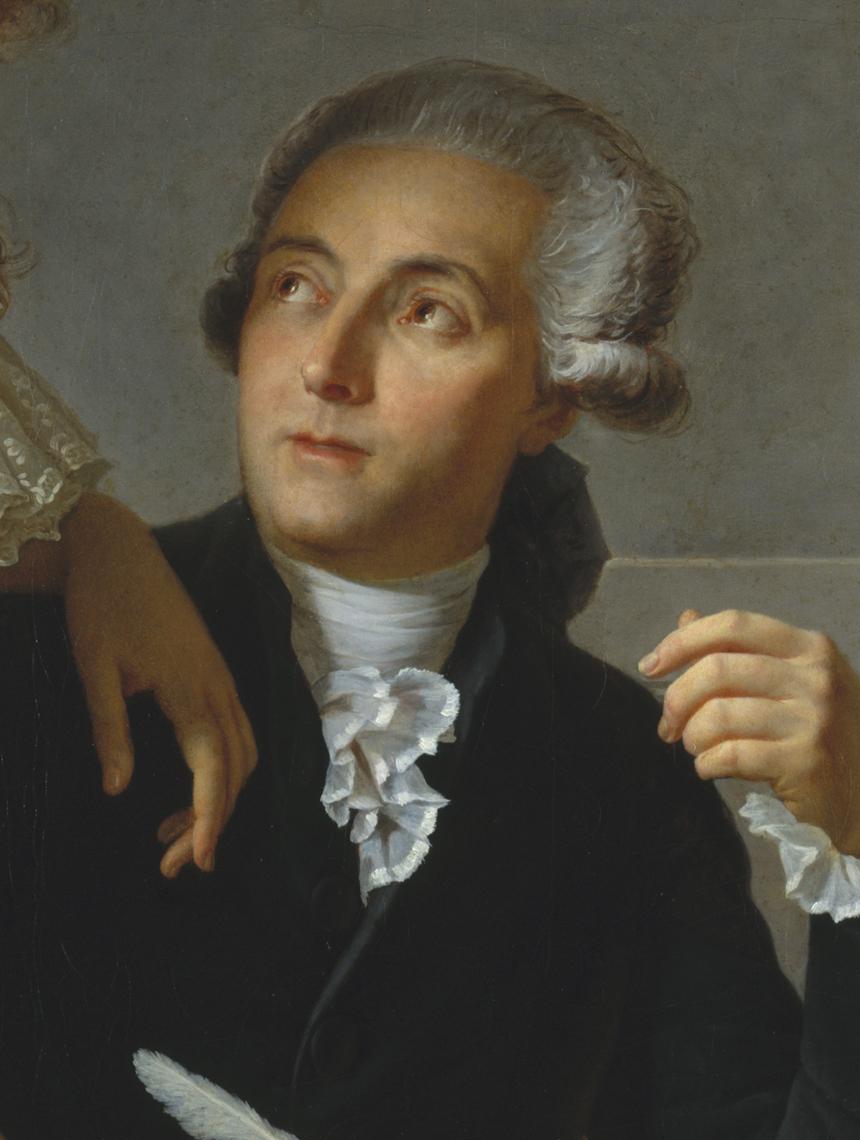
Lavoisier Helps Chemistry Speak a New Language
Careful measurement and a revised account of combustion helped reorganize chemistry. Changing names and explanations also changed what experiments could mean.
In the late eighteenth century, chemical study remained largely anchored in qualitative descriptions and the long-standing concept of phlogiston, an undetectable substance believed to escape during burning. While working in Paris, Antoine Lavoisier shifted this perspective by relying heavily on precise measurement. By conducting experiments inside sealed glass vessels where gases could neither enter nor escape, he recorded the weights of both reactants and products with meticulous care. These quantitative tests demonstrated that when substances such as phosphorus and sulfur burned, or when metals formed calces, their mass increased because they absorbed a portion of the surrounding air rather than losing an elusive essence.
A decisive turn in this research followed an encounter in October 1774 with the English natural philosopher Joseph Priestley. Priestley shared his observations on a vigorous gas obtained by heating the red calx of mercury, which he interpreted within traditional theory as dephlogisticated air. Pursuing his own line of sealed experiments, Lavoisier recognized that this gas was not modified ordinary air, but a distinct elemental constituent of the atmosphere. In 1778 he named this principle oxygen. Five years later, in 1783, he recognized hydrogen as an element, providing an alternative framework that directly challenged the phlogiston doctrine.

Keep reading in Yester
Coming soon to the App Store
Keep following the story
Sources
Image: Jacques-Louis David