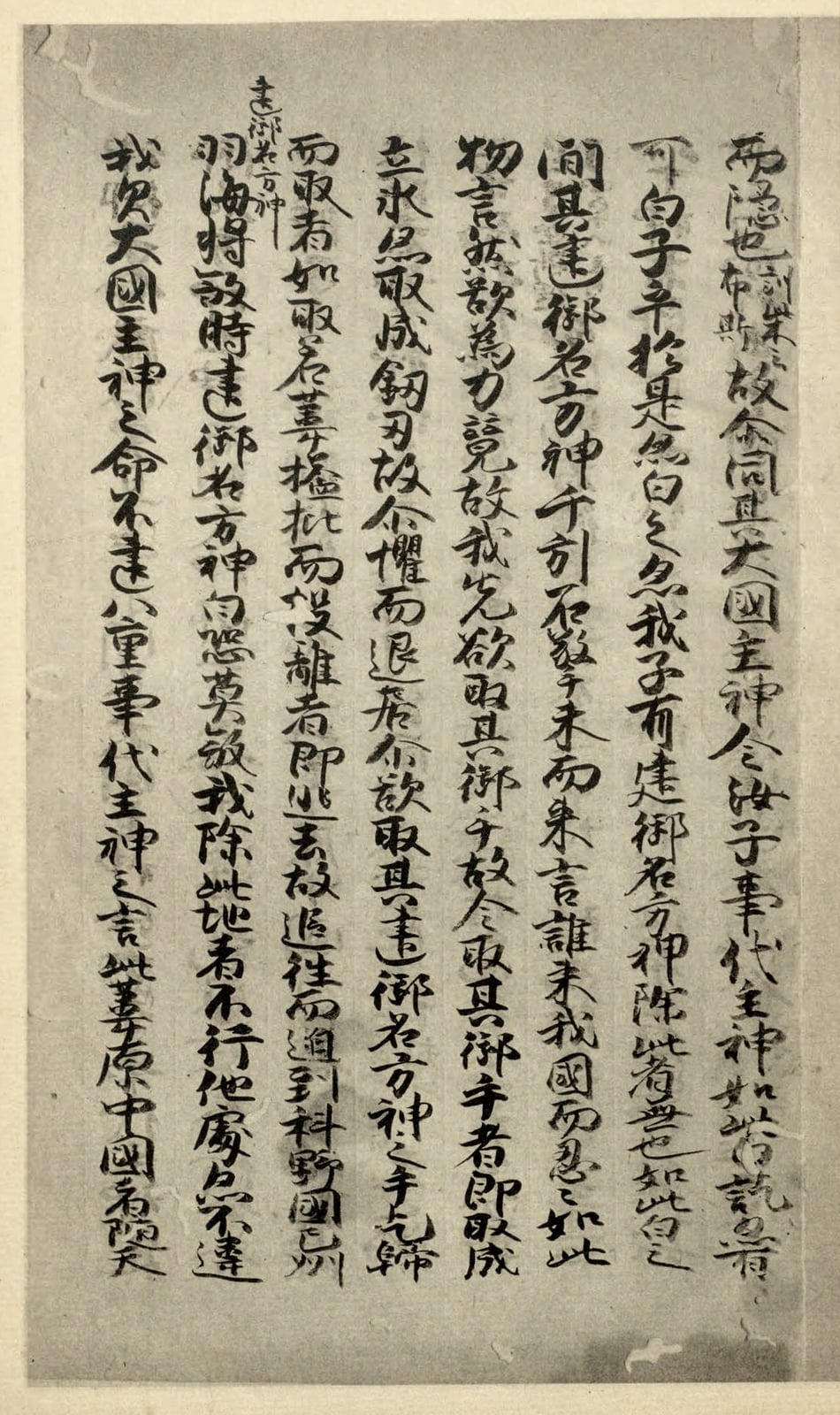
The Kojiki Records Japan’s Myths of Origin
The oldest surviving Japanese chronicle traced the imperial line to the gods.
On the twenty-eighth day of the first month of 712, the Japanese courtier O no Yasumaro presented a newly completed text to Empress Genmei. Known as the Kojiki, or Records of Ancient Matters, this three-volume work gathered oral lore, hymns, genealogical records, and foundation myths into a continuous narrative. Genmei had commissioned Yasumaro only a few months earlier, in late 711, commanding him to transcribe material previously committed to memory by a court attendant named Hieda no Are under Emperor Tenmu. Through this initiative, the court sought to settle discrepancies among private family accounts and produce an authoritative record of Japan's origins.
The chronicle structured Japan's history across three distinct eras, moving from divine genesis to historical reigns. Its first volume, the Kamitsumaki, begins with the primeval emergence of deities, the shaping of the Japanese islands by Izanagi and Izanami, and the deeds of the sun goddess Amaterasu and her unruly brother Susanoo. It culminates in the descent from heaven of Amaterasu's grandson, Ninigi, who laid the divine lineage of the imperial house. The middle volume follows Ninigi's great-grandson, Emperor Jimmu, through his conquests and continues through the reign of Emperor Ojin. The final volume details the reigns from Emperor Nintoku up to Empress Suiko in the early seventh century, shifting markedly away from direct divine intervention.

Keep reading in Yester
Coming soon to the App Store
Keep following the story
Sources
- Exploring Nara through Kojiki: What is Kojiki? (Nara Prefectural Government, Nara Kiki Man'yo Project)
- Kojikiden (Encyclopedia of Shinto, Kokugakuin University)
- Introduction: Texts and Sources (Encyclopedia of Shinto, Kokugakuin University)
- About Norinaga: Motoori Norinaga (1730-1801) (Motoori Norinaga Memorial Museum)
- Kojiki
Image: Ken'yu (賢瑜), Koten Hozonkai (古典保存会)