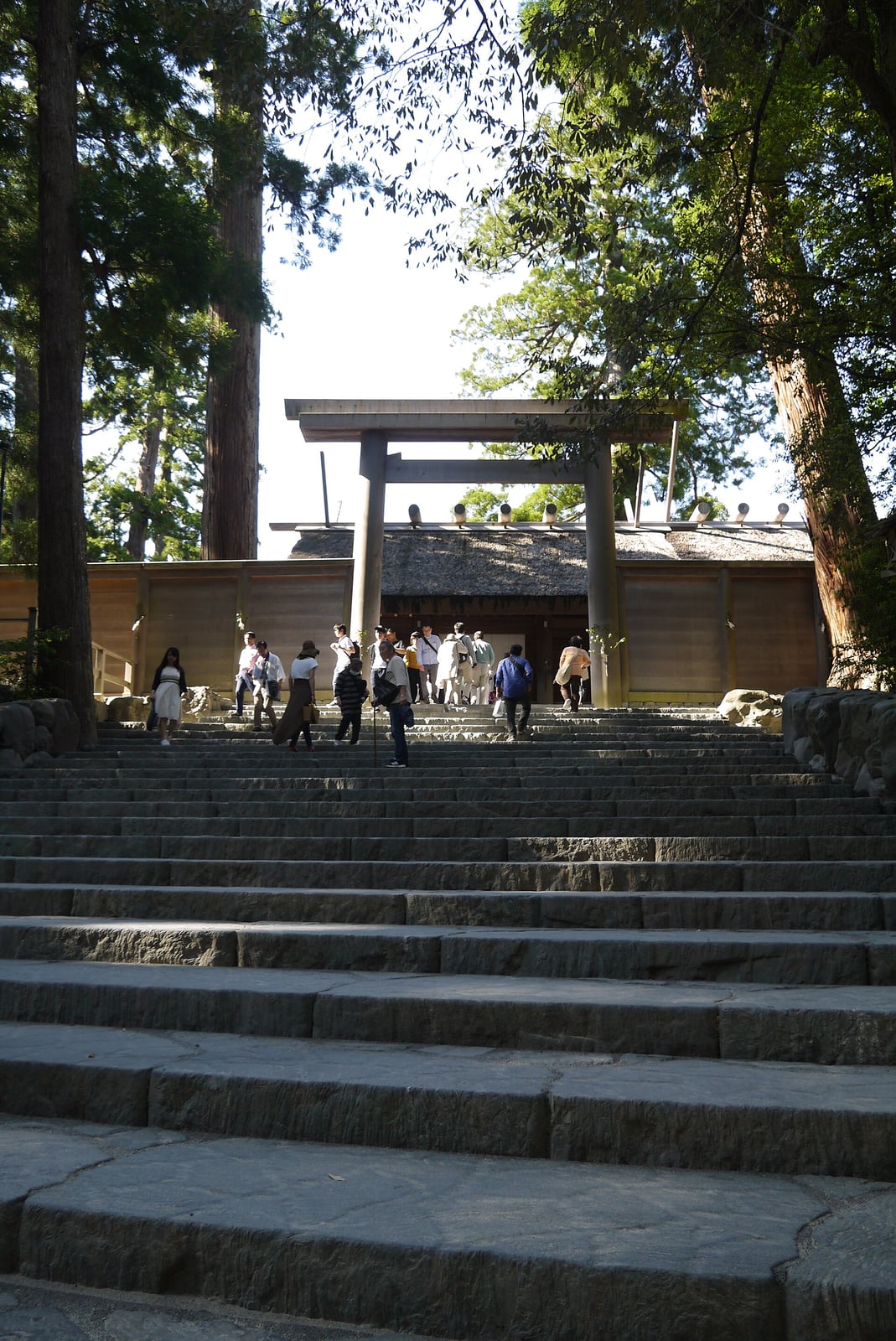
Ise Shrine Begins Its Cycle of Rebuilding
Japan’s most sacred Shinto shrine has been rebuilt every twenty years for centuries.
In the late seventh century, Emperor Tenmu called for the periodic rebuilding of the sanctuaries at Ise, the central spiritual seat dedicated to the solar deity Amaterasu Ōmikami. After his death, the first ceremonial rebuilding took place under Empress Jitō, at the Inner Shrine in 690 and at the Outer Shrine in 692. This milestone inaugurated the Shikinen Sengū, an institutional cycle in which the primary shrine buildings are systematically dismantled and erected anew every twenty years on an adjacent plot, a practice that has continued, despite some interruptions, for about 1,300 years.
The sanctuary complex encompasses two principal precincts situated several kilometers apart in modern Mie Prefecture. Naikū, the Inner Shrine, is devoted to Amaterasu and houses what tradition identifies as the sacred mirror, Yata no Kagami, one of Japan's Imperial Regalia. The Outer Shrine, Gekū, honors Toyouke-hime, the deity of agriculture and harvest. Surrounding these two focal grounds are 123 related shrines, forming an expansive sacred landscape that was integrated into state ritual under early imperial patronage.

Keep reading in Yester
Coming soon to the App Store
Keep following the story
Sources
- Shikinen sengū (Encyclopedia of Shinto, Kokugakuin University)
- 式年遷宮とは (Ise Jingu, official site)
- About Ise Jingu (Ise Jingu, official site)
- Saigū (Encyclopedia of Shinto, Kokugakuin University)
- Saiku FAQ (Saiku Historical Museum, Mie Prefecture)
- Okage mairi (Encyclopedia of Shinto, Kokugakuin University)
- Linked to emperor, Ise Shrine is no ordinary shrine (Associated Press via Fox News)
- Ise Shrine
Image: Oilstreet