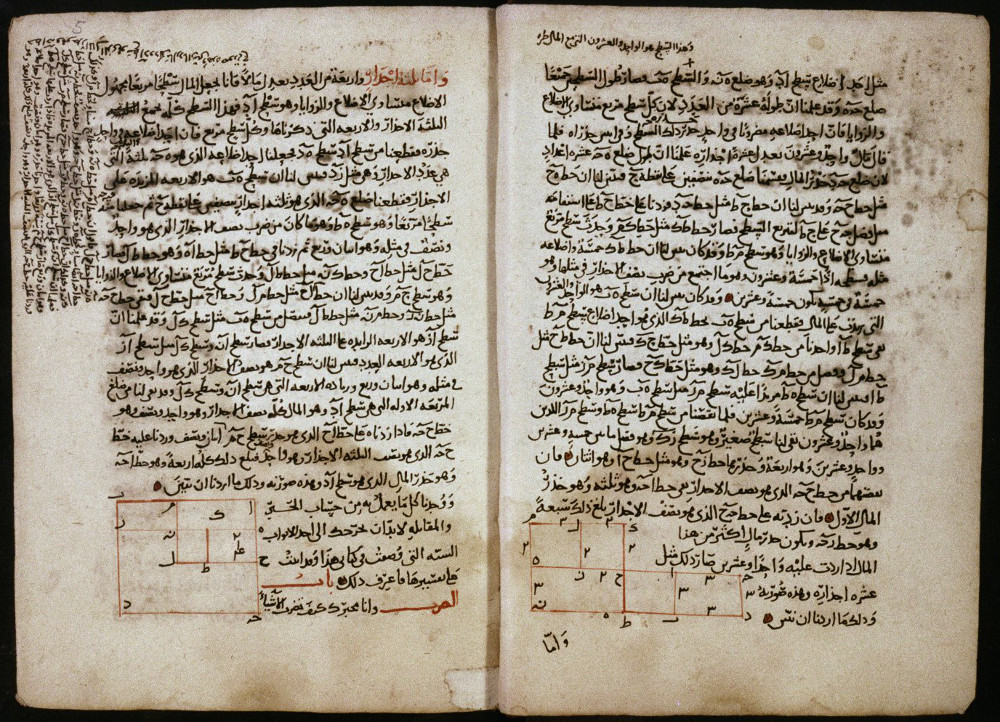
Al-Khwarizmi Gives Equations a Method
An Arabic book organized ways to solve practical mathematical problems. Its influence traveled through translation and survives in words we use without thinking about their history.
Around the early ninth century, Muhammad ibn Musa al-Khwarizmi wrote a book in Baghdad explaining ways to solve mathematical problems. Its Arabic title included al-jabr, a term that eventually supplied the word algebra. The work did not look like a modern textbook filled with x’s and symbolic expressions. It explained procedures in words and used geometric arguments. What made it influential was the organization of methods: a reader could identify a kind of problem and follow a dependable route toward a solution.
Al-Khwarizmi worked in the scholarly world of the Abbasid caliphate, where translation, patronage and exchange brought different bodies of knowledge into contact. His work drew on a mathematical past rather than appearing from nowhere. Babylonian, Greek and Indian traditions had already developed important techniques. Recognizing those predecessors does not reduce his contribution. It makes it possible to see the distinctive achievement of reorganizing knowledge into a teachable framework suited to the questions and institutions of a particular setting.

Keep reading in Yester
Coming soon to the App Store
Keep following the story
Sources
Image: Muḥammad ibn Musa al-Khwarizmi