Aryabhata Recasts the Mathematics of the Sky
A compact work connected calculation and astronomy, including an explanation for the apparent movement of the stars.
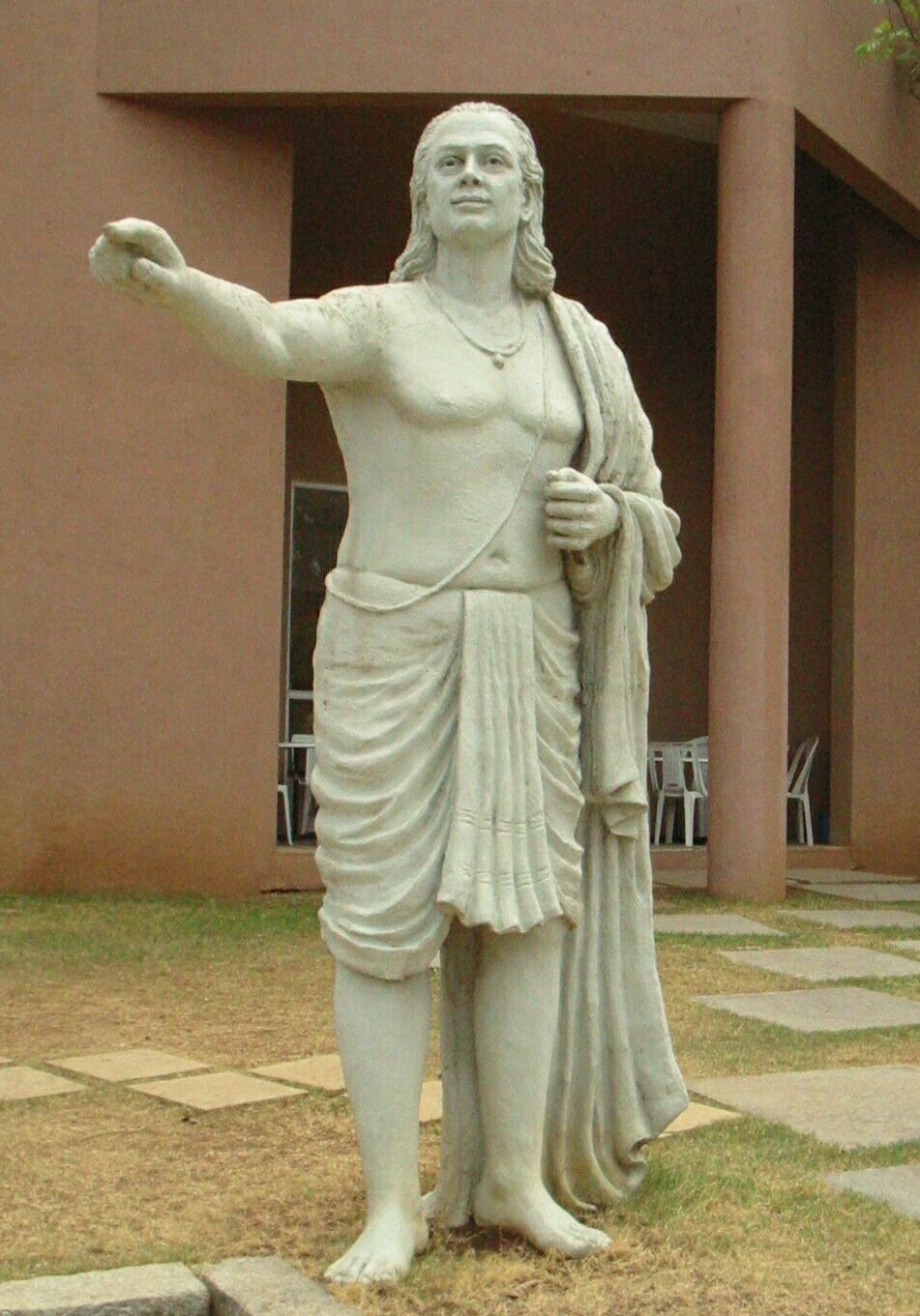
In the treatise known as the Aryabhatiya, the mathematician-astronomer Aryabhata noted that he was twenty-three years old when 3,600 years had elapsed in the Kali Yuga. This chronological benchmark corresponds to 499 CE and indicates that he was born in 476 CE. Aryabhata identified himself with Kusumapura, an ancient settlement identified with Pataliputra near present-day Patna. Later commentators, including his disciple Bhaskara I, also described him as connected to the Ashmaka region, leading to varying scholarly hypotheses about his early origins.
Composed in terse Sanskrit verse typical of sutra literature, the Aryabhatiya condensed extensive systems of calculation and celestial observation into 108 poetic lines, supplemented by introductory verses. The work is organized into four distinct sections: the Gitikapada, which establishes cosmological time scales and provides a table of sines; the Ganitapada, focusing on geometric measurement, progressions, and equations; the Kalakriyapada, outlining planetary reckoning and time divisions; and the Golapada, addressing the geometry of the celestial sphere. Because of its extreme brevity, the text relied on later scholars to unpack its compact rules.

Keep reading in Yester
Coming soon to the App Store