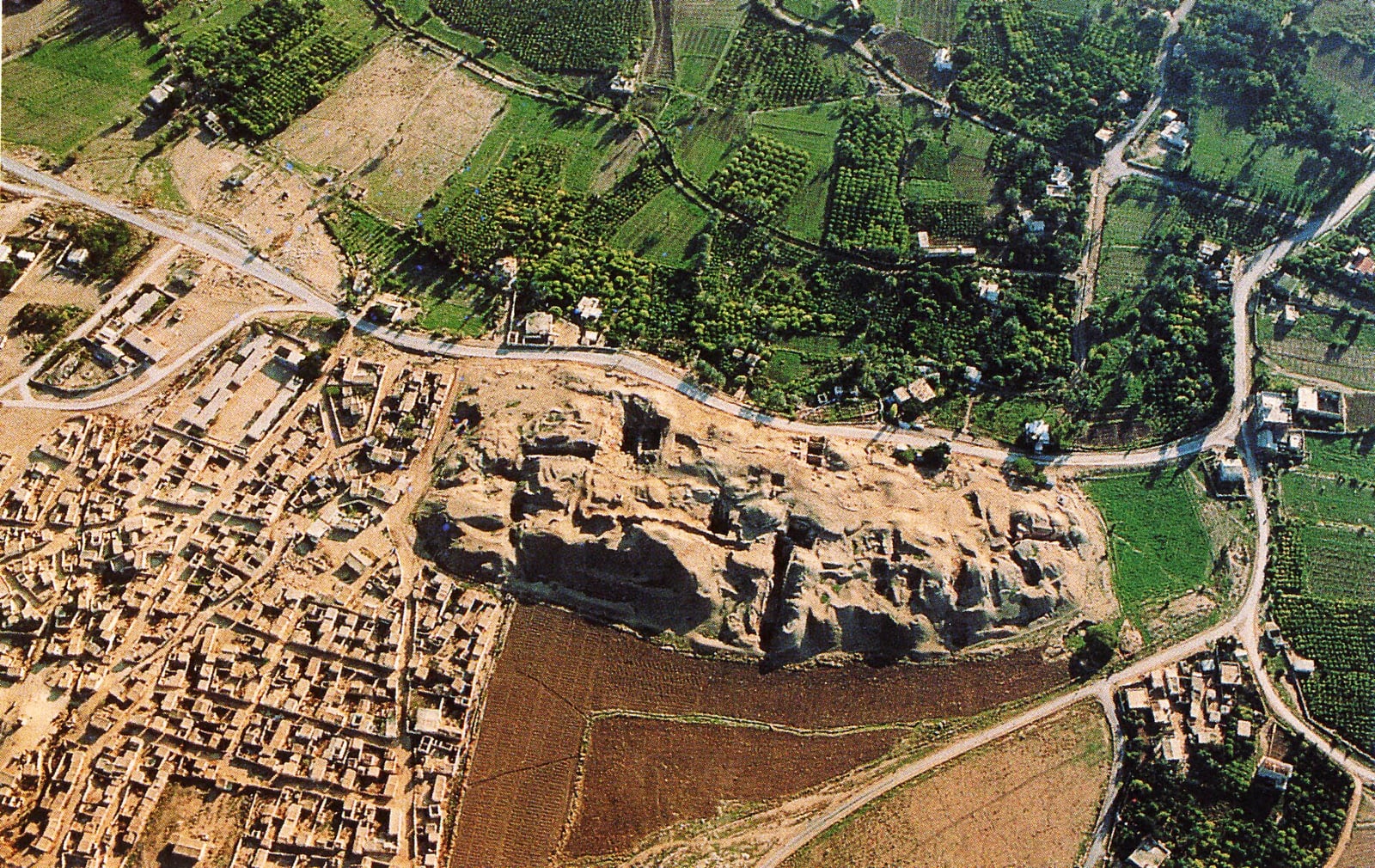
Jericho’s Early Farmers Build a Stone Tower
A tower about 8.5 metres high rose in one of the world’s first walled settlements.
At Tell es-Sultan in the Jordan Valley, early communities established a permanent presence beside the perennial spring of Ein es-Sultan. Natufian hunter-gatherers had previously used the vicinity as a seasonal camping ground, leaving behind microlith stone tools. Following the end of the Younger Dryas cold period around 9600 BCE, sustained warmer conditions allowed people to prolong their stays, gradually replacing nomadic foraging with year-round occupation. By the start of the Pre-Pottery Neolithic A phase, between 9500 and 9000 BCE, this location had grown into a settled agrarian community, pioneering cereal cultivation alongside game hunting.
During the ninth millennium BCE, the inhabitants developed a distinctive architectural tradition without ceramic technology. They assembled small, rounded dwellings measuring about five metres across, using sun-dried bricks made of clay and straw bonded by mud mortar. Roofed with brush smeared in mud, each domestic space contained hearths both inside and outside the walls. Underneath the floors of these circular houses, residents buried their deceased relatives. The settlement sustained itself on domestic or wild varieties of emmer wheat, barley, and pulses, though the size of the community during this era remains an open debate, with estimates spanning from 200 to as many as 3,000 people.

Keep reading in Yester
Coming soon to the App Store
Keep following the story
Sources
- Ancient Jericho/Tell es-Sultan (UNESCO World Heritage Centre)
- First skyscraper was a monument to intimidation: How Jericho's 11,000-year-old cosmic tower came into being (ScienceDaily, from American Friends of Tel Aviv University)
- "First Skyscraper" Built to Fight Solstice Shadow? (National Geographic)
- Jericho
Image: Fullo88 at Italian Wikipedia