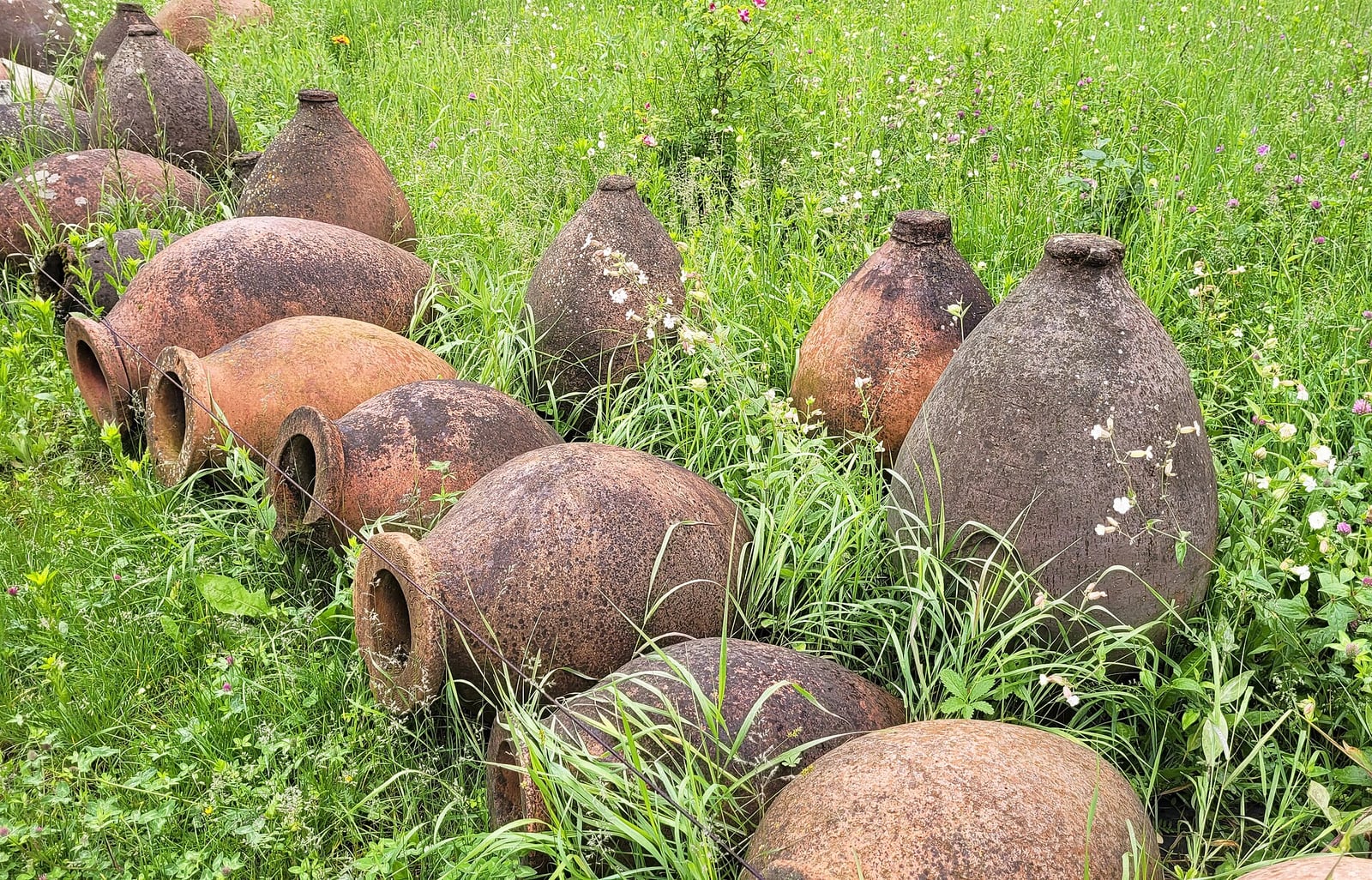
Georgian Farmers Make Some of the World’s Earliest Wine
Residue in Neolithic jars shows grapes were fermented in the Caucasus 8,000 years ago.
Archaeological evidence from the South Caucasus reveals that early agricultural communities were cultivating grapevines and fermenting grape juice as early as 6000 BC. In the valleys and mountain slopes of what is now Georgia, Neolithic communities fermented grape juice in very large clay jars, some of the earliest pottery made in the Near East. Over centuries, these initial trials evolved into a systematic method of viticulture, laying the foundations of a winemaking tradition that Georgians regard as continuous over eight millennia.
Central to this enduring technique is the kvevri, a massive egg-shaped earthenware vessel coated internally with beeswax; the earliest archaeological evidence for kvevri winemaking dates to the eighth to seventh centuries BC. Winemakers filled these large jars with pressed grape juice, skins, and stems before sealing them with wooden covers and a thick layer of earth. Buried completely underground, the vessels maintained steady cellar temperatures throughout fermentation and maturation, sometimes holding the vintage undisturbed for years. Alongside the kvevri, regional craftsmen developed an entire taxonomy of specialized pottery for holding and consuming wine, including storage jars like the chapi and drinking vessels such as the khelada and doki.

Keep reading in Yester
Coming soon to the App Store
Keep following the story

Sources
Image: Bernard Gagnon