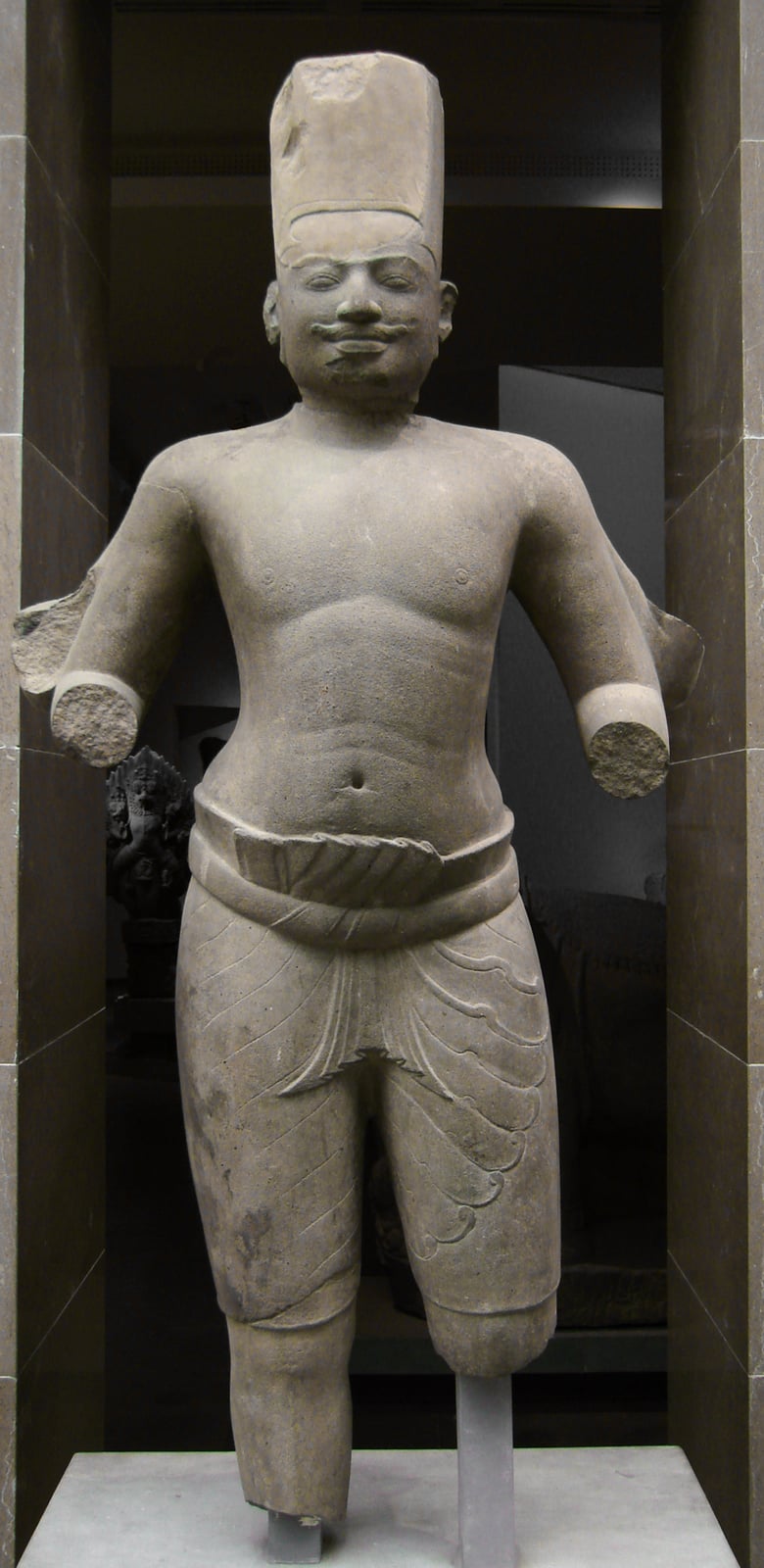
Jayavarman II Declares Cambodia’s Independence from Java
A ceremony on Mount Kulen is remembered as the founding of the Khmer Empire.
In 802 CE, an ambitious Khmer prince named Jayavarman II ascended Mount Mahendraparvata, the highland ridge known today as Phnom Kulen, to conduct a sequence of sacred consecration rituals. Supported by his court chaplain, Sivakaivalya, and an invited Brahmin named Hiranyadama, the monarch was initiated as a chakravartin, or universal ruler. The ceremonies instituted the devaraja ritual, designed to elevate the king above all competing regional lords and sever any enduring ties of subservience to an external overlord recorded in the stone epigraphs simply as Java. This symbolic declaration has long been commemorated as the formal beginning of the unified Khmer Empire.
The geopolitical environment preceding this ritual was defined by division rather than central rule. Mainland Southeast Asia contained shifting, rival principalities frequently embroiled in local conflict, with several factions paying tribute or submitting to foreign naval powers. Traditional accounts record that Jayavarman lived in Java during his youth, whether as an exile or a hostage, before returning to mainland territories to establish a foothold at Indrapura. Beginning with smaller settlements in the southeast, he launched a steady campaign to consolidate power across the lower Mekong Basin, expanding his domain by military force and strategic marital alliances.

Keep reading in Yester
Coming soon to the App Store
Keep following the story
Sources
Image: Vassil