
Queen Shin Sawbu Gives the Shwedagon Its Gold
A ruler of Hanthawaddy offered her weight in gold to gild Myanmar’s great stupa.
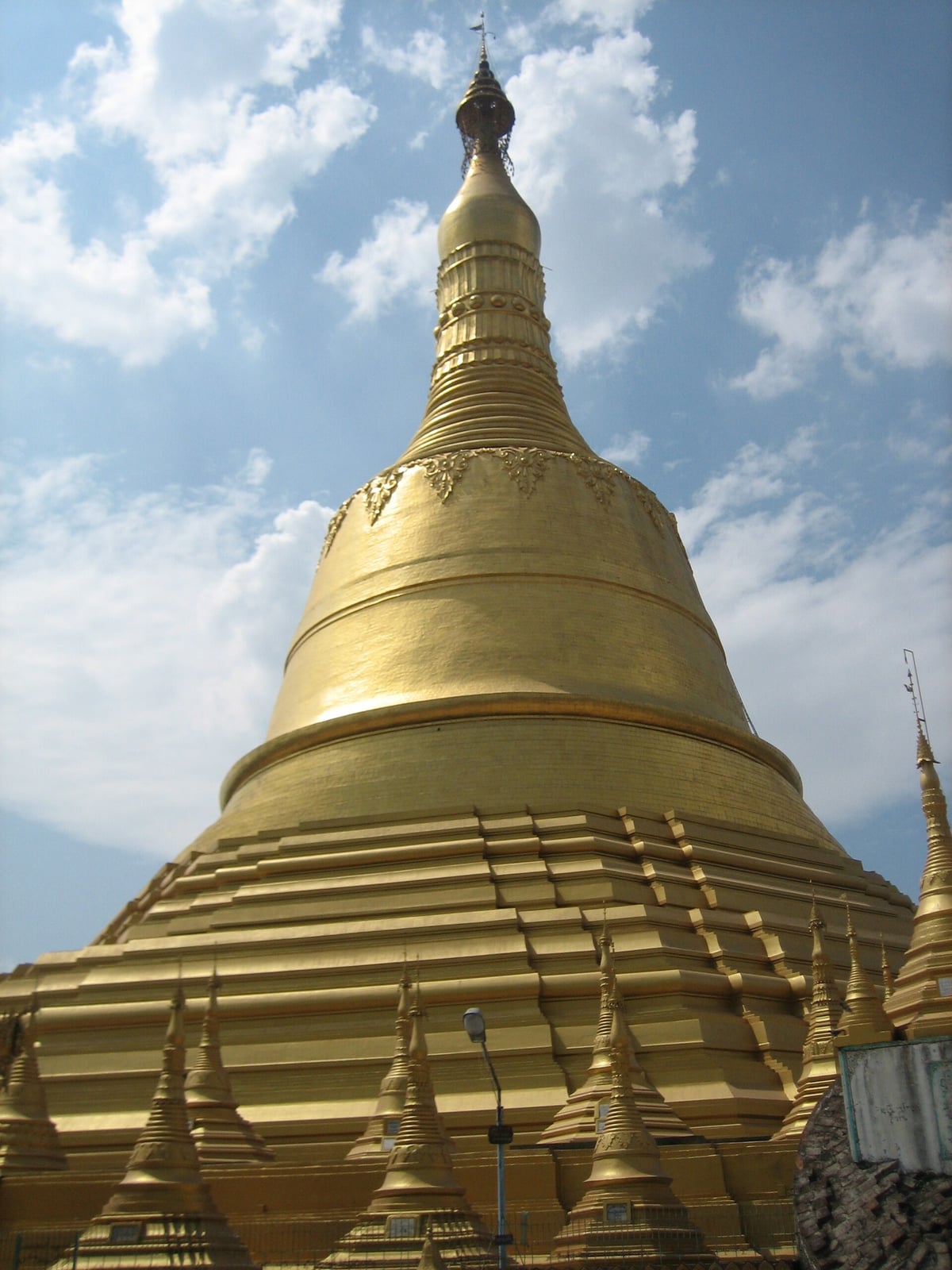
Rising above Singuttara Hill in modern Yangon, the Shwedagon Pagoda stands as Myanmar's preeminent Buddhist sanctuary. Traditional accounts attribute its foundation to the era of Gautama Buddha more than twenty-five centuries ago, recounting how two merchant brothers enshrined eight strands of his hair alongside relics from three previous Buddhas. Recorded history, however, provides a firmer chronology. The earliest mention in royal chronicles appears in the fourteenth century, recording that King Binnya U of Martaban-Hanthawaddy elevated the stupa to eighteen meters around 1362 or 1363.
The defining physical transformation of the monument took place in the fifteenth century during the Hanthawaddy Kingdom. The Shwedagon Pagoda Inscriptions, commissioned by King Dhammazedi, preserve an account of renovations commencing in 1436. Dhammazedi's predecessor, Queen Shin Sawbu, who ruled from 1454 until 1471, substantially reshaped the site. She enlarged the stupa to a height of forty meters and, by tradition, donated her own weight in gold to gild it, initiating a tradition of gilded royal patronage that turned the shrine into Burma's leading Buddhist pilgrimage destination by the turn of the sixteenth century.

Keep reading in Yester
Coming soon to the App Store
Keep following the story
Sources
Image: Philip Nalangan