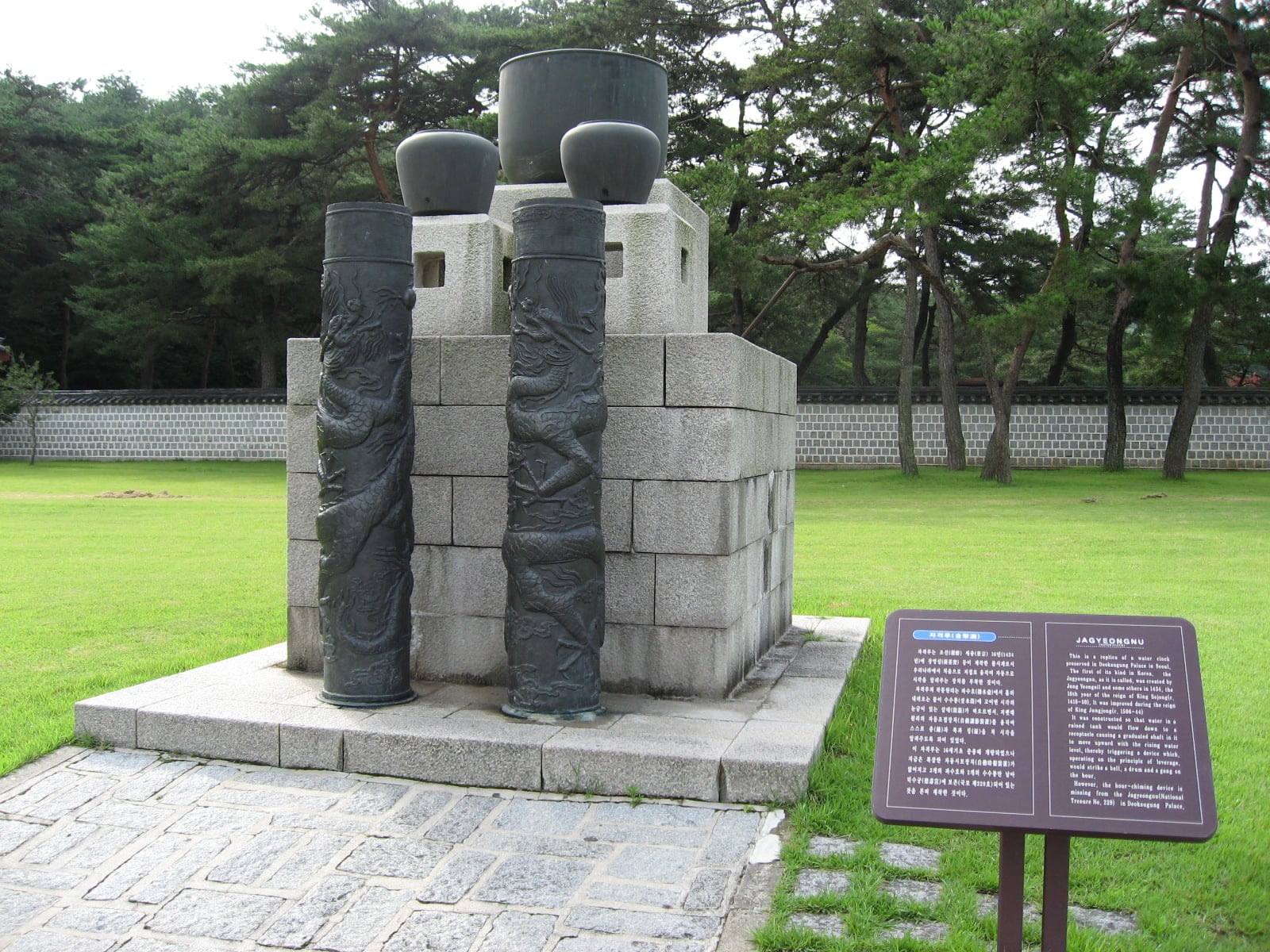
Jang Yeong-sil Builds a Clock That Announces the Time
A self-striking water clock connected royal patronage with practical engineering.
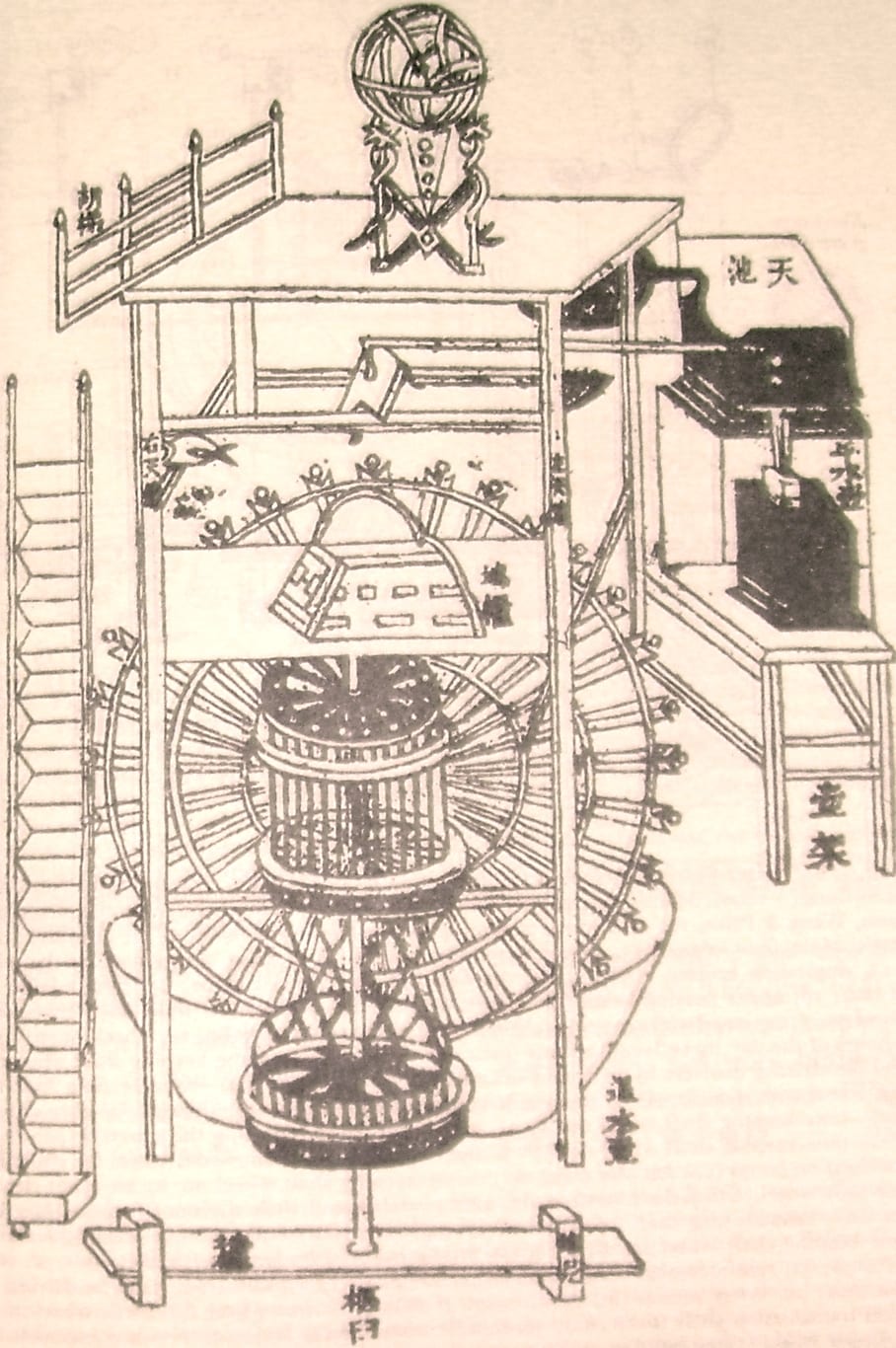
In 1434, the Korean technician Jang Yeong-sil completed the Jagyeokru, the Joseon dynasty's first self-striking water clock. For centuries, Korean timekeeping had relied on simpler arrangements of tiered water jars, an approach noted in historical records as early as the Three Kingdoms era. Those traditional devices demanded constant human oversight, requiring attendants to observe fluid levels and manually beat drums to mark each hour. Seeking to establish a dependable and uniform standard of time, King Sejong instructed palace scholars and artisans to construct a machine capable of sounding the hours automatically.
Jang arrived at this project through an unusual social trajectory. Born to a government courtesan, he held the low social status of a state-owned nobi. His practical aptitude in metalworking and mechanics brought him to the capital of Hanseong, where exceptional commoners were granted audiences before the monarch. Recognizing his technical talent, Sejong appointed him as a technician in the royal court, assigning him to work alongside researchers gathered under the sovereign's patron programs, including scholars at the Hall of Worthies.

Keep reading in Yester
Coming soon to the App Store
Keep following the story
Sources
Image: The user's homepage