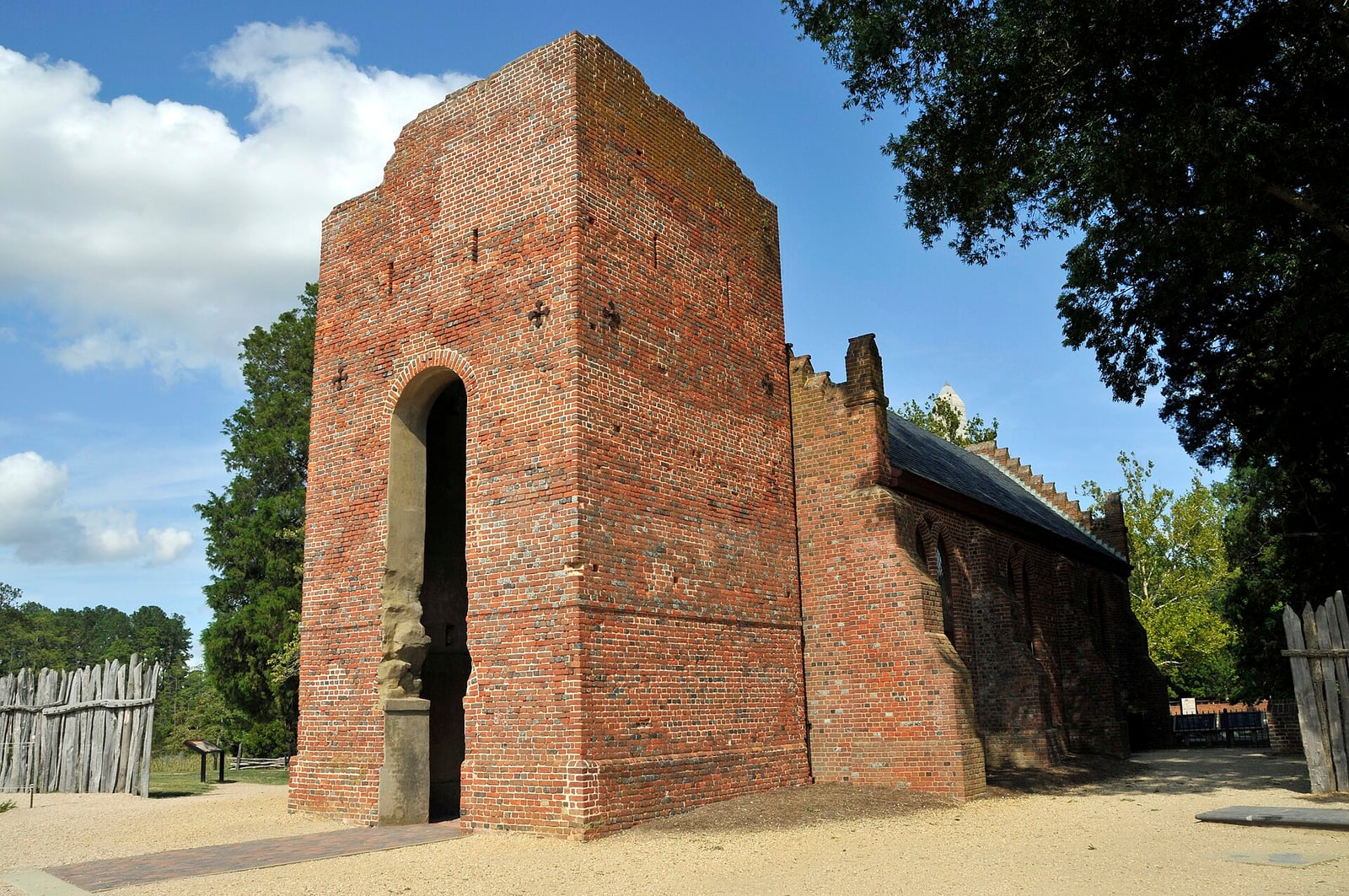
English Colonists Found Jamestown in Virginia
The first lasting English settlement in the Americas nearly collapsed in its first years.
In late 1606, an expedition chartered by the Virginia Company of London set sail from England to establish an outpost in North America. Led by Captain Christopher Newport aboard the Susan Constant, Godspeed, and Discovery, the group entered the Chesapeake Bay region in the spring of 1607. Under council president Edward Maria Wingfield, they chose a site along a river named for King James I, roughly forty miles inland from the Atlantic Ocean. Although the location offered deep water for anchoring and a strategic defense against potential Spanish naval attacks, the swampy peninsula lacked clean drinking water and suffered from swarms of mosquitoes.
The enterprise faced immediate peril. Modern tree-ring analysis of bald cypresses indicates that the settlers arrived at the start of a seven-year drought, lasting from 1606 to 1612, that was the driest period in about 770 years. This environmental hardship severely curtailed indigenous agriculture and compromised the colony's food and water supplies. Furthermore, many early arrivals were gentlemen or servants unused to manual labor, and they arrived too late in the season to plant successful crops. Two-thirds of the initial settlers perished before supply vessels returned from England in 1608 with fresh provisions and new arrivals.

Keep reading in Yester
Coming soon to the App Store
Keep following the story
Sources
Image: Tony Fischer