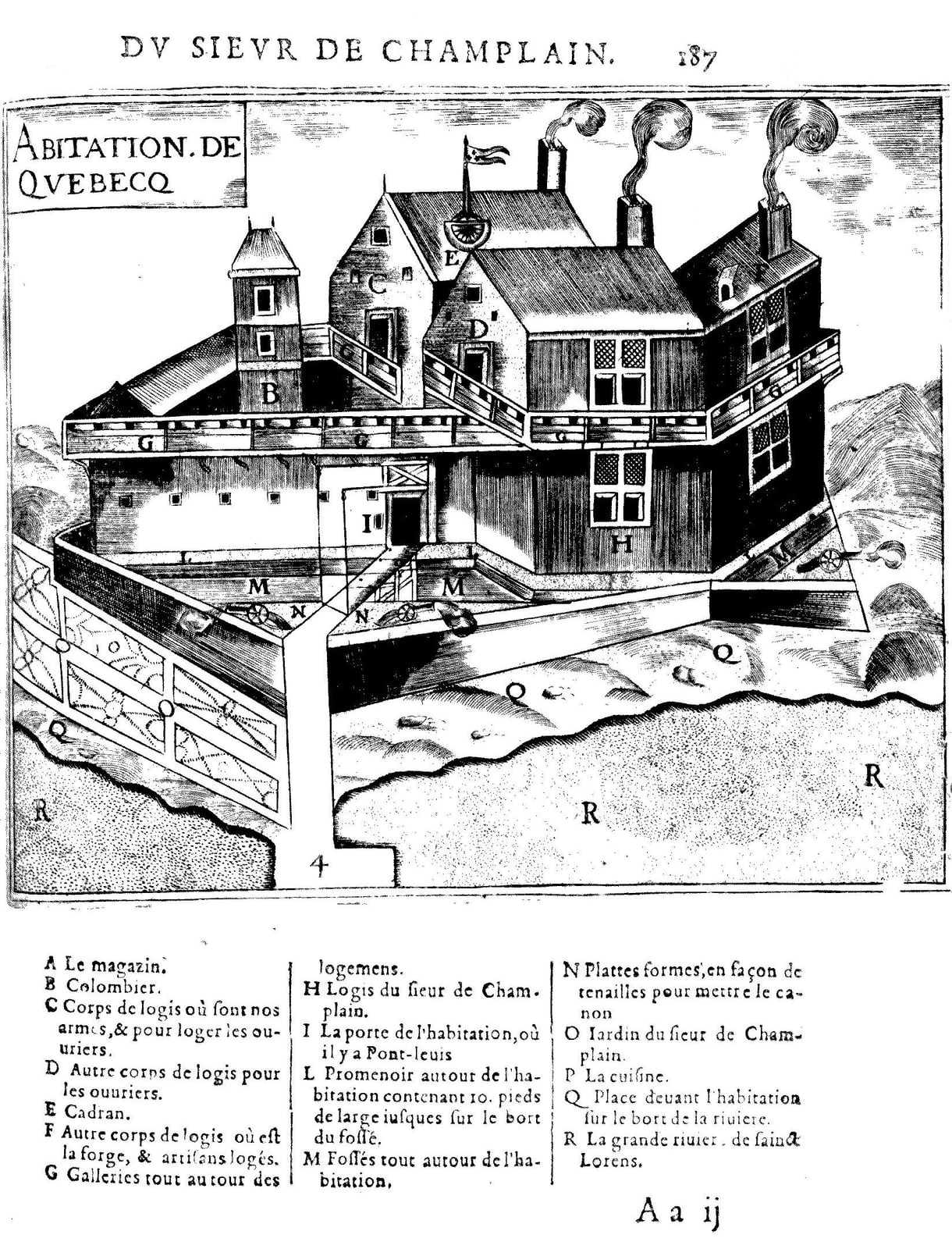
Champlain Founds Quebec on the St Lawrence
A French trading post where the river narrows became the heart of New France.
On 3 July 1608, the French navigator and cartographer Samuel de Champlain stepped ashore at a narrowing of the St. Lawrence River to establish a permanent post. Probably born in Brouage, in the French province of Saintonge, Champlain had developed practical navigational and military expertise during the late sixteenth century. After serving King Henry IV and participating in earlier French colonial attempts in Acadia, he received backing from merchant Pierre Dugua de Mons to secure a foothold for trade further inland. Sailing from Honfleur in April 1608, the expedition transferred men and equipment into smaller craft at Tadoussac to ascend the river, choosing a point called Quebec by the local population.
The new habitation began under difficult circumstances, marked immediately by internal treachery. Shortly after work commenced cutting down nut trees for timber, a settler named Jean du Val conspired with three others to assassinate Champlain and hand the outpost to rival Spanish or Basque traders. An informer alerted Champlain's pilot, allowing the leader to lure the conspirators aboard a vessel and arrest them. Du Val was hanged and his head placed on display at the settlement, while his accomplices were sent to France for trial, cementing Champlain's authority over the small, vulnerable enclave.

Keep reading in Yester
Coming soon to the App Store
Keep following the story


Sources
Image: Bibliothèque et Archives nationales du Québec