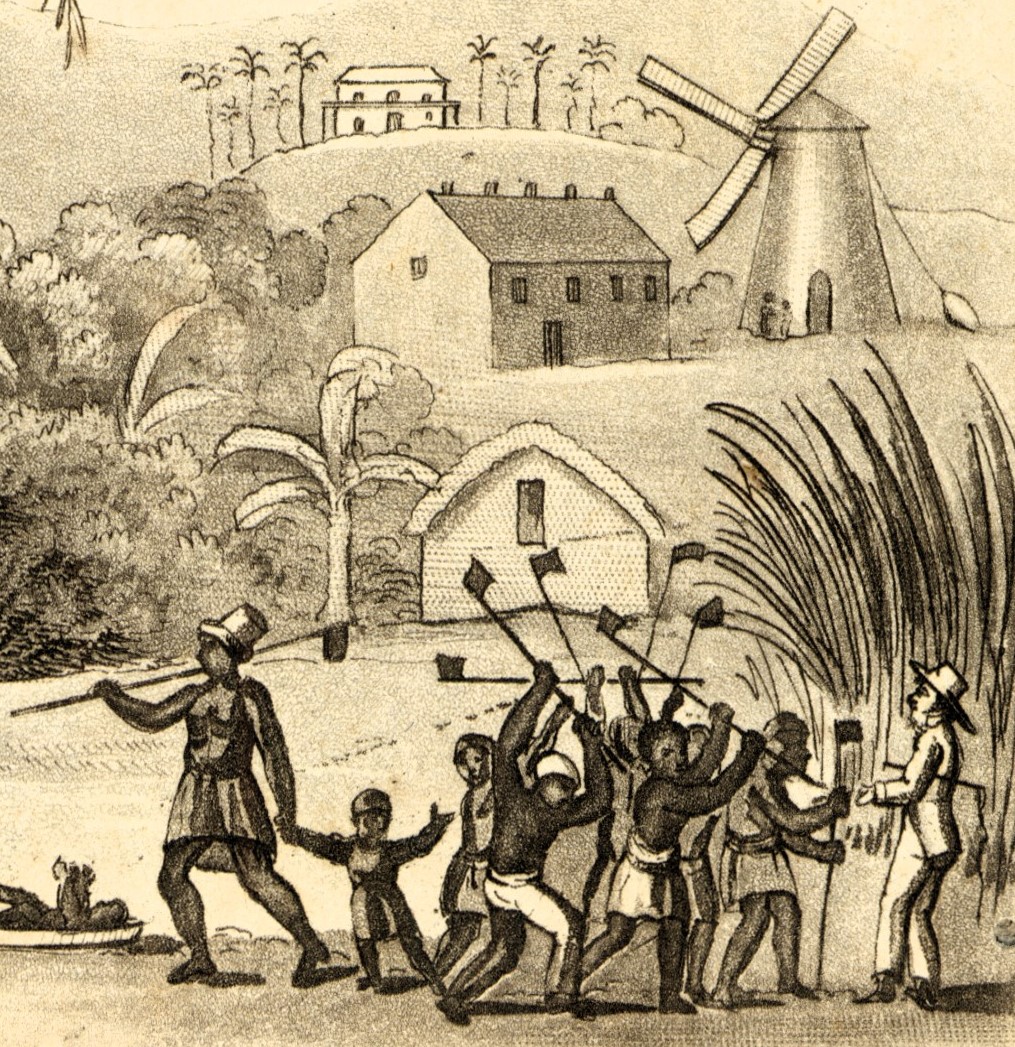
Sugar Transforms Barbados
A small island became a model for plantations built on enslaved labor.
English colonization of Barbados began in the 1620s as a commercial enterprise under proprietary grants. Funded by London merchant Sir William Courten, the first permanent settlement took root near modern Holetown in February 1627. The earliest economy rested on tobacco grown by smallholders and indentured European laborers, alongside dozens of Indigenous people brought from South America. As Virginia tobacco production expanded in the 1630s, however, falling market prices pressed the colony's planters to seek a more lucrative staple.
The turning point came in the early 1640s, when planters adopted the techniques of commercial sugar production from the Dutch in Brazil. Early Barbadian sugar was of poor quality, but by about 1650 planters had refined their methods and sugar was becoming the island's central enterprise. The change demanded substantial capital investment, heavy machinery, and intensive manual field labor. Planters learned from visitors from Brazil and from visits to sugar estates there, and some accounts also credit Sephardic Jewish settlers from Dutch Brazil with spreading technical knowledge, while Dutch merchants provided the necessary financing, refining equipment, and transatlantic transport to European markets.

Keep reading in Yester
Coming soon to the App Store
Keep following the story

Sources
- The introduction of sugar cane (King's College London, King's Collections)
- The Industrial Heritage of Barbados: The Story of Sugar and Rum (UNESCO World Heritage Centre tentative list)
- The Barbados Census of 1679 and the Legacies of Slavery in Early Modern England (Economic History Society)
- Records From Barbados Are Far From Mundane (Newberry Library)
- History of Barbados
Image: John Augustine Waller (writer) Ralph Stennett (drawer) Neele & Son (engraver)