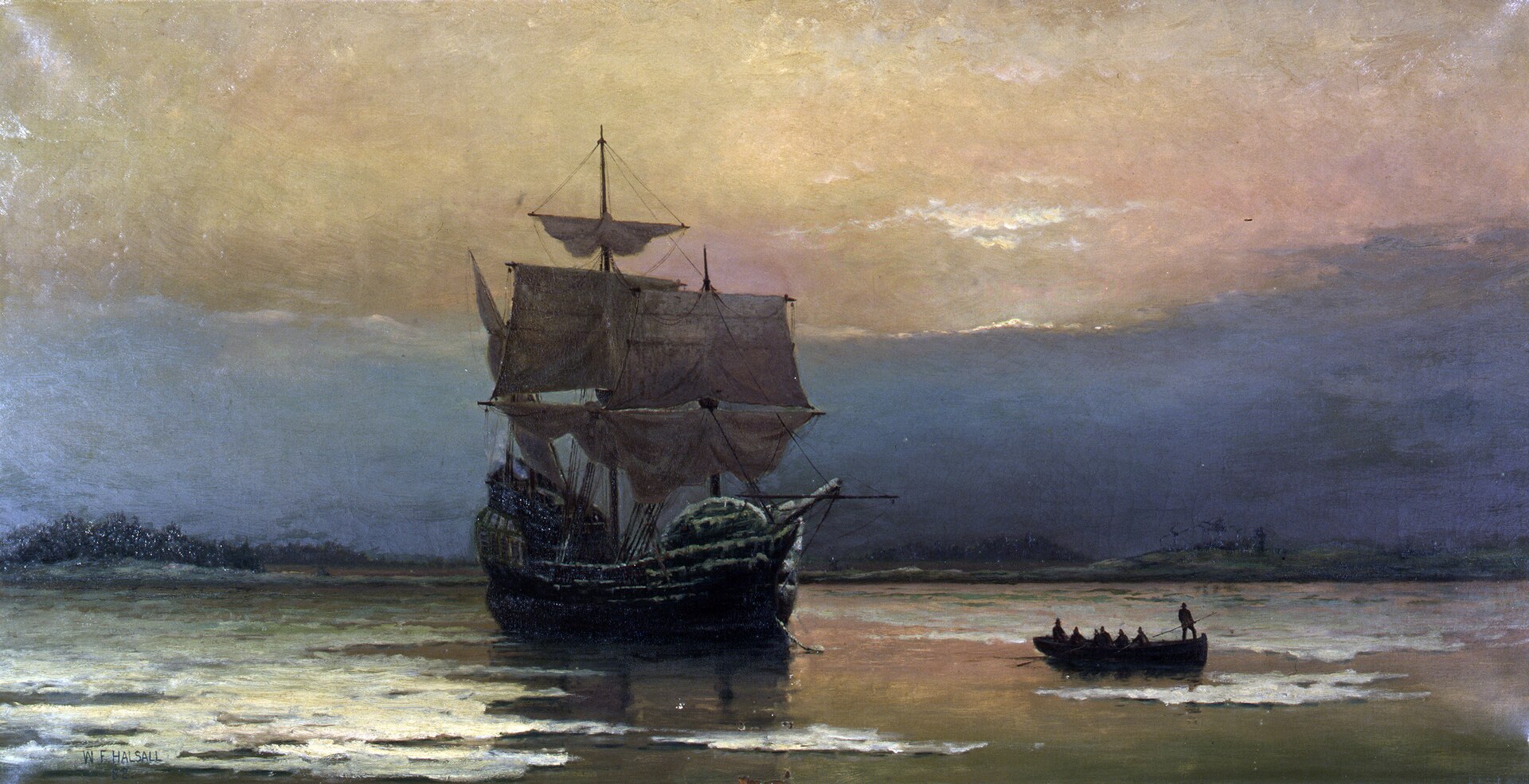
The Mayflower Reaches New England
English separatists founded Plymouth Colony on Wampanoag land.
In September 1620, the merchant vessel Mayflower set sail alone from Plymouth, England, bound for North America. Among the approximately 130 people aboard were 102 passengers, more than a third of whom belonged to a community of English religious separatists. These emigrants had previously withdrawn from the Church of England, deeming its institutional practices irredeemable, and spent over a decade in Leiden in the Netherlands. Growing anxieties over European political tensions, restrictive edicts from King James I, and difficult economic circumstances prompted leaders of the Leiden congregation to seek a permanent settlement across the Atlantic.
The journey had originally been conceived as a joint expedition involving a second, smaller vessel named Speedwell. After conveying passengers from the Netherlands to England, Speedwell repeatedly developed severe leaks, forcing both ships to return to port at Dartmouth and later Plymouth. With autumn progressing and vital funds dwindling, the expedition leaders scrapped Speedwell entirely. Twenty of its travelers squeezed onto Mayflower alongside existing passengers, while the rest abandoned the voyage. The delay forced Mayflower to undertake an arduous crossing late in the season with depleted provisions.

Keep reading in Yester
Coming soon to the App Store
Keep following the story
Sources
Image: William Halsall