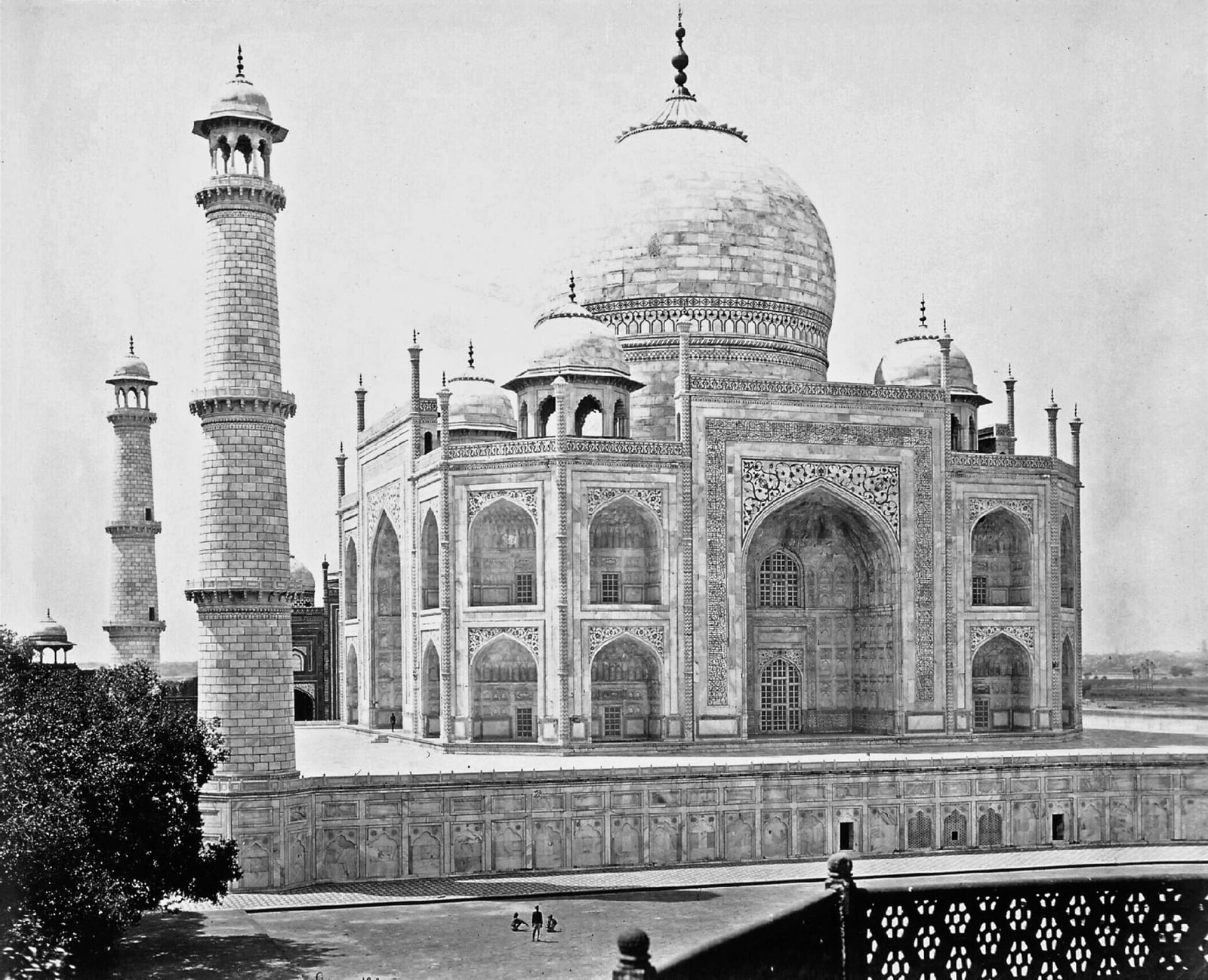
The Taj Mahal Transforms Mourning into an Imperial Monument
A Mughal mausoleum joined architecture, gardens and craftsmanship on a monumental scale.
In 1631, the fifth Mughal emperor, Shah Jahan, commissioned a monumental tomb complex on the southern bank of the Yamuna River in Agra. The project commemorated his wife Mumtaz Mahal, who died that June while giving birth to their fourteenth child. Contemporary court chroniclers recorded that the emperor withdrew from public affairs in grief before initiating the grand commission. To secure the riverfront ground, Shah Jahan acquired an estate from Raja Jai Singh I, exchanging it for an urban palace in central Agra. Groundwork commenced in 1632, requiring the excavation of roughly three acres of land and the sinking of deep stone-and-lime footings to anchor the elevated terrace against the riverbank.
The physical assembly of the complex engaged more than twenty thousand workers, guided by a board of architects under the leadership of imperial court architect Ustad Ahmad Lahori. This collaborative team drew together artisans across regions, including Ottoman dome builder Ismail Afandi, calligrapher Amanat Khan Shirazi, and supervisors from Persia and India. The main mausoleum achieved completion in 1648, marked earlier by a memorial gathering in 1643 for the twelfth anniversary of Mumtaz Mahal's death. Subsidiary structures, extensive red sandstone pavilions, and formal gardens required an additional five years of work, bringing the entire site to functional completion in 1653 at an estimated cost of thirty-two million rupees.

Keep reading in Yester
Coming soon to the App Store
Keep following the story
Sources
Image: Samuel Bourne, 1834–1912