Emperor Kanmu Moves Japan’s Capital to Heian-kyō
A new grid-planned capital became Kyoto, the seat of the court for a thousand years.
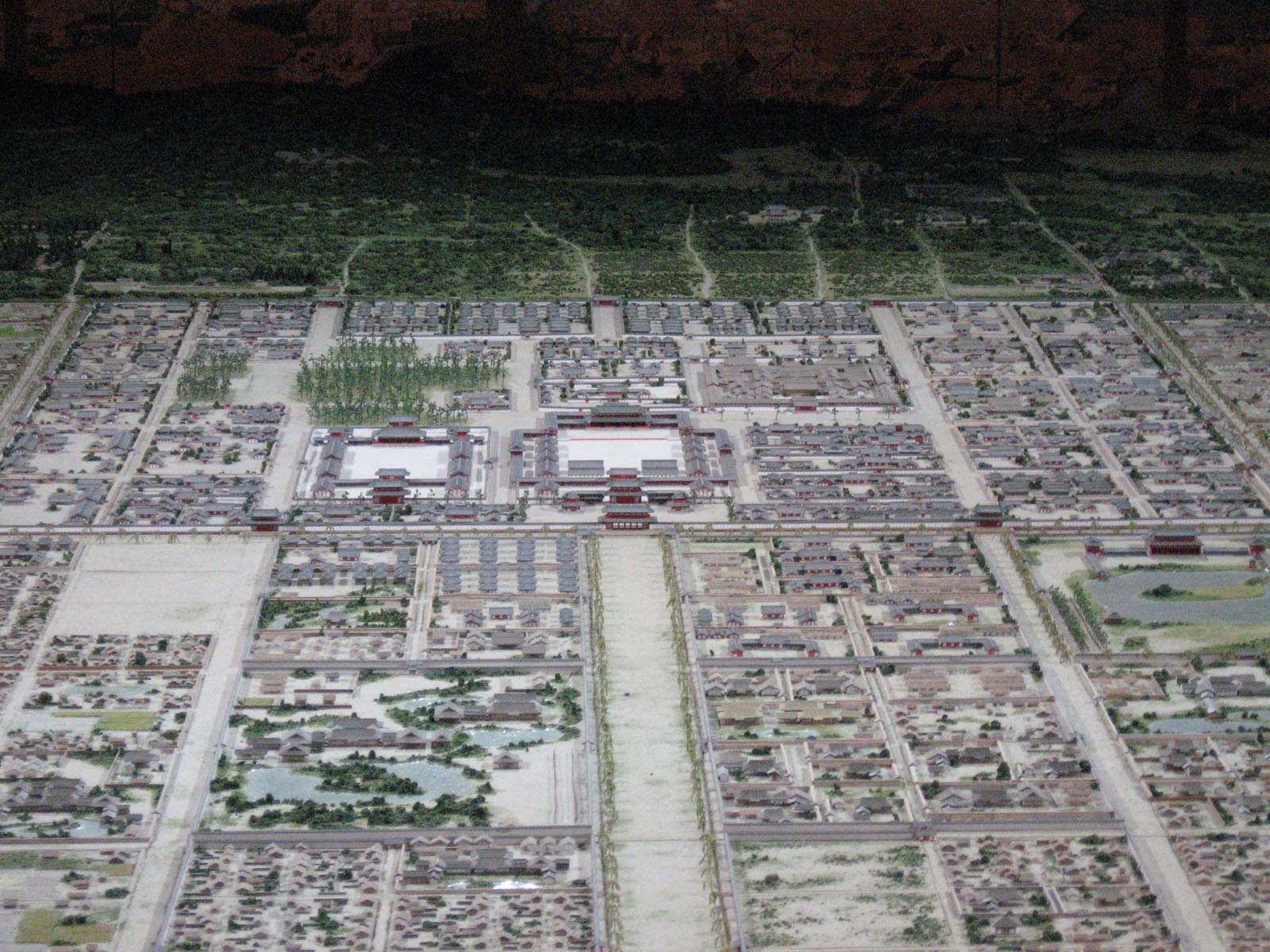
On 18 November 794, corresponding to the twenty-second day of the tenth month of Enryaku 13, Emperor Kanmu moved his court into a freshly surveyed site in the Kadono region of Yamashiro Province. Kanmu had abandoned Japan's earlier seat at Heijō-kyō a decade before to establish Nagaoka-kyō, but that experiment foundered quickly. According to a biographical notice preserved in the Nihon Kōki, the official Wake no Kiyomaro advised the emperor to abandon the troubled settlement and inspect the Kadono basin. After senior courtiers surveyed the valley in early 793, land allocation and construction began promptly. Shortly after the court relocated, an imperial edict proclaimed the settlement Heian-kyō, meaning tranquil capital, while also revising the characters used to write Yamashiro Province.
The new capital was planned as a vast rectangular grid modeled closely on Chinese imperial planning, especially the Tang dynasty capital of Chang'an. Measuring roughly 4.5 kilometers from east to west and 5.2 kilometers from north to south, Heian-kyō covered less than a third of the territory of Chang'an and, unlike its continental predecessor, lacked an enclosing perimeter wall. Its grandest thoroughfare was Suzaku-ōji, an avenue approximately 85 meters wide that ran from the palace complex south to the southern gate, Rajōmon. This central artery divided the city into two halves: the Left Capital on the east and the Right Capital on the west, when observed facing south from the imperial palace.

Keep reading in Yester
Coming soon to the App Store
Keep following the story
Sources
Image: Wikiwikiyarou