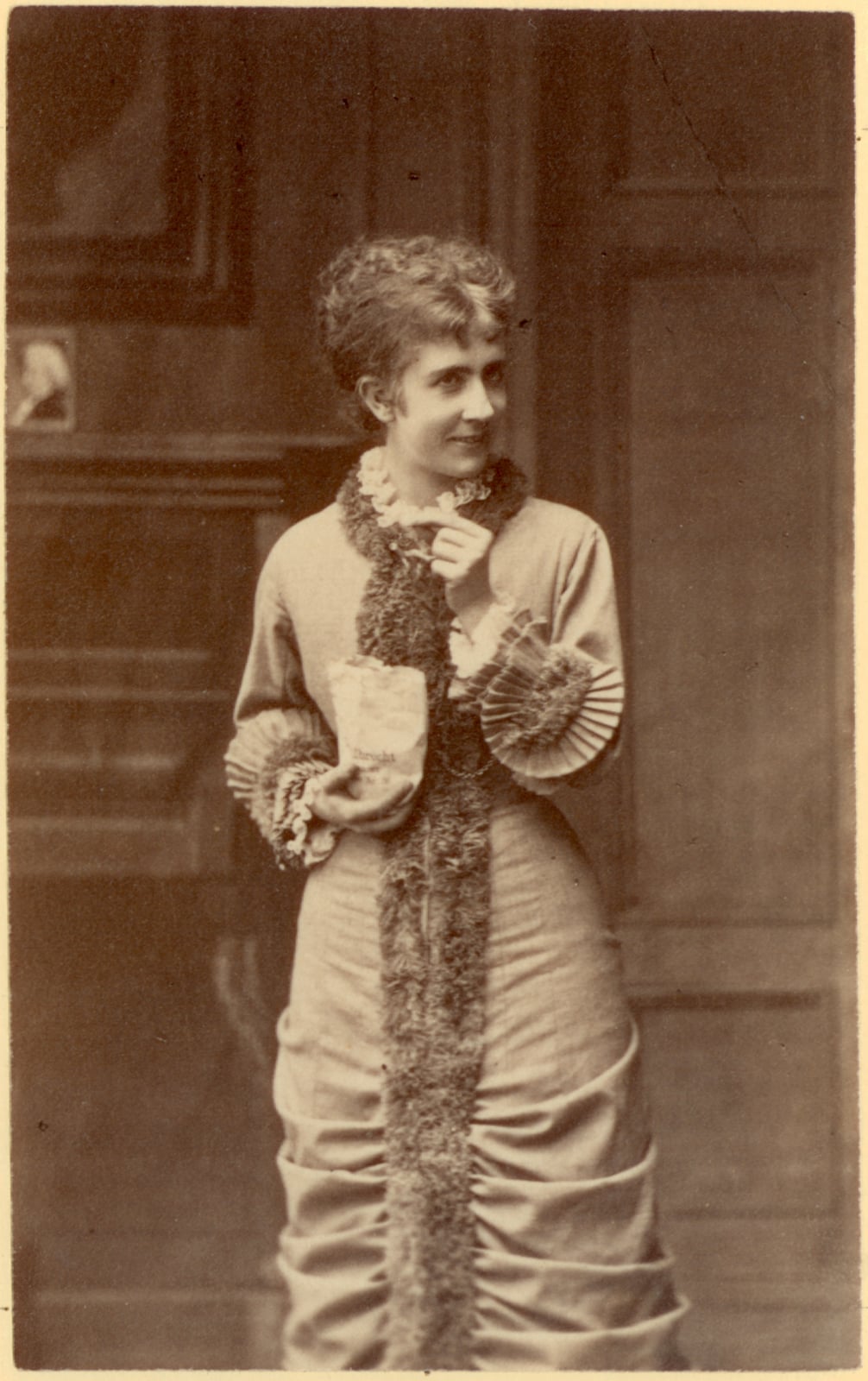
A Doll’s House Questions the Terms of Marriage
A domestic drama provoked debate about duty and individual independence.
On 4 December 1879, Henrik Ibsen published A Doll's House in Copenhagen, followed on 21 December by its stage premiere at the Royal Danish Theatre. Set in a Norwegian town, the three-act drama presents what appeared to be an ordinary middle-class household. Nora Helmer, playfully patronized by her husband Torvald as an irresponsible spendthrift, secretly carries a serious burden. Years earlier, when Torvald fell gravely ill, Norwegian legal conventions barred women from conducting independent financial operations such as obtaining loans without a man's endorsement. To finance a recuperative trip to Italy, Nora covertly borrowed money from a clerk named Nils Krogstad, forging her dying father's signature on the surety bond.
The household harmony fractures when Torvald, newly promoted to a managerial post at his bank, prepares to dismiss Krogstad. Desperate to protect his own position, Krogstad blackmails Nora, threatening to expose her forgery to her husband. Nora attempts to deflect Torvald's decisions, but he remains adamant about the dismissal, citing Krogstad's moral failings and unprofessional familiarity. When Krogstad deposits a letter revealing the debt into the home's locked mailbox, Nora attempts to delay the revelation by frantically rehearsing a dance for a costume party, while quietly contemplating ending her own life to spare Torvald from disgrace.

Keep reading in Yester
Coming soon to the App Store
Keep following the story
Sources
- Et Dukkehjem (Lex, Den Store Danske)
- Et dukkehjem (Store norske leksikon)
- Innledning til Et dukkehjem: Bakgrunn (Henrik Ibsens skrifter, University of Oslo)
- Innledning til Et dukkehjem: Oppførelser (Henrik Ibsens skrifter, University of Oslo)
- William Archer, Introduction to A Doll's House, Collected Works vol. VII (1906, Internet Archive)
- A Doll's House
Image: J. A. Schulz