Wollstonecraft Argues for Women’s Education
A political argument challenged the assumptions used to deny women intellectual independence.
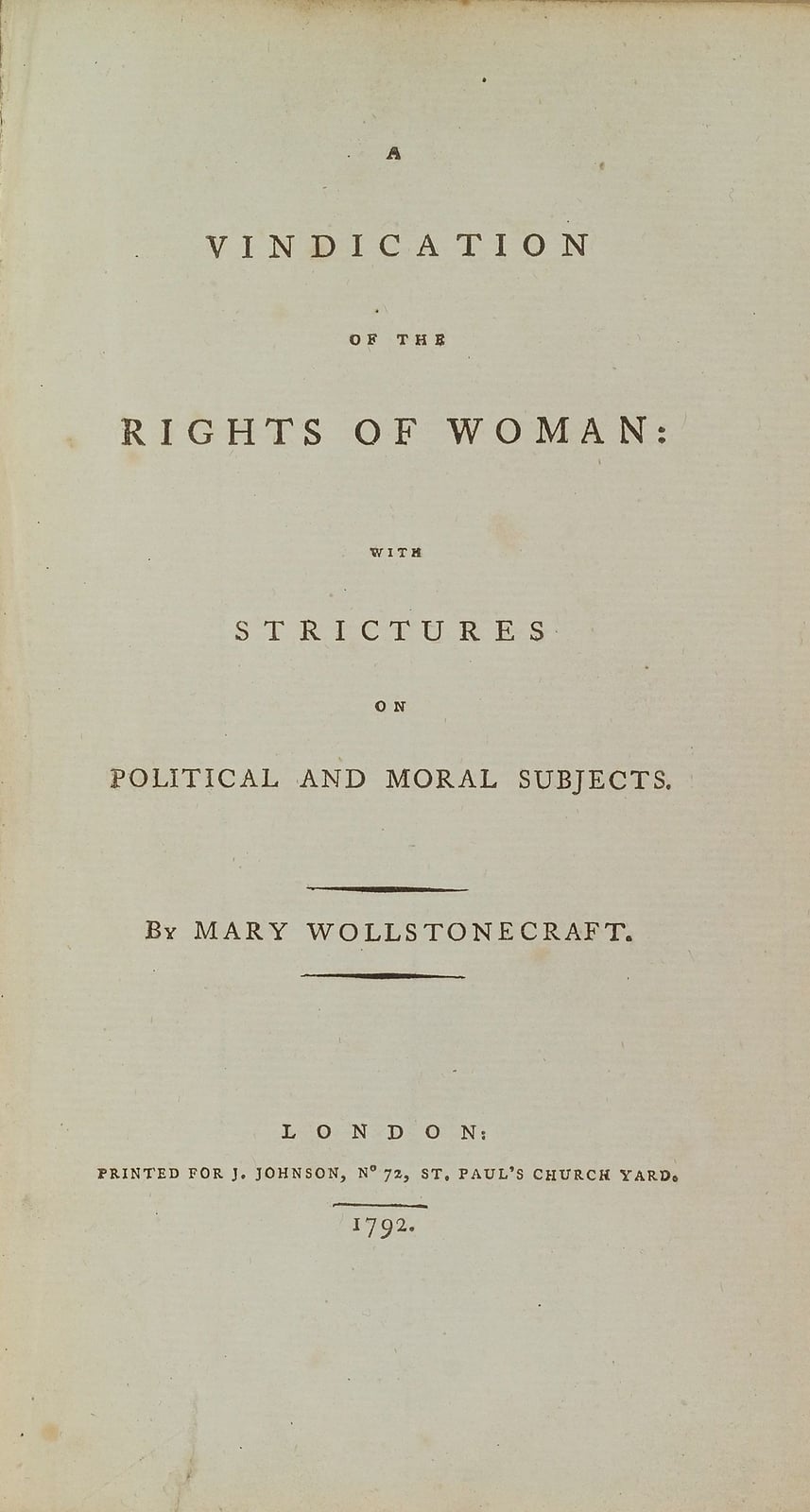
In 1792, Mary Wollstonecraft published A Vindication of the Rights of Woman: with Strictures on Political and Moral Subjects in London, directly intervening in political debates stirred by the French Revolution. Spurred into print by a 1791 report to the French National Assembly by Charles Maurice de Talleyrand-Perigord, which advised that female education should remain strictly confined to the home, Wollstonecraft wrote swiftly to confront the widespread assumption that women were unsuited for rigorous intellectual cultivation. Dedicating her work to Talleyrand, she challenged his conclusions and demanded that educational access be reconsidered as a matter of universal justice.
Wollstonecraft rejected the prevalent eighteenth-century belief, propagated by conduct book authors and theorists such as Jean-Jacques Rousseau, that women naturally lacked rational capacities and were destined merely to please men or follow uncontrolled sensibility. She maintained that women appeared frivolous or overly emotional only because contemporary customs actively discouraged serious instruction, prompting them to cultivate superficial beauty rather than moral and intellectual discipline. If women were to rear virtuous children and serve as capable companions rather than mere domestic subordinates, she asserted, their understanding needed systematic development through sound education.

Keep reading in Yester
Coming soon to the App Store
Keep following the story
Sources
- Mary Wollstonecraft (Stanford Encyclopedia of Philosophy)
- A Vindication of the Rights of Woman, full text (Project Gutenberg)
- Mary Wollstonecraft (National Park Service, Women's Rights National Historical Park)
- Beginnings in the United States (Purdue University Libraries, Women's Suffrage exhibit)
- Seeing Progress through History: Contemporary Reception of Wollstonecraft (Broadview Press)
- A Vindication of the Rights of Woman
Image: Mary Wollstonecraft