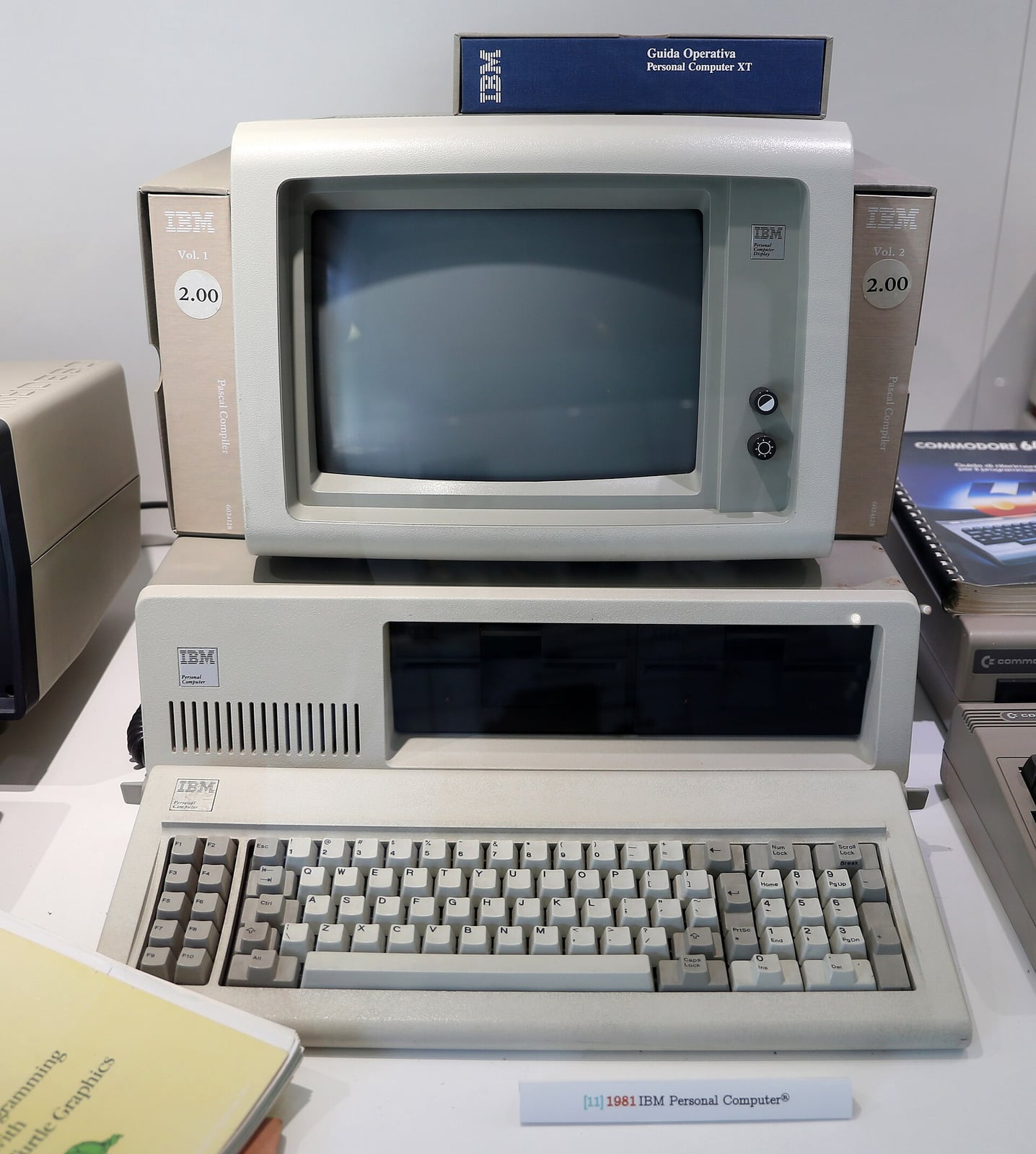
IBM Launches Its Personal Computer
A desktop machine built from off-the-shelf parts set a standard for personal computing.
By the end of the 1970s, the market for desktop microcomputers was expanding rapidly, driven by machines from companies such as Tandy, Commodore, and Apple. International Business Machines, known across the world for dominating large corporate computing, found its traditional development cycles unsuited to this swift transformation. Crafting a new product within IBM normally took four to five years, and the company designed and made nearly everything it sold. Confronted with this fast-growing market, corporate leadership reassessed its posture and considered whether a conventional mainframe firm could produce a competitive desktop machine.
The initiative that broke with IBM traditions began in Boca Raton, Florida, under the direction of William C. Lowe and Philip Don Estridge. Formed as an independent working group nicknamed Project Chess, the unit bypassed the usual vertical integration that characterized the firm. Instead of developing custom chips and closed systems from scratch, the team drafted a strategy built around standard commercial hardware and independent distribution channels. This allowed them to assemble a working prototype within months rather than years. Speed was critical, as computer retail stores demanded familiar, serviceable designs that could be repaired without shipping units back to IBM facilities.

Keep reading in Yester
Coming soon to the App Store
Keep following the story
Sources
Image: Sailko