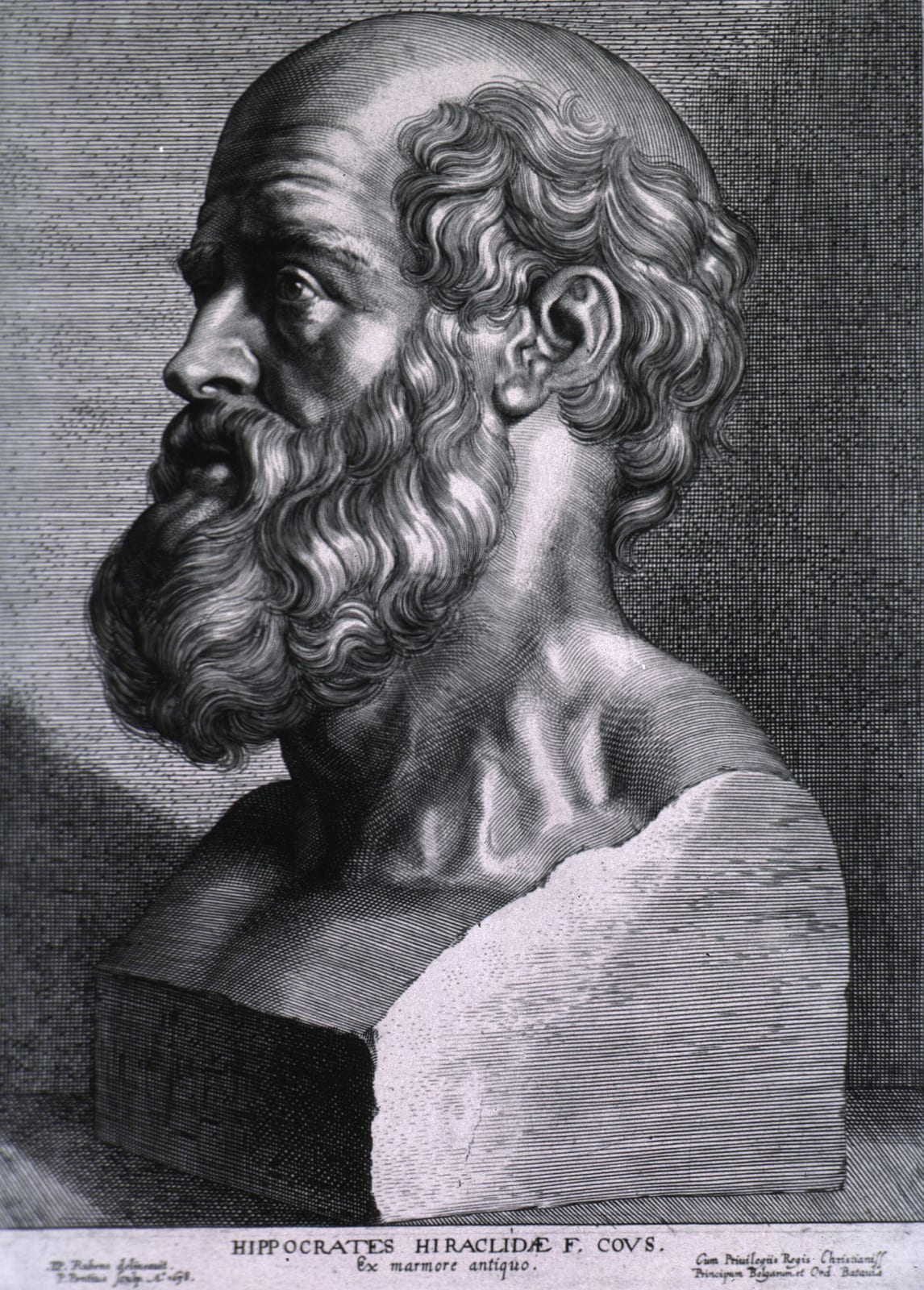
The Hippocratic Writings Make Medicine a Debate
A varied collection of medical texts exposes competing explanations of illness rather than one timeless doctrine.
During the Classical era, medical knowledge in ancient Greece coalesced into a diverse anthology of around sixty treatises traditionally attributed to the physician Hippocrates. Despite carrying his name since antiquity, not a single surviving text can be definitively proven as his personal composition. Instead, the writings represent a collection assembled from different authors, periods, and competing schools of thought, notably encompassing both the Coan and Cnidian traditions. Scholars assume that several authors contributed to the compendium, probably scattered over several centuries, and different treatises often give contradictory advice; some texts belong to the oldest stratum of the collection, while others are clearly much later.
Rather than expressing a uniform doctrine, the collection captures an ongoing intellectual contest over the fundamental causes of disease and the proper role of the physician. Some writers, such as the author of On Ancient Medicine, vigorously attacked contemporaries who reduced all pathologies to primary cosmological qualities like hot, cold, wet, or dry. These authors argued that medical insight must rest upon the empirical effects of food, drink, and bodily humors. Other texts leaned more toward rationalist constructs reminiscent of pre-Socratic natural philosophy, debating how internal organs and bodily fluids interacted when direct visual observation proved impossible.

Keep reading in Yester
Coming soon to the App Store
Keep following the story
Sources
Image: Paulus Pontius / After Peter Paul Rubens