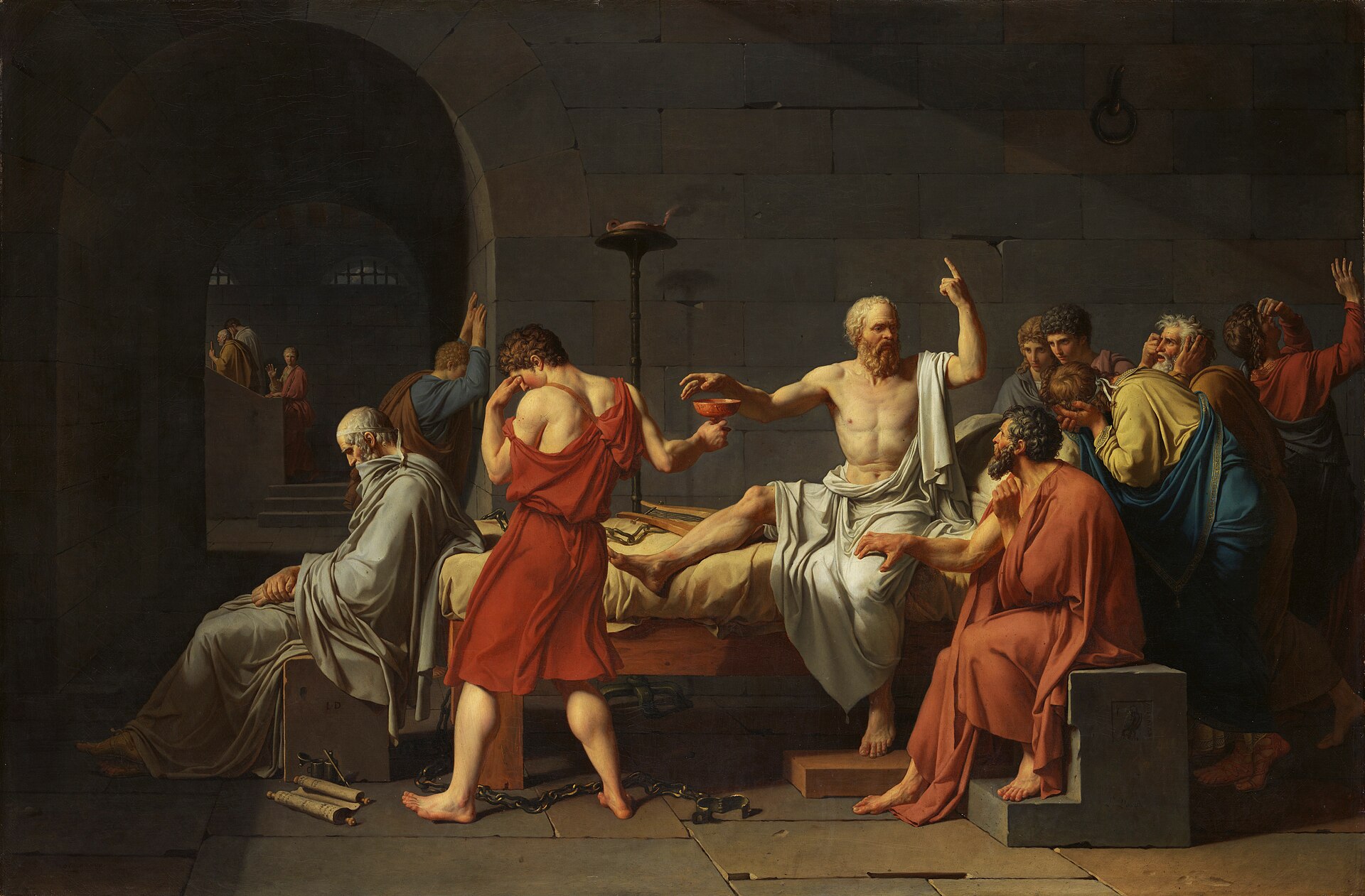
Athens Puts Socrates on Trial
A jury condemned the philosopher for impiety and corrupting the young.
In 399 BCE, the Athenian citizen Meletus brought formal charges of impiety and corrupting the youth against the philosopher Socrates before a state magistrate known as an archon. The indictment asserted that Socrates refused to acknowledge the traditional gods recognized by Athens and was introducing novel deities instead. After reviewing the initial evidence, the archon concluded that the case warranted a public trial, assembling a popular jury composed of hundreds of male citizens selected by lot. Though primary accounts do not record the exact panel size, it is generally reconstructed as about 500 jurors.
The formal prosecution arose from decades of growing tension within Athens. For many years, comic playwrights had targeted Socrates, most notably Aristophanes in the comedy The Clouds, which portrayed him as an intellectual who instructed younger men in deceitful rhetoric to overcome traditional parental authority. Competing thinkers and established citizens resented Socrates's persistent elenctic method of questioning, which systematically challenged their claims to knowledge and virtue. Furthermore, Socrates frequently spoke of a personal divine sign or daimonion that cautioned him against particular actions, contributing to civic suspicion surrounding his religious views.

Keep reading in Yester
Coming soon to the App Store
Keep following the story

Sources
Image: Jacques-Louis David