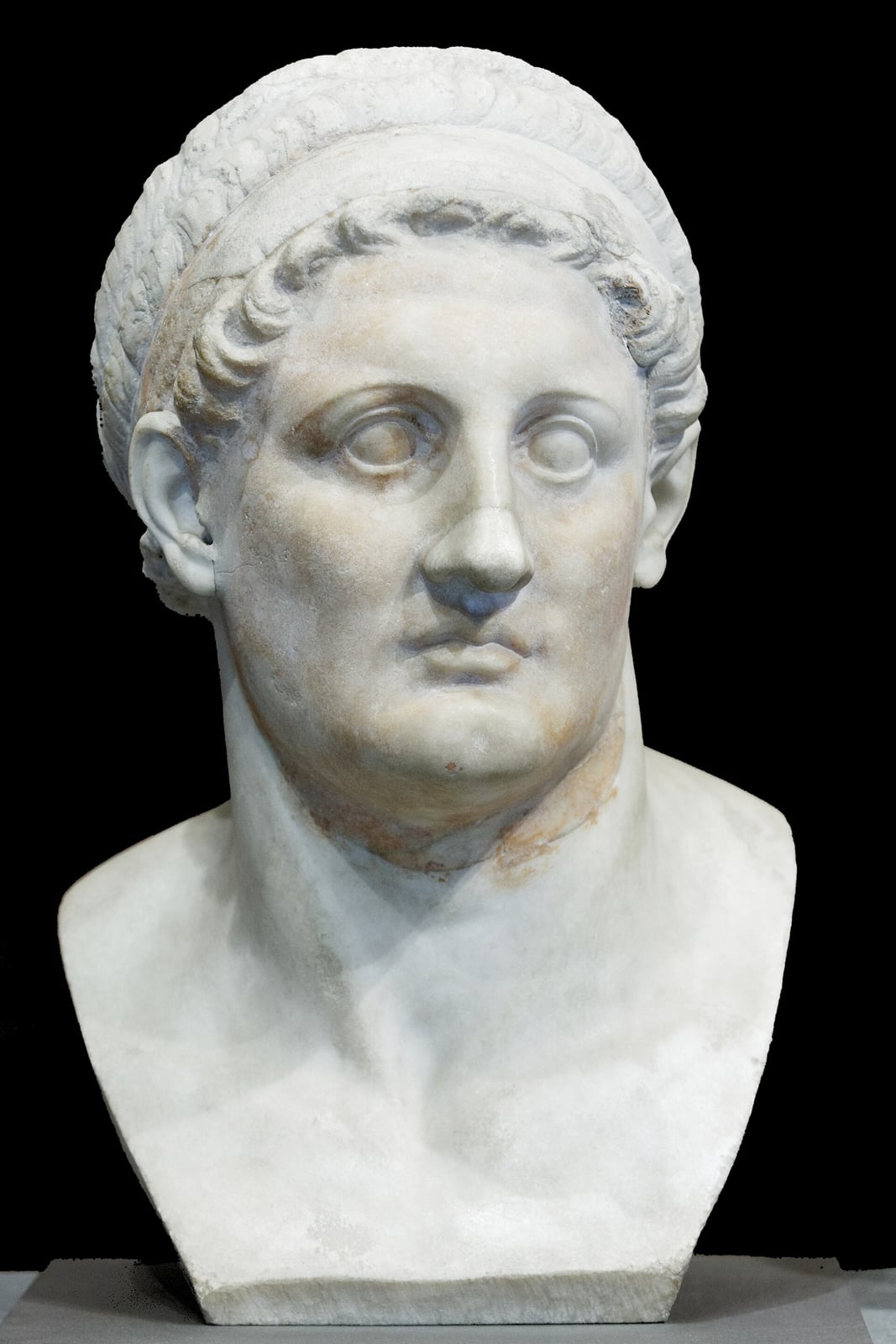
Herophilos Dissects the Human Body in Alexandria
A physician in Alexandria mapped nerves, the brain and the pulse.
During the third century BCE, the Greek physician Herophilos of Chalcedon established an anatomical tradition in Ptolemaic Alexandria that transformed ancient understanding of the interior human body. Dissection of human corpses was forbidden in almost all Mediterranean societies of the era, but the political and intellectual environment of Alexandria provided rare institutional freedom. Herophilos conducted systematic dissections of human cadavers, often presenting his findings in public demonstrations to explain internal structures directly to observers. Working alongside his contemporary Erasistratus, he helped turn the city into a prominent center of medical teaching.
Prior medical traditions had offered conflicting models of bodily control, with prominent thinkers identifying the heart as the center of consciousness. Through direct inspection of the cranial cavity, Herophilos argued instead that the brain housed human intellect. He distinguished between the cerebrum and the cerebellum, assigning specific functional importance to each portion, and charted the cranial nerves. His dissections enabled him to separate nerves from blood vessels and to establish the functional division between sensory nerves and motor nerves, which he proposed originated in the brain and operated through the transmission of pneuma. Within the brain he also described the calamus scriptorius, a groove in the floor of the fourth ventricle, the cavity he regarded as the principal seat of the soul.

Keep reading in Yester
Coming soon to the App Store
Keep following the story
Sources
Image: Marie-Lan Nguyen