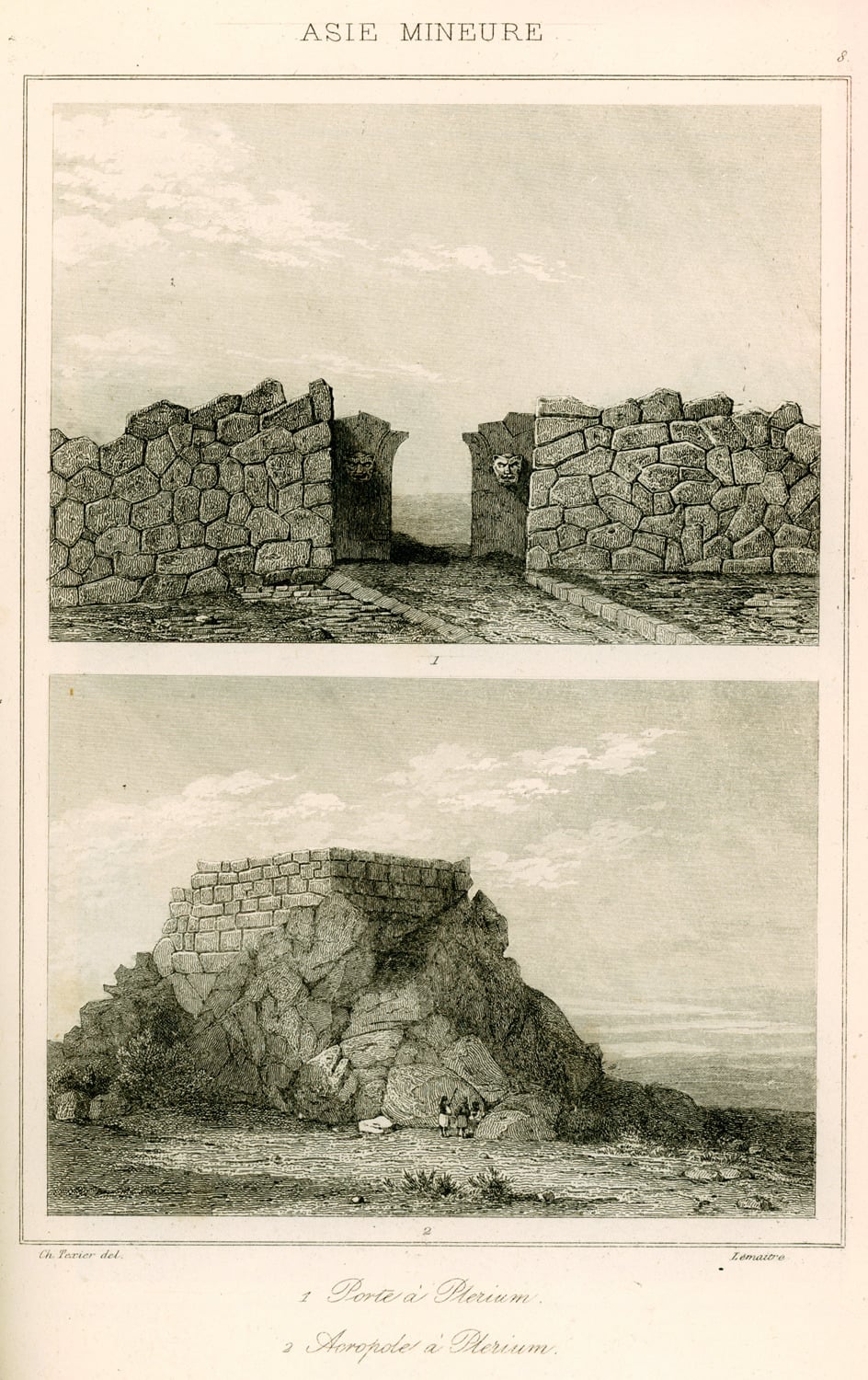
Hattusa Builds a Capital for the Hittite World
Fortifications, temples and clay archives reveal the workings of a Bronze Age imperial capital.
Near modern Boğazkale within the curve of the Kızılırmak River, the ruins of Hattusa document the administrative core of the Late Bronze Age Hittite Empire. Traces of human activity at the location extend back to the Chalcolithic era in the sixth millennium BC. Late in the third millennium BC, Hattian inhabitants established a community named Hattush. By the nineteenth and eighteenth centuries BC, merchants traveling from Assyria built a trading station in a distinct quarter of the settlement. Around 1700 BC, the settlement was ruined and burned by King Anitta of Kussara, who inscribed a curse warning subsequent monarchs against rebuilding the town. Nevertheless, resettlement followed soon after, possibly carried out by Anitta's own son.
Around 1650 BC, King Labarna moved his royal seat to the site, adopting the name Hattusili to proclaim himself the man from Hattusa. The capital faced frequent instability and strategic movements in the centuries that followed. Hostile Kaskian incursions from the north twice struck the city, contributing to periods when royal operations were conducted at other centers, including Sapinuwa. Under Muwatalli II, governance shifted southward to Tarhuntassa, with the king appointing his brother, the subsequent Hattusili III, as governor over Hattusa. The seat returned firmly to Hattusa under Mursili III in the thirteenth century BC, retaining its preeminent position until the collapse of the kingdom in the twelfth century BC.

Keep reading in Yester
Coming soon to the App Store
Keep following the story
Sources
- Hattusha: the Hittite Capital (UNESCO WHC)
- Corum Bogazkoy Archaeological Site (Turkish Museums, Ministry of Culture and Tourism)
- Severe multi-year drought coincident with Hittite collapse around 1198-1196 BC (Nature)
- Paving the Digital Way to an Ancient People from Anatolia (University of Würzburg)
- Hattusilis I (EBSCO Research Starters)
- Hattusa
Image: Félix Marie Charles Texier