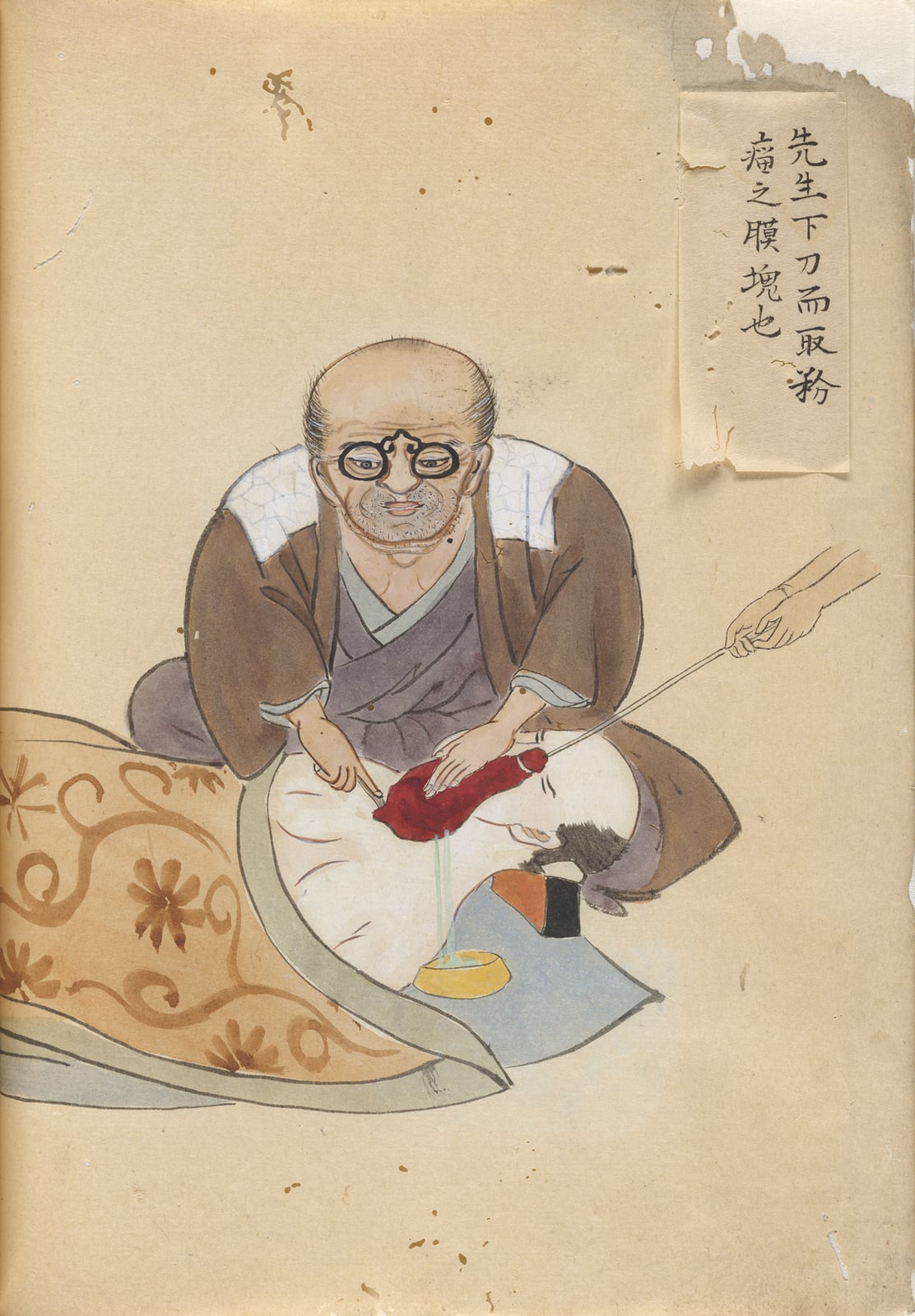
Hanaoka Seishū Performs Surgery Under General Anesthesia
An herbal anesthetic made a breast cancer operation possible decades before ether.
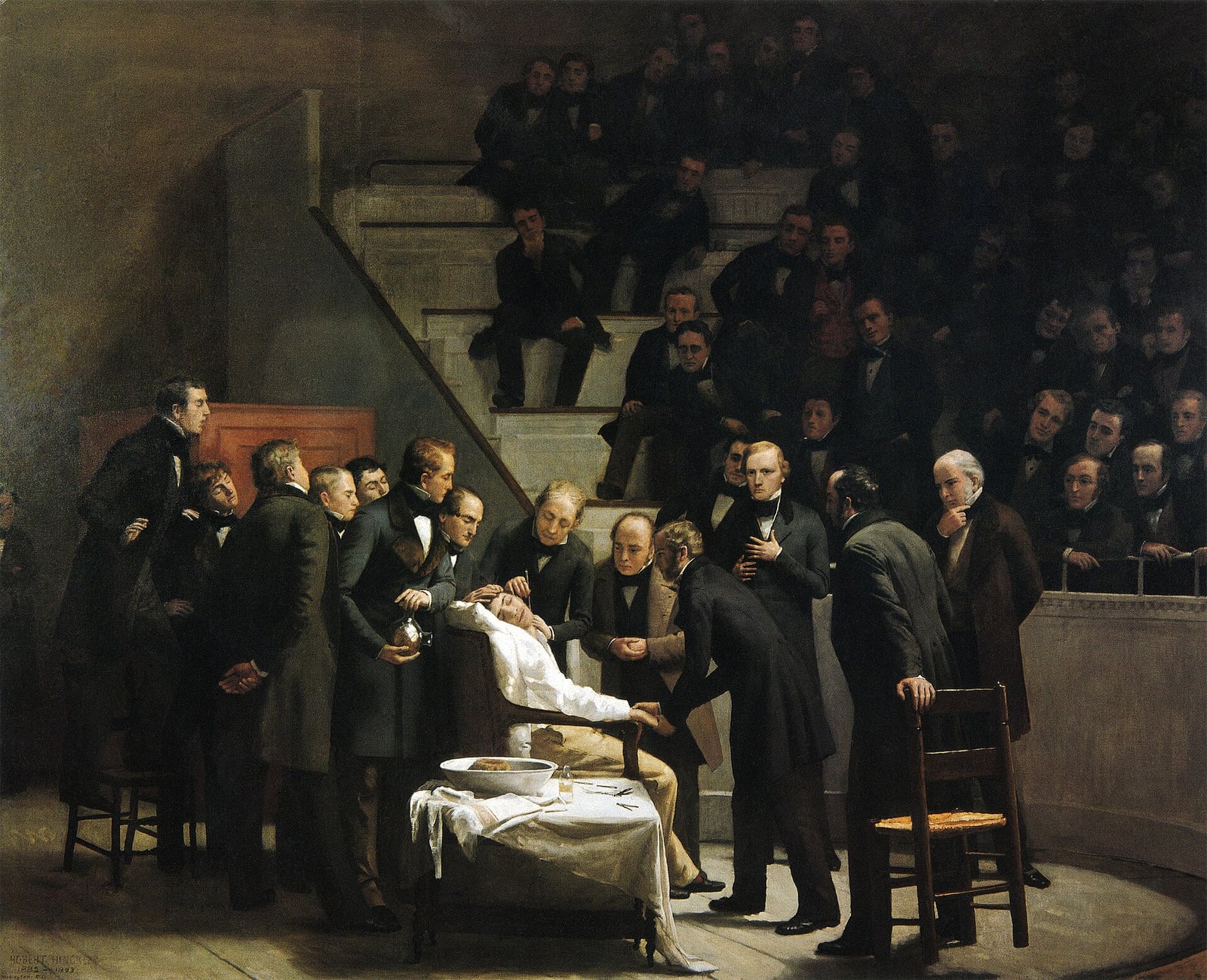
On October 13, 1804, in Japan's Kii Province, the Edo-period surgeon Hanaoka Seishu conducted a partial mastectomy on a sixty-year-old woman. To spare her the extreme pain of the procedure, he administered an oral herbal compound called tsusensan, which induced prolonged unconsciousness and muscle relaxation. The successful excision of the tumor is considered by some historians to be the earliest reliably documented surgical operation carried out under general anesthesia, predating the clinical use of ether in the West by nearly four decades.
Hanaoka came from a family of physicians in what is now Wakayama Prefecture and studied medicine in Kyoto before establishing his own clinical practice. His medical approach merged traditional Japanese and Chinese practices with surgical concepts acquired through Rangaku, or Dutch learning. Under the Tokugawa shogunate's strict policy of national isolation, known as Sakoku, foreign books were severely restricted, leaving Japanese doctors with limited exposure to contemporary Western European developments. Despite these constraints, Hanaoka absorbed Dutch anatomical and operative methods while exploring classical Asian pharmacopeia.

Keep reading in Yester
Coming soon to the App Store
Keep following the story
Sources
- Medical history: Seishu Hanaoka and his success in breast cancer surgery under general anesthesia two hundred years ago (Breast Cancer, Springer)
- History of anesthesia (Japanese Society of Anesthesiologists)
- About JSA (Japanese Society of Anesthesiologists)
- Hanaoka Seishu, inventor of an early general anesthetic (Hektoen International)
- Hanaoka Seishū
Image: Hanaoka Seishu