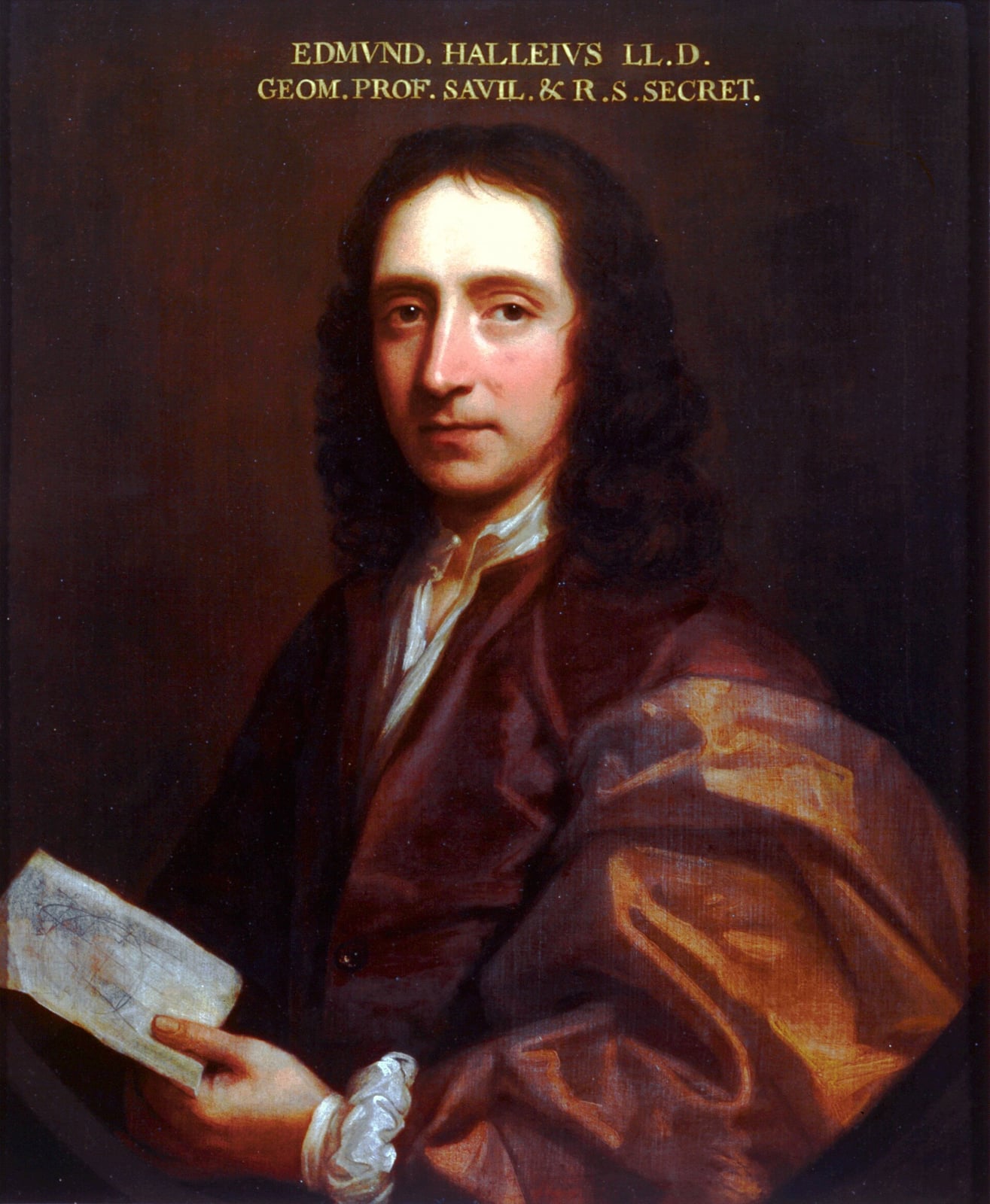
Halley Predicts a Comet Will Return
Comparing earlier observations transformed a celestial visitor into a testable prediction.
In 1705, Edmond Halley published his Synopsis of the Astronomy of Comets, applying historical records and mathematical calculations to chart the paths of past celestial bodies. Rather than viewing comets as erratic, isolated events, Halley examined sightings recorded across preceding centuries. By comparing the orbital characteristics of comets seen in 1456, 1531, 1607, and 1682, he identified an unmistakable pattern, concluding that these appearances represented a single object returning along an elliptical path approximately every three quarters of a century.
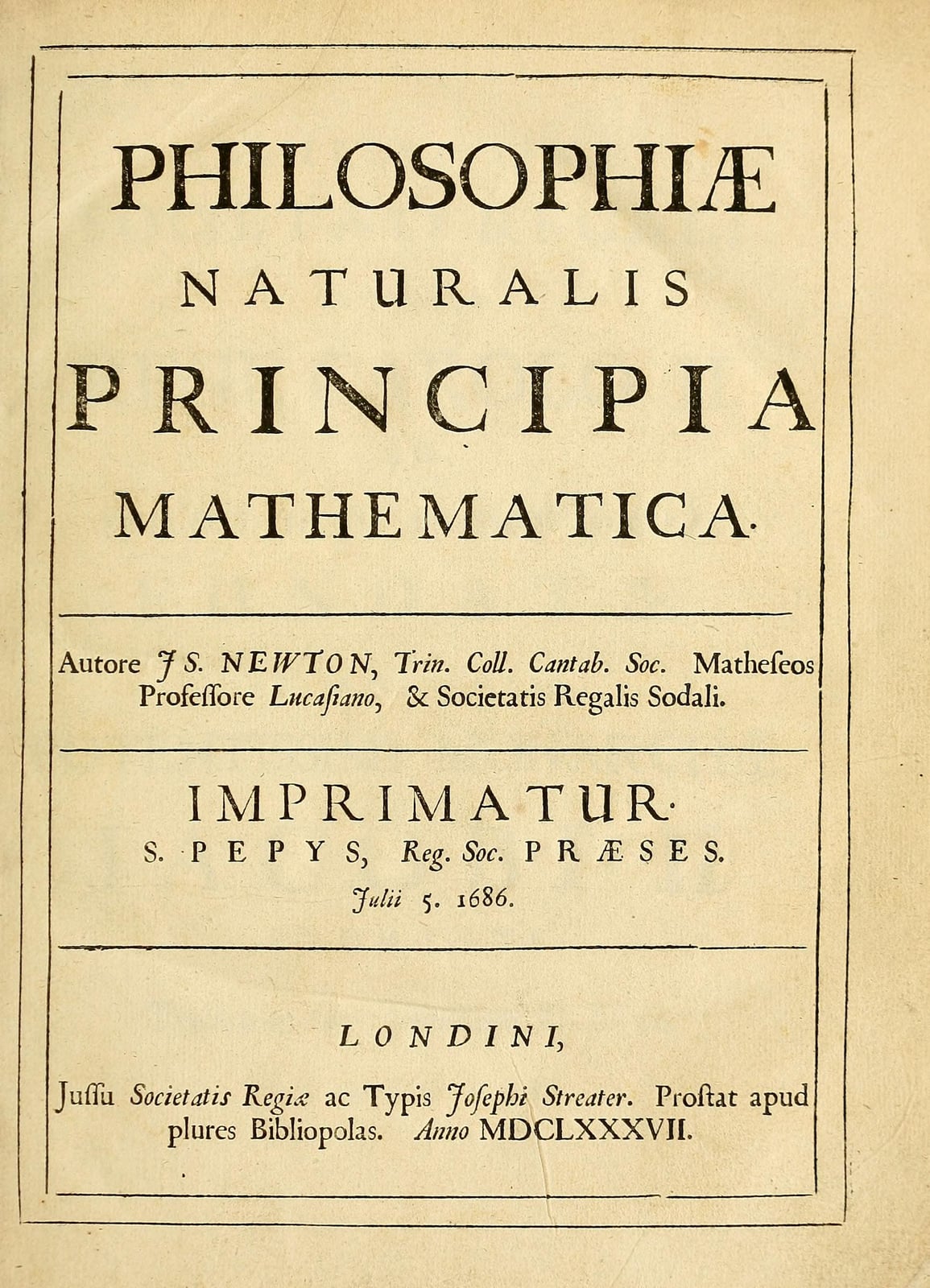
Halley's proposal rested firmly on earlier astronomical observations and theoretical developments. In September 1682, he had tracked the comet himself. Yet the mathematical framework that enabled his deduction stemmed from his collaboration with Isaac Newton. When Halley visited Cambridge in 1684 to discuss Kepler's laws of planetary motion, he learned that Newton had already demonstrated how gravity governed orbital trajectories. Halley urged Newton to expand his research, ultimately funding the publication of the Philosophiæ Naturalis Principia Mathematica in 1687 at his own expense.

Keep reading in Yester
Coming soon to the App Store
Keep following the story
Sources
Image: Thomas Murray