Fritz Haber Makes Ammonia from the Air
A process to fix nitrogen fed billions and armed nations.
During the nineteenth century, agricultural expansion and industrial manufacturing created an unprecedented requirement for fixed nitrogen. Farmers and chemical producers relied heavily on natural deposits of Chilean sodium nitrate and island guano. As the twentieth century approached, scientists and industrialists recognized that these finite supplies could not sustain future demands. Although molecular nitrogen formed roughly seventy-eight percent of the Earth's atmosphere, its triple chemical bond rendered it largely unreactive under standard conditions, baffling researchers who sought to bind it into usable compounds.
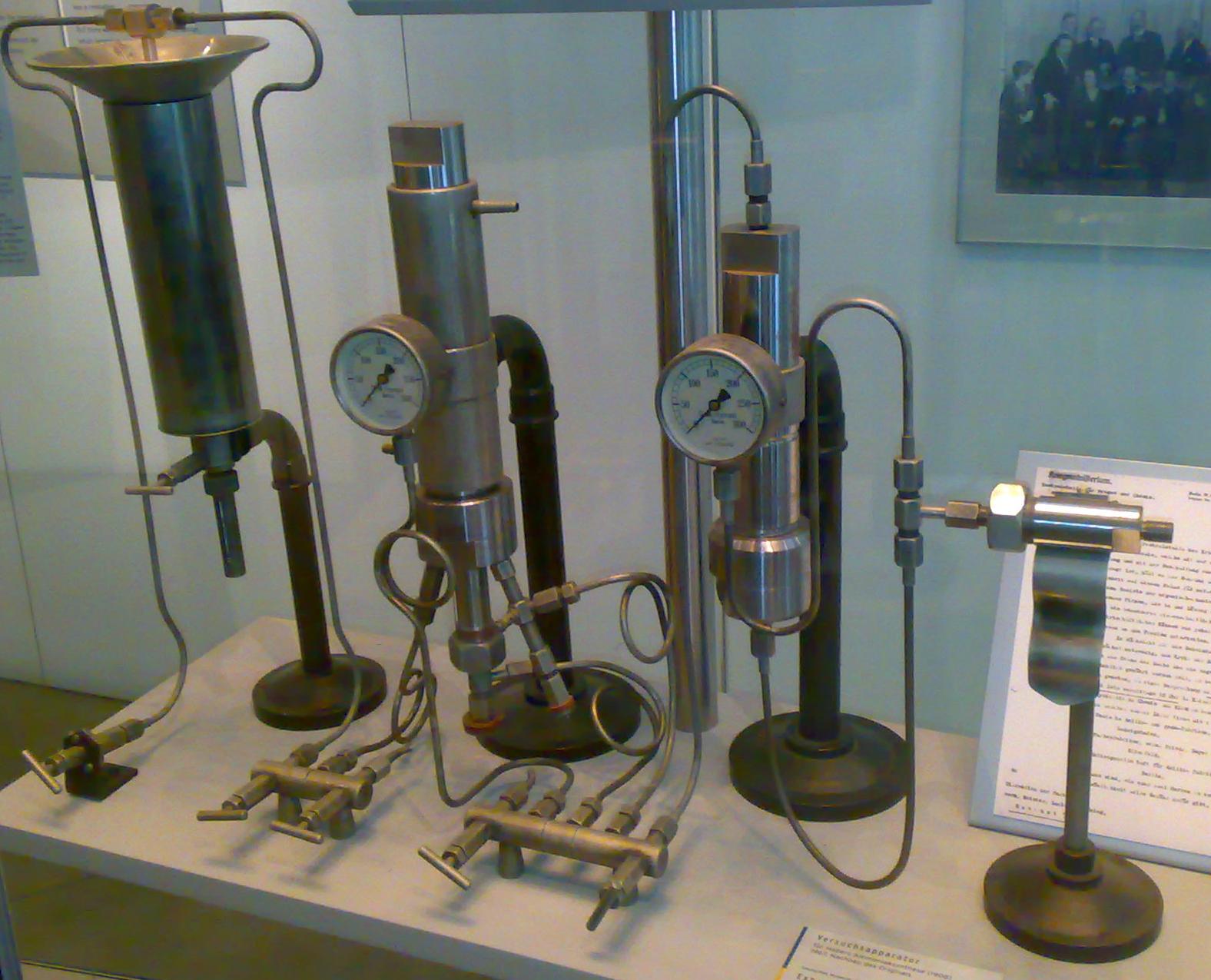
Working with his assistant Robert Le Rossignol, the German chemist Fritz Haber developed laboratory apparatus capable of sustaining high pressures and elevated temperatures. In the summer of 1909, Haber demonstrated a functional system that combined gaseous hydrogen and atmospheric nitrogen over a metallic catalyst, producing liquid ammonia. The reaction relied on extreme operating pressures to overcome unfavorable thermodynamic equilibrium and kinetic barriers. Initial experiments utilized scarce osmium and uranium before researchers sought more practical materials.

Keep reading in Yester
Coming soon to the App Store
Keep following the story
Sources
- Fritz Haber, Biographical (Nobel Prize Outreach)
- The Nobel Prize in Chemistry 1918 (Nobel Prize Outreach)
- Carl Bosch, Biographical (Nobel Prize Outreach)
- The Nobel Prize in Chemistry 1931 (Nobel Prize Outreach)
- Fritz Haber (Science History Institute)
- 1913: First Ammonia Synthesis Plant (BASF)
- Sample of Haber's synthetic ammonia, 2 July 1909 (Science Museum Group)
- Haber process
Image: JGvBerkel