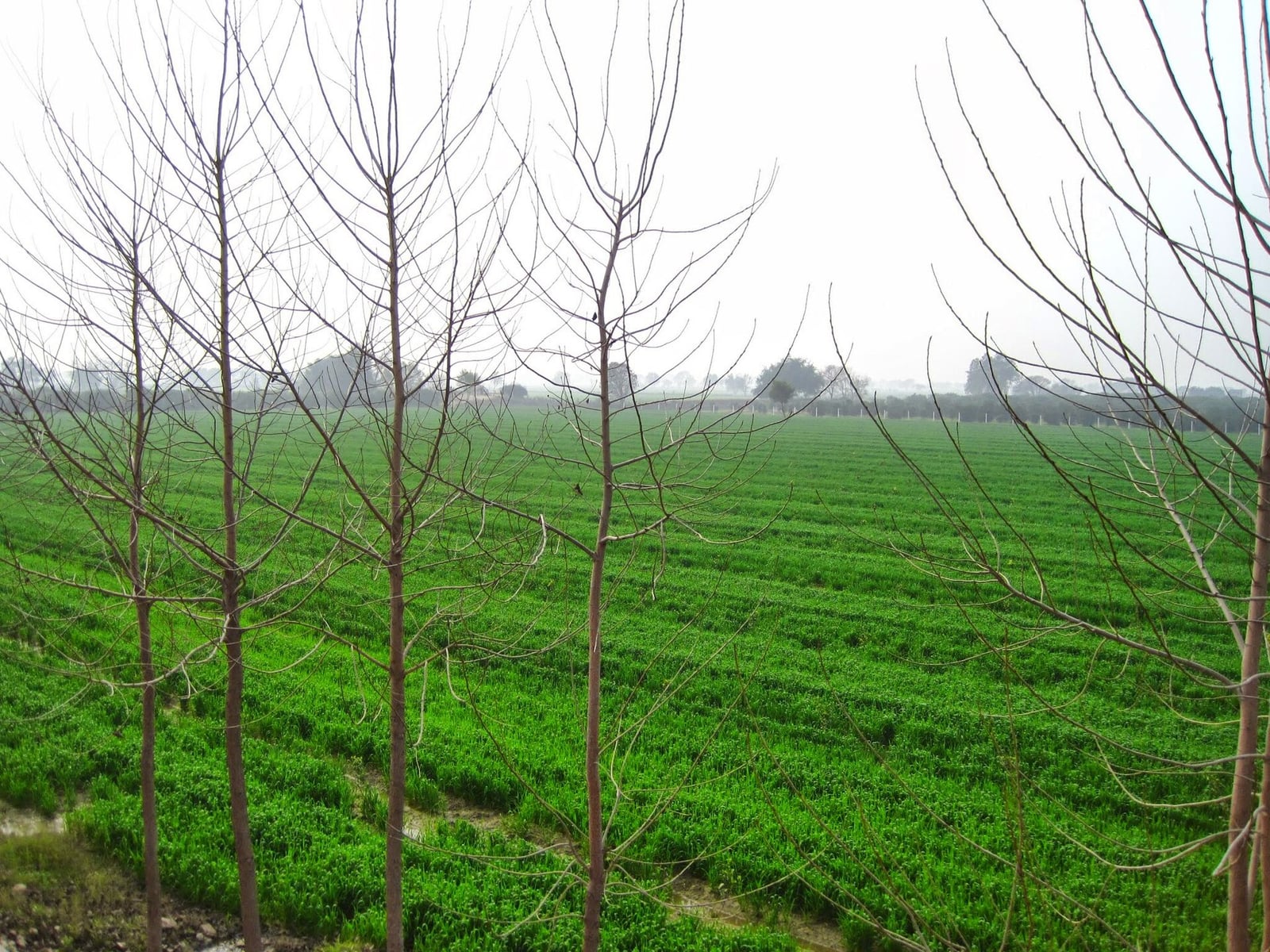
New Wheat Varieties Start India’s Green Revolution
High-yield seeds, fertilizer and irrigation raised harvests.
During the mid-1960s, consecutive droughts struck India in 1964–1965 and 1965–1966, triggering acute food shortages and famines for a growing population. Traditional cultivation practices had struggled to meet national needs, leaving the country facing graver grain deficits than many other developing nations. These crises prompted the Indian government, first under Prime Minister Lal Bahadur Shastri and then under his successor Indira Gandhi, to collaborate with international donor agencies to shift domestic agriculture toward an intensive, industrial model focused on modern technological inputs.
The initiative formed part of a broader international effort initiated by agricultural scientist Norman Borlaug to expand crop productivity in developing nations. Within India, the campaign was primarily directed by geneticist M. S. Swaminathan alongside Food and Agriculture Minister Chidambaram Subramaniam, while researcher Dilbagh Singh Athwal contributed to wheat development. Institutions such as the Indian Agricultural Research Institute focused on selecting and breeding crop strains for higher yields, responsiveness to synthetic fertilizers, and disease resistance, particularly targeting rust-resistant varieties of wheat.

Keep reading in Yester
Coming soon to the App Store
Keep following the story


Sources
- Architect of India's green revolution M. S. Swaminathan passes away (Nature India)
- Green Revolution was coined 57 years ago this month; it is time to reassess its legacy (Down To Earth)
- Revisiting the Impacts of the Green Revolution in India (Virginia Tech Institute for Policy and Governance)
- Stalwart Statesman: Lal Bahadur Shastri (Down To Earth, Gobar Times)
- The Green Revolution in India (Google Arts & Culture)
- Green Revolution in India
Image: vikas bishnoi