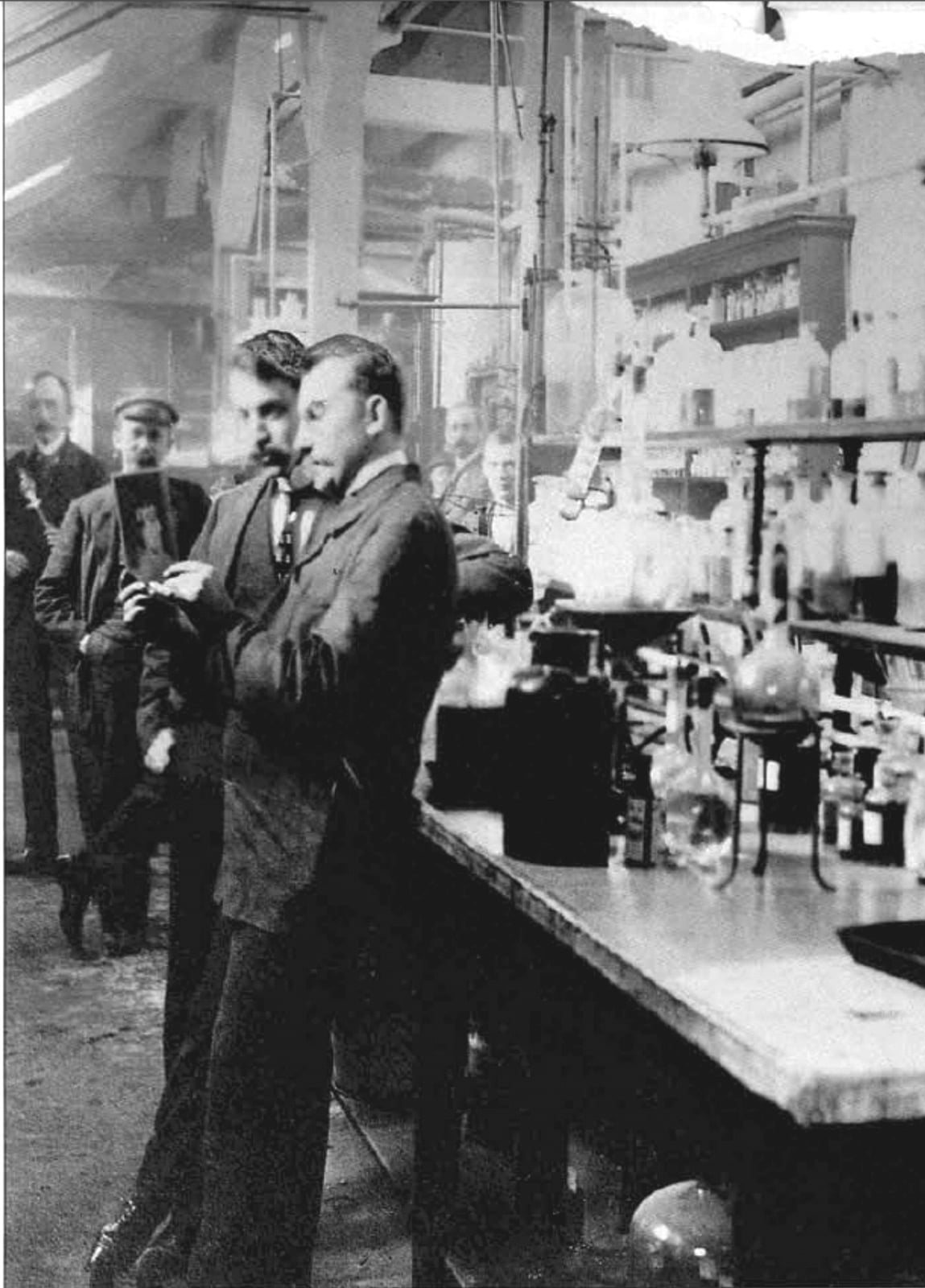
Bayer Launches Aspirin
A chemical company turned an old remedy into a mass-produced drug.
Medicinal remedies derived from willow bark and other plants containing salicylates have an extensive history stretching back millennia. Ancient Sumerian clay tablets and the Egyptian Ebers Papyrus documented their therapeutic applications, and Hippocrates recorded the use of salicylic preparations to lower fevers around 400 BC. Centuries later, in 1763, the English clergyman Edward Stone reported to the Royal Society that powdered willow bark effectively reduced fevers in local patients. By the nineteenth century, salicylic compounds had also been found in meadowsweet, a plant of the genus Spiraea, and salicylic acid itself was known in German as Spirsäure, prompting widespread European medical experimentation with related chemical compounds.
Despite their therapeutic value in reducing pain and inflammation, naturally derived salicylates frequently caused severe gastric irritation. Chemists consequently sought synthetic modifications to produce a more tolerable medicine. In 1853, the French chemist Charles Frédéric Gerhardt successfully synthesized acetylsalicylic acid for the first time by treating sodium salicylate with acetyl chloride. However, his work did not yield an immediately practical pharmaceutical product, and the compound remained largely an academic curiosity for decades while researchers refined its chemical structure and evaluated synthetic pathways.

Keep reading in Yester
Coming soon to the App Store
Keep following the story
Sources
- Aspirin: Turn-of-the-Century Miracle Drug (Science History Institute)
- A history of aspirin (The Pharmaceutical Journal, Royal Pharmaceutical Society)
- Felix Hoffmann (Bayer)
- Aspirin (World of Health, via Encyclopedia.com)
- The Nobel Prize in Physiology or Medicine 1982 (NobelPrize.org)
- Historical perspective of aspirin: A journey from discovery to clinical practice (J Cardiovasc Thorac Res, via PMC)
- Aspirin
Image: Bayer