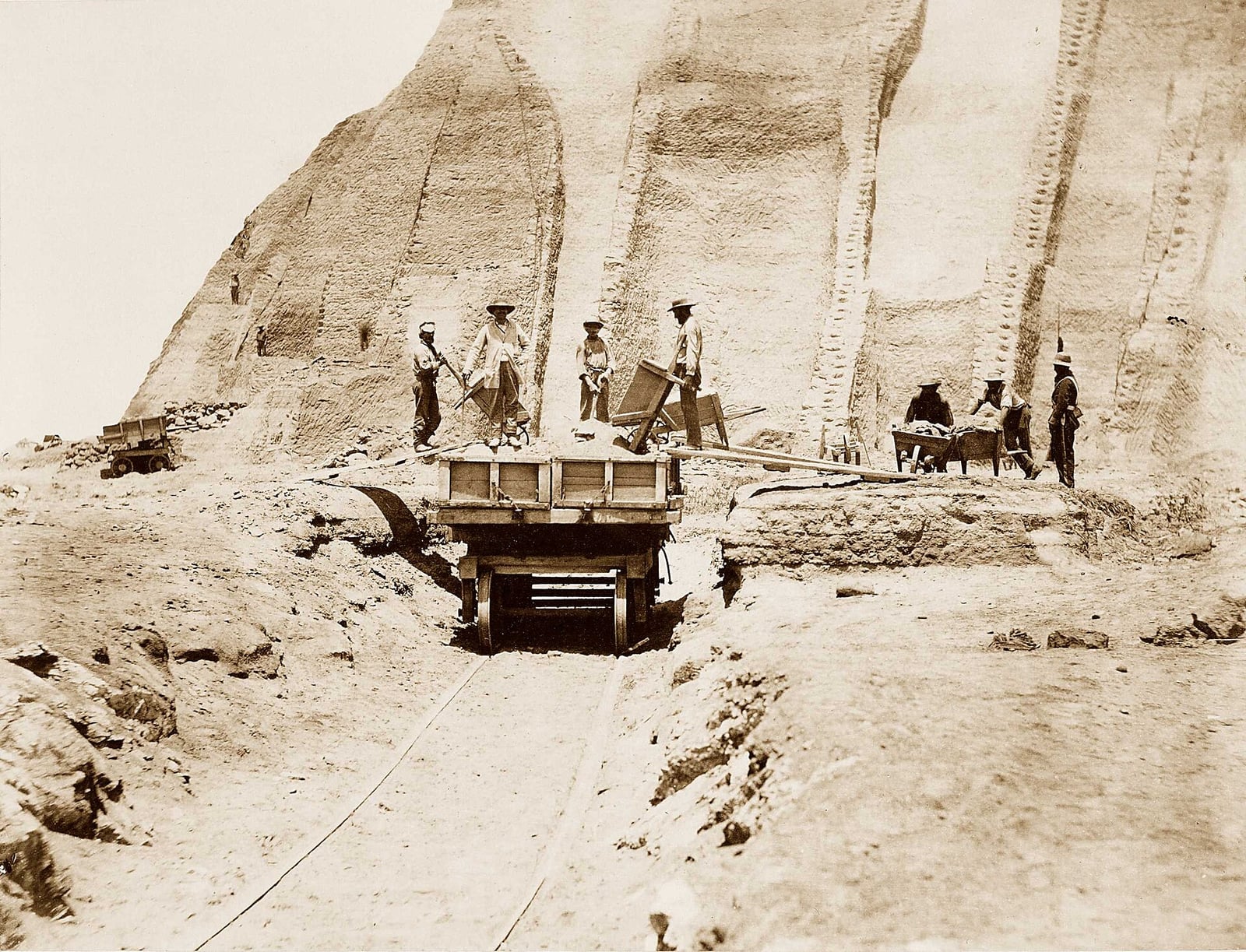
Peru Grows Rich on Seabird Droppings
Guano from offshore islands became a prized fertilizer and Peru’s leading export.
Archaeological evidence indicates that Andean communities harvested seabird guano from dry offshore islands to enrich coastal soils for thousands of years. Rulers of the Inca Empire later maintained strict dominion over these natural deposits, restricting entry to nesting territories and decreeing the death penalty for anyone who disturbed the birds. Most of this material accumulated from the droppings of the guanay cormorant, along with colonies of the Peruvian pelican and Peruvian booby. Because the hyperarid coastline experienced almost no rain, potent concentrations of nitrogen, potassium, and phosphate remained intact within the deep beds instead of leaching away as occurred across damper European shores.
Although colonial Spanish records mentioned guano as early as 1548, widespread commercial interest across the Atlantic emerged only in the nineteenth century. The Prussian naturalist Alexander von Humboldt examined the material at Callao in 1802 and published accounts detailing its fertilizing qualities. Scientific appreciation deepened after the chemist Humphry Davy published Elements of Agricultural Chemistry in 1813, praising Peruvian guano as a transformative input capable of making sterile soils productive. As Pacific whaling vessels began carrying consumer freight to South America, merchant ships faced the problem of returning north underloaded, creating commercial incentives to seek bulky, high-value export cargo.

Keep reading in Yester
Coming soon to the App Store
Keep following the story
Sources
Image: Henry de Witt Moulton