Potosí’s Silver Enters a Global Economy
Mining wealth depended on demanding labor systems with lasting human costs.
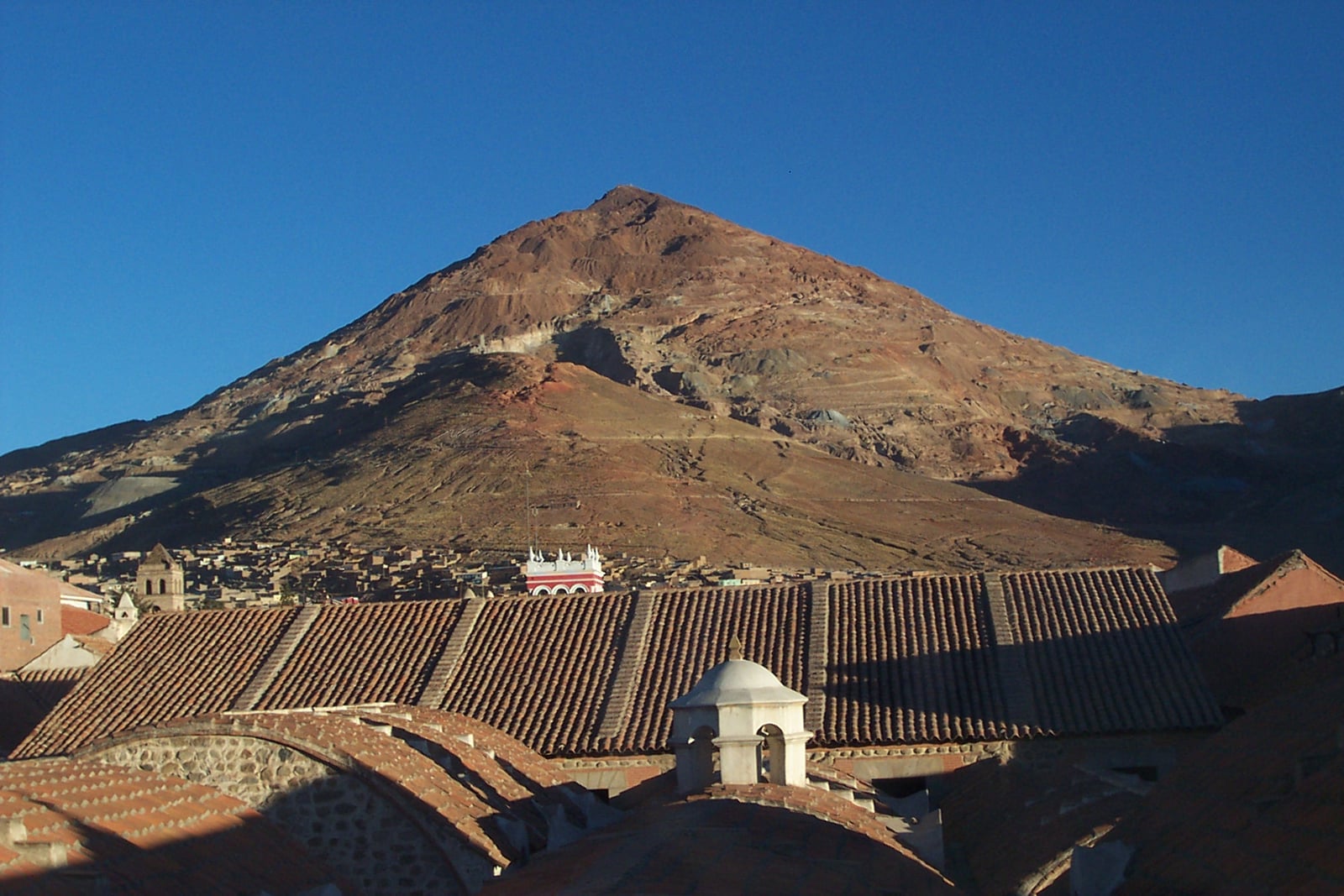
In 1545, Spanish colonizers founded the mining settlement of Potosí at the base of the Cerro Rico, a towering Andean mountain in what is now Bolivia. Tradition attributes the identification of its vast silver deposits to an indigenous prospector named Diego Huallpa. Sitting at an elevation of around 4,000 meters, the location presented harsh conditions, yet its extraordinary mineral wealth quickly transformed it into one of the largest cities in the world. The Cerro Rico held the richest silver lodes in the New World, and Potosí became Spain's principal colonial source of silver.
Initially, indigenous miners processed rich oxidized surface ores using small clay furnaces known as guayras, a smelting technology inherited from the Incas. When these direct-smelting ores were largely exhausted around 1565, silver output fell sharply. Production was revived through the patio process, a method relying on mercury amalgamation to draw silver from lower-grade, unoxidized ores deeper inside the mountain. In 1609, Álvaro Alonso Barba devised a hot amalgamation method using copper cauldrons, later known as the pan process.

Keep reading in Yester
Coming soon to the App Store
Keep following the story
Sources
- City of Potosi (UNESCO World Heritage Centre)
- Legislaciones coloniales que enmarcaron los despojos en los Andes centrales: la mita colonial (Dispossessions in the Americas, University of Pennsylvania)
- Double labor structure at Potosi, Robert McCaa, colonial Latin America lecture slides (University of Minnesota)
- Mita (Encyclopedia of Latin American History and Culture, Encyclopedia.com)
- Inequality's roots: Melissa Dell on Peru's mining mita (MIT News, 2010)
- The Alchemy of Modernity. Alonso Barba's Copper Cauldrons and the Independence of Bolivian Metallurgy (1790-1890), Tristan Platt (Journal of Latin American Studies, Cambridge Core)
- Basques and Vicunas at the Mouth of Hell: A Documentary History of Potosi in the Early 1620s, Johnson and Lane (University of Nevada Press, Project MUSE)
- Potosí
Image: Mhwater at Dutch Wikipedia