Chipko Makes Forest Protection a Community Struggle
Local livelihoods and women’s organizing helped turn trees into a focus of environmental politics.
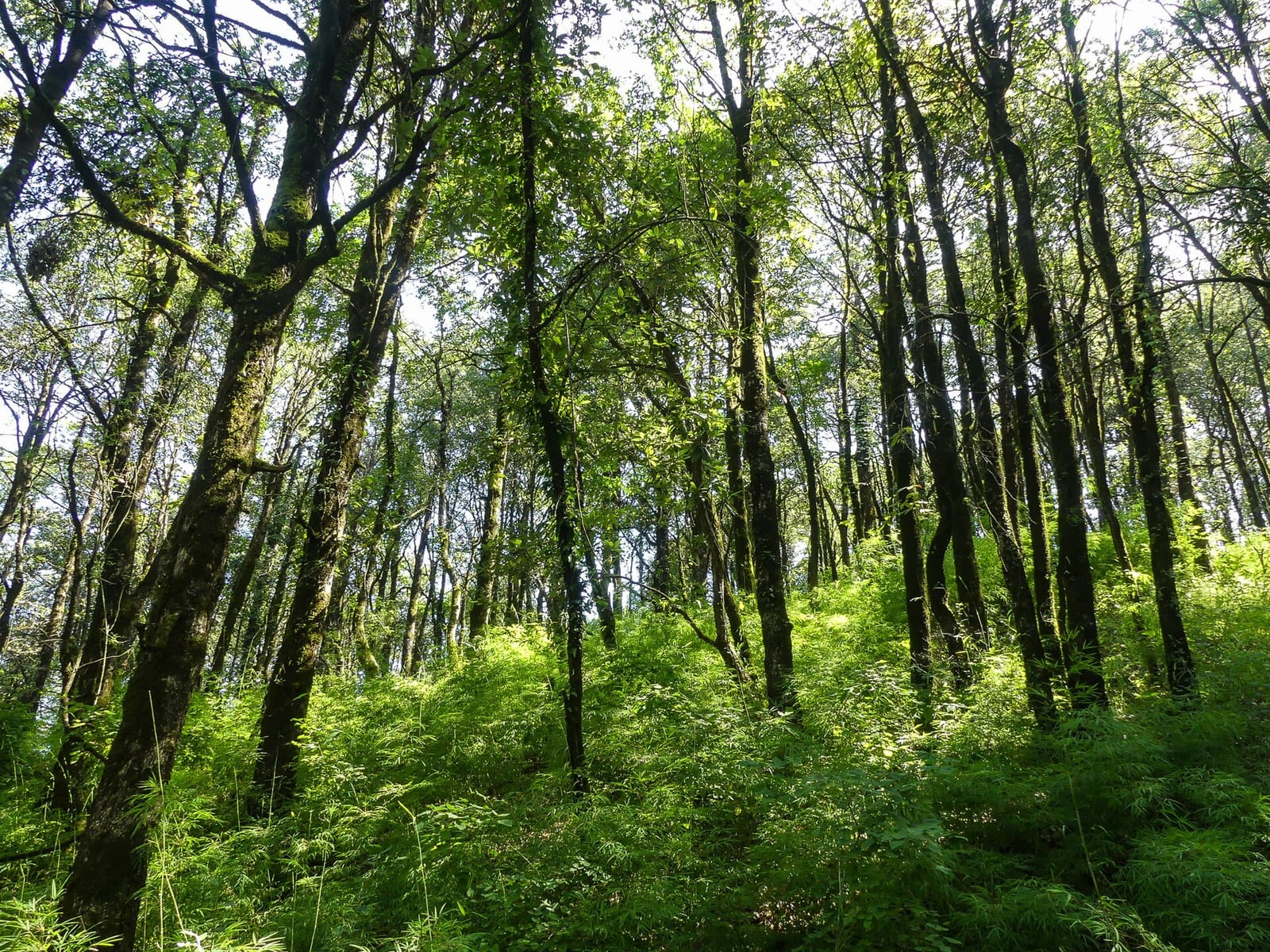
In the early 1970s, rural communities in the Garhwal Himalayas faced mounting economic hardship alongside worsening environmental instability. Regional forestry policies favored external commercial timber contractors who extracted wood for distant industries while bringing in outside laborers. This arrangement left local residents with minimal employment and restricted their traditional access to essential forest supplies such as firewood, animal fodder, and irrigation resources. Heavy logging and civil engineering works had already destabilized the fragile slopes, culminating in the severe Alaknanda River floods of July 1970, when massive landslides destroyed bridges, roads, and villages across hundreds of kilometers.
Resistance crystallized through the Dasholi Gram Swarajya Sangh, a cooperative established in 1964 by Gandhian social worker Chandi Prasad Bhatt to foster village-level forest industries. Tensions escalated sharply when the Forest Department refused the cooperative's modest request for ten ash trees to produce agricultural hand tools, choosing instead to grant a logging contract for hundreds of trees to an Allahabad manufacturer producing sports gear. In April 1973, roughly one hundred cooperative workers and villagers assembled at Mandal, employing drums and collective chants to force the commercial loggers into retreat. The state subsequently revoked the sports firm's permit, establishing that non-violent direct action could alter official resource allocations.

Keep reading in Yester
Coming soon to the App Store
Keep following the story

Sources
- Standing up for trees: Women's role in the Chipko Movement, Unasylva No. 146 (FAO)
- How a tree-hugging protest transformed Indian environmentalism (Nature)
- Embrace of an unforgettable conservation crusade lingers on (Down To Earth)
- Bhatt, Chandi Prasad, 1982 Ramon Magsaysay Award citation (Ramon Magsaysay Award Foundation)
- Chipko movement
Image: Mike Prince from Bangalore, India