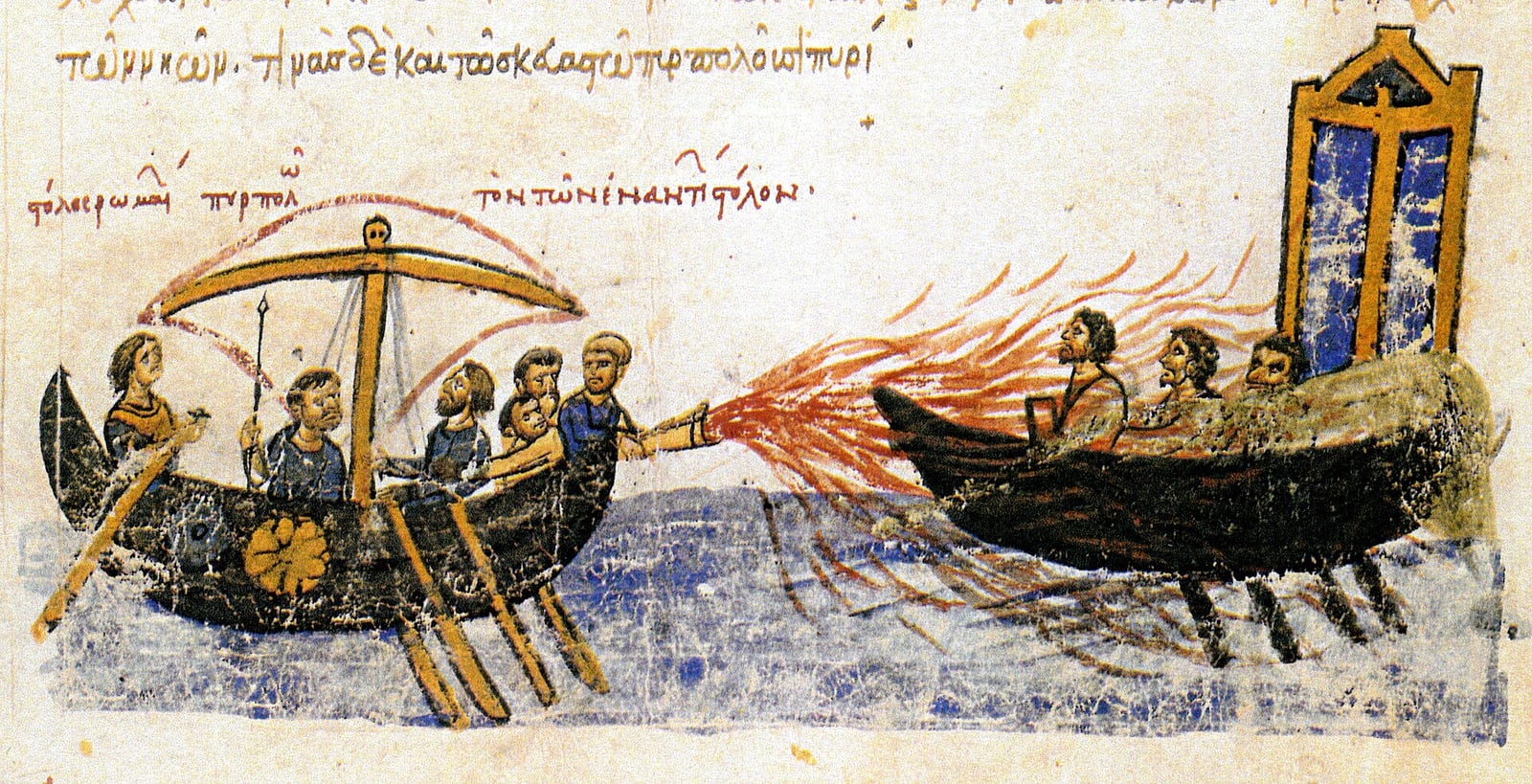
Byzantium Defends Its Capital with Greek Fire
A secret incendiary weapon helped protect Constantinople from naval attack.
In the late seventh century, the Byzantine Empire faced an existential threat as expanding Arab armies overran Syria, Palestine, and Egypt before dispatching fleets toward the imperial capital. According to the Byzantine chronicler Theophanes the Confessor, a refugee architect named Kallinikos from Heliopolis arrived around 672 and supplied the empire with a devastating maritime incendiary. When deployed during the naval sieges of Constantinople, this incendiary mixture ignited enemy vessels and helped preserve the capital, establishing a weapon system that would defend imperial borders for centuries.
Although later Western European observers labeled the substance Greek fire during the Crusades, Byzantine records referred to it by terms such as sea fire, liquid fire, war fire, or manufactured fire. Combustible mixtures of sulfur, pitch, and naphtha had appeared in Mediterranean warfare for generations, but the Byzantine system was distinctive for its naval projection methods. Some modern historians, including James Partington, doubt that a single individual invented the mixture, suggesting instead that Kallinikos modified preexisting technologies or that chemists in the capital refined discoveries inherited from earlier Alexandrian traditions.

Keep reading in Yester
Coming soon to the App Store
Keep following the story
Sources
Image: Unknown author Unknown author