Italian Craftsmen Invent Eyeglasses
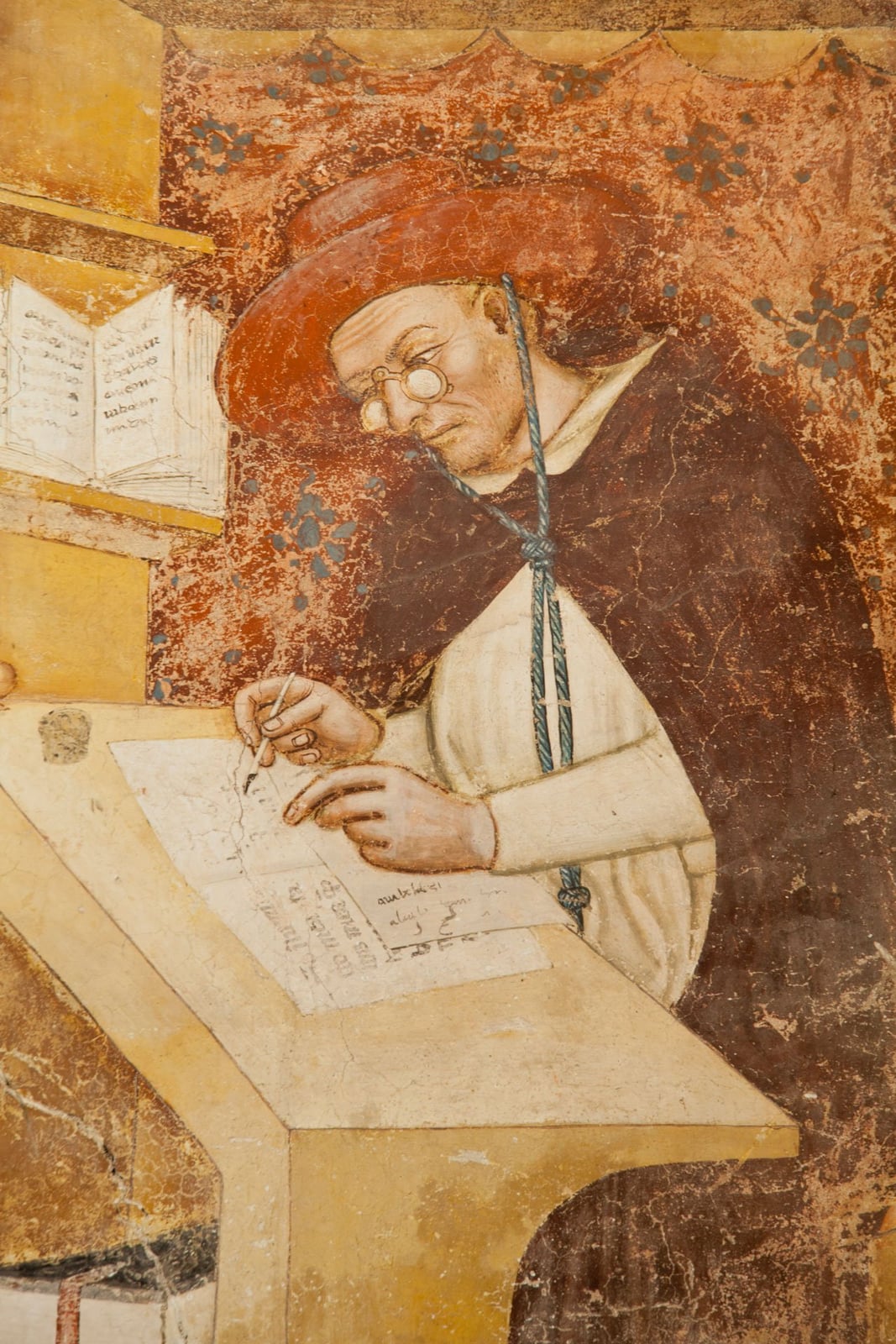
A friar in Pisa preached about a recent invention that helped people read.
Optical lenses had been studied for centuries before practical eyewear emerged. Ancient Roman records note that Emperor Nero viewed gladiatorial games through an emerald, while convex lenses were examined in Ptolemy's Optics. During the golden age of Islamic science, scholar Ibn al-Haytham, known in the West as Alhazen, significantly advanced the understanding of magnification in his eleventh-century Book of Optics. Latin translations of these scientific treatises reached western Europe during the twelfth century. There, scholars began using hemispherical glass reading stones, placing them directly across manuscripts to enlarge faint, dense script.
The crucial transition from handheld magnifying stones to wearable spectacles occurred in northern and central Italy during the final decades of the thirteenth century. In a sermon delivered on February 23, 1306, the Dominican friar Giordano da Pisa announced that it had been less than twenty years since the art of producing vision-correcting glasses had been discovered, adding that he had met the inventor personally. While the unnamed originator remained guarded about the technique, another Dominican friar, Alessandro della Spina of Pisa, successfully duplicated the method and freely shared it with local craftsmen.

Keep reading in Yester
Coming soon to the App Store
Keep following the story

Sources
Image: Tommaso da Modena