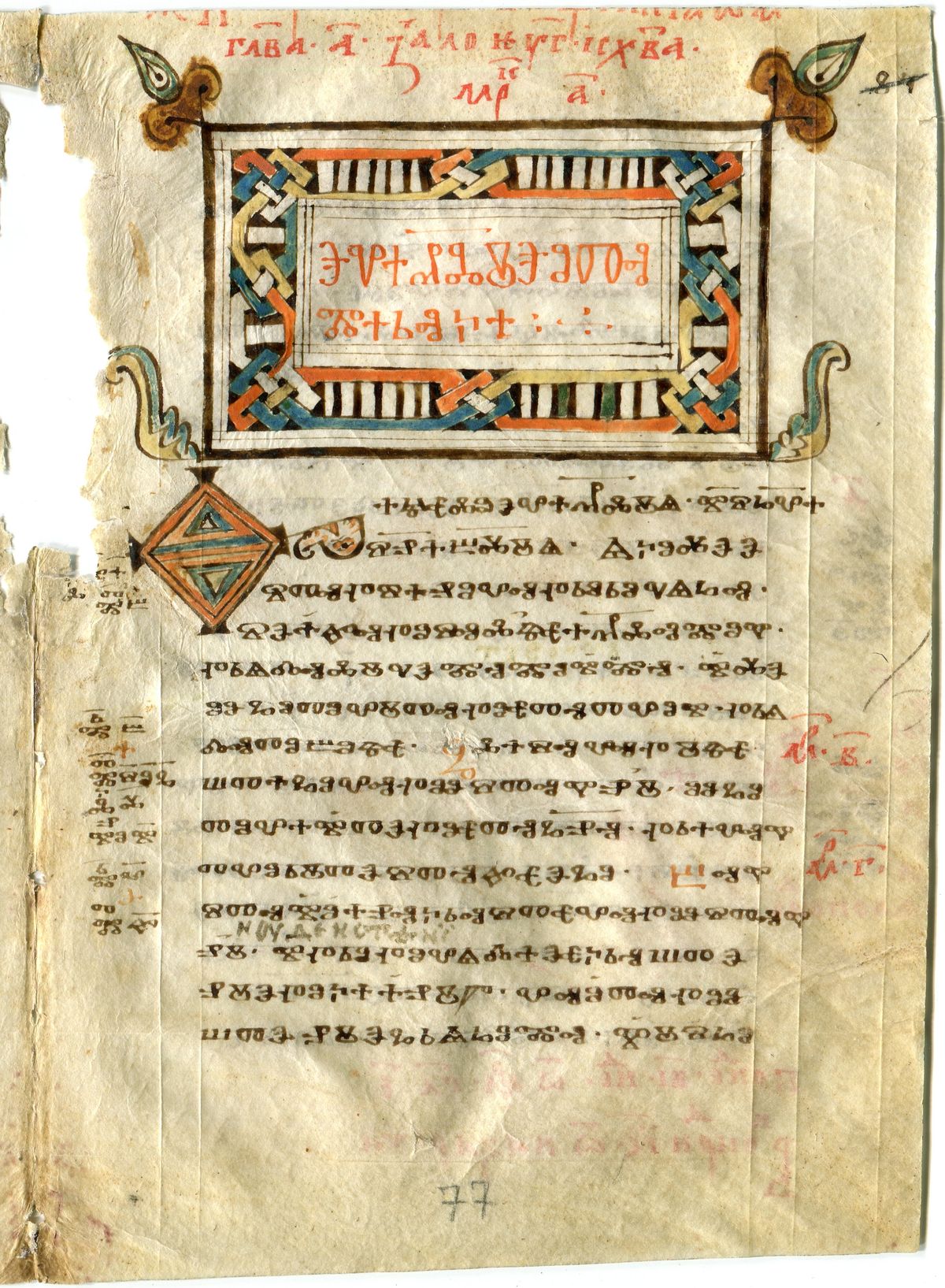
Cyril and Methodius Bring a Slavic Alphabet to Moravia
Two missionary brothers created a script to write Slavic languages.
In 862, Prince Rastislav of Great Moravia asked the Byzantine emperor for teachers who could instruct his people in their own tongue. Rastislav hoped to counter the political and religious authority of East Frankish clergy who conducted services in Latin. The imperial court dispatched two learned brothers from Thessalonica, Cyril and Methodius. Cyril designed a bespoke writing system to translate Christian scriptures and liturgy into Old Church Slavonic. Known today as the Glagolitic script, this creation gave the Slavic world its earliest confirmed alphabet and established a native literary tradition across Central and Eastern Europe.
The Slavic spoken idiom contained phonetic distinctions that Greek and Latin alphabets could not accurately represent. Scholars generally agree that Cyril based many characters on contemporary cursive Greek minuscule letters, while fashioning other signs to represent unique Slavic sounds. Hypotheses regarding the origin of these non-Greek characters suggest borrowings from Hebrew or Coptic, or original inventions based on Christian geometric symbolism. In total, the system evolved to include more than forty distinct signs, though the exact size of the initial set remains unknown. Unlike Greek and Cyrillic numbering systems, Glagolitic assigned numerical values to characters based entirely on their sequence in its own native alphabet.

Keep reading in Yester
Coming soon to the App Store
Keep following the story
Sources
Image: Unknown author Unknown author