The Phoenicians Spread an Alphabet Around the Mediterranean
A script of 22 letters became the ancestor of Greek, Latin and Arabic writing.
During the late second millennium BC, scribes and stonemasons in the coastal cities of the Levant refined a writing method that fundamentally altered how human speech was recorded. Emerging from earlier Proto-Canaanite and Proto-Sinaitic scripts, which were inspired by Egyptian hieroglyphs, the Phoenician alphabet consolidated into a standardized system of twenty-two consonant letters. Unlike older multi-directional scripts, it established a fixed horizontal direction, running consistently from right to left. By convention, epigraphists date the emergence of the Phoenician script proper to around 1050 BC, though an absence of securely dated inscriptions from that specific century means the earliest confirmed examples date to the tenth century BC.
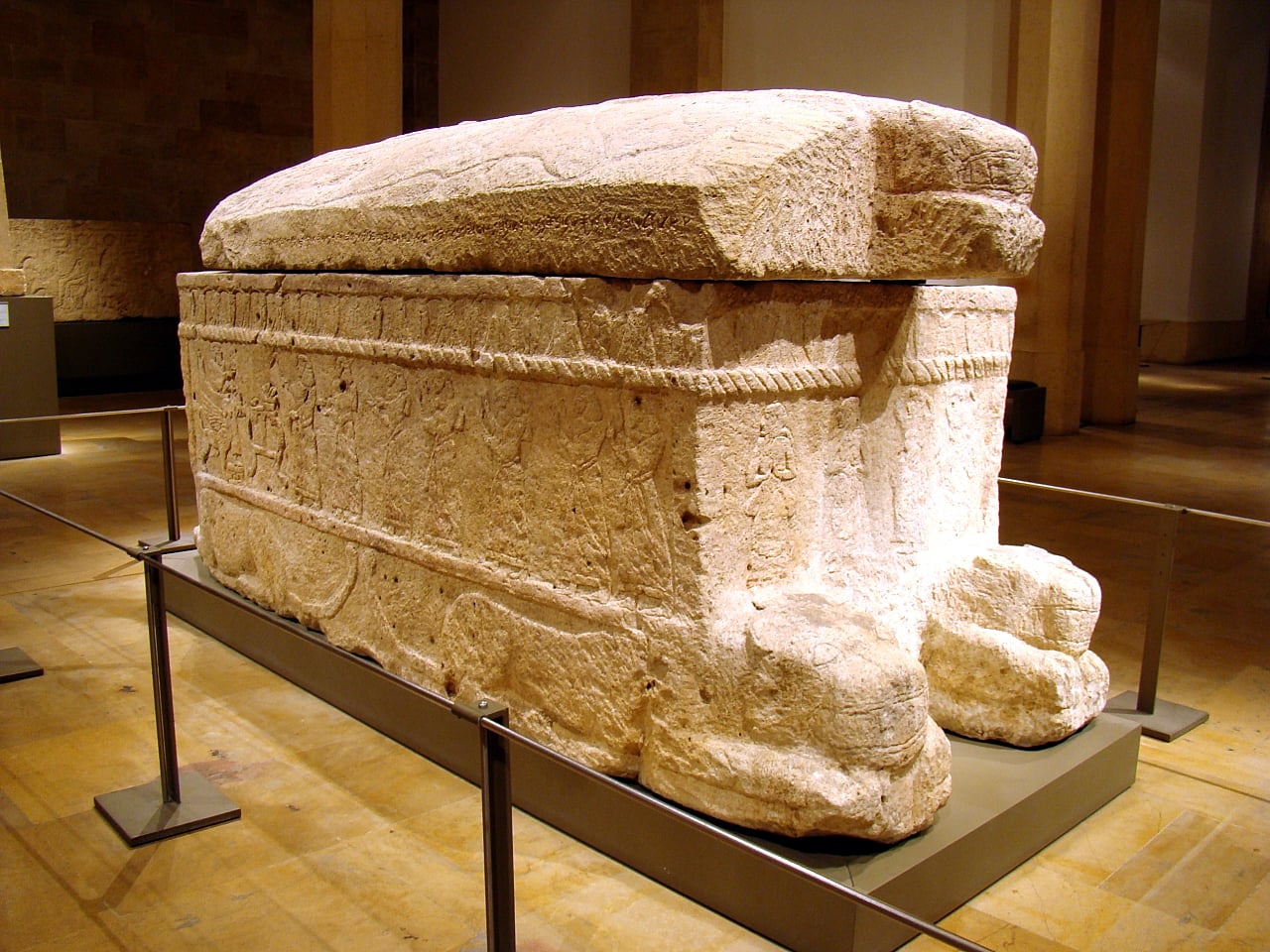
One of the earliest comprehensive examples of this mature script appears on the royal sarcophagus of King Ahiram in the ancient port city of Byblos, located in present-day Lebanon. Known as an abjad, the Phoenician system recorded only consonants, leaving vowel sounds unwritten. Each letter represented a single phonetic sound, named according to the principle of acrophony, where the initial sound of a word provided the phonetic value of the sign. Because the letters were originally carved into stone or incised with a stylus, their shapes were predominantly linear and angular, gradually developing more cursive forms over subsequent centuries.

Keep reading in Yester
Coming soon to the App Store
Keep following the story
Sources
Image: O.Mustafin