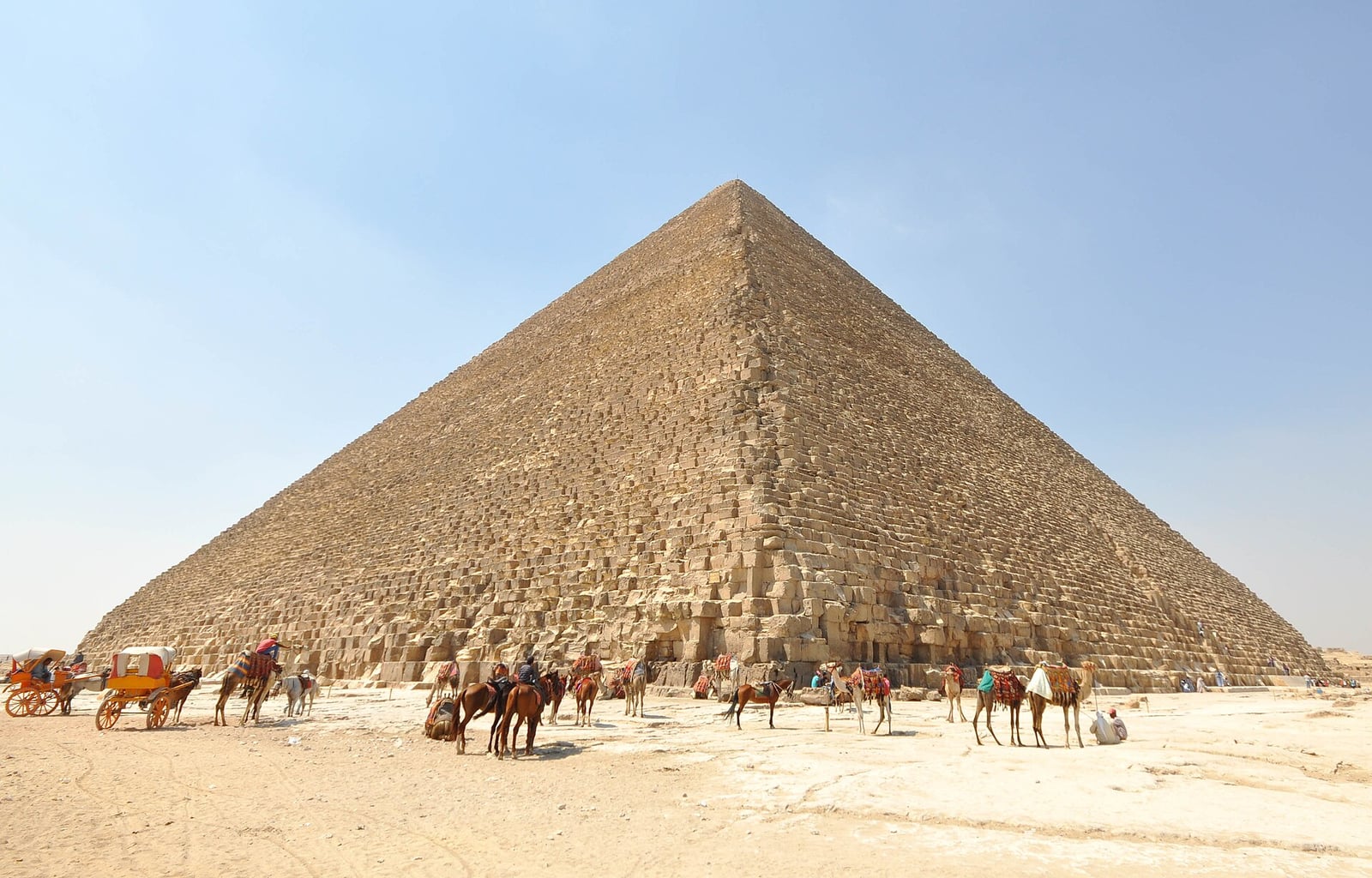
The Great Pyramid Rises at Giza
Khufu’s pyramid was the tallest human-made structure for thousands of years.
During the Fourth Dynasty of Egypt's Old Kingdom, around 2600 BC, Pharaoh Khufu commissioned a funerary monument on the Giza Plateau that would dominate the ancient world. Now known as the Great Pyramid of Giza, the vast structure was engineered from an estimated 2.3 million stone blocks weighing approximately six million tonnes in total. The pyramid initially reached a height of 146.6 metres, a stature that made it the tallest human-made construction on Earth for more than 3,700 years.
The core of the pyramid was assembled using local limestone, bound together with mortar. To achieve a gleaming exterior, builders transported finer white limestone across the Nile from the quarries of Tura. Immense blocks of granite, some weighing as much as 80 tonnes, were quarried further south at Aswan and shipped north by river to frame the primary burial chamber. The surrounding complex formed an elaborate ceremonial landscape, featuring two mortuary temples joined by an elevated causeway, buried ceremonial boats, and separate satellite pyramids dedicated to Khufu's queens.

Keep reading in Yester
Coming soon to the App Store
Keep following the story

Sources
- Discovery of a big void in Khufu's Pyramid by observation of cosmic-ray muons (Nature)
- How Old Are the Pyramids? (Ancient Egypt Research Associates)
- Why King Khufu's Solar Boat Is on the Move After 4,600 Years (Smithsonian Magazine)
- In Photos: Egypt transports King Khufu's first boat to Grand Egyptian Museum (Ahram Online)
- Oldest papyrus (Guinness World Records)
- Great Pyramid of Giza
Image: Jorge Láscar from Melbourne, Australia