Ghana’s Independence Opens a Continental Conversation
The Gold Coast became Ghana in 1957. Its independence was a national achievement and an invitation to imagine a different political future across Africa.
At midnight in March 1957, a change of flag in Accra announced something that had once seemed distant: the British Gold Coast was becoming independent Ghana. The name reached back to an earlier West African empire, although the new country did not occupy the same territory. That choice connected a modern political project with an African past. Independence was being presented not as the beginning of history, but as the recovery of the power to shape it.
Kwame Nkrumah and the Convention People’s Party had built support through organization, electoral competition and demands for immediate self-government. The movement drew on workers, traders, young people and others whose expectations could not be reduced to one leader’s ambition. British imprisonment had interrupted Nkrumah’s political activity before his party’s electoral success helped bring him into government. By 1957, the transition rested on years of pressure and negotiation, not a sudden act of generosity from a departing empire.

Keep reading in Yester
Coming soon to the App Store
Keep following the story
Sources
- Ghana: A Country Study (Federal Research Division, Library of Congress, 1995, via Internet Archive)
- A Guide to the United States' History of Recognition, Diplomatic, and Consular Relations: Ghana (Office of the Historian, U.S. Department of State)
- Bandung Conference (Asian-African Conference), 1955 (Office of the Historian, U.S. Department of State)
- Nkrumah and independence
- Ghana’s historical context
- Independence and subsequent government
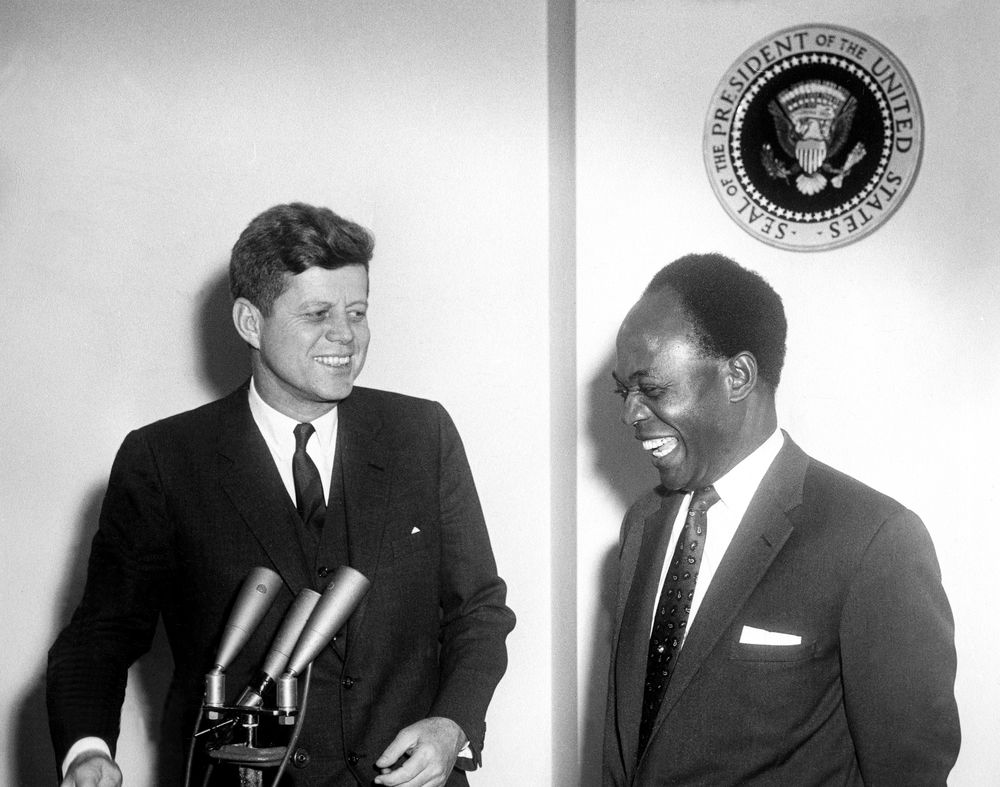
Image: Abbie Rowe