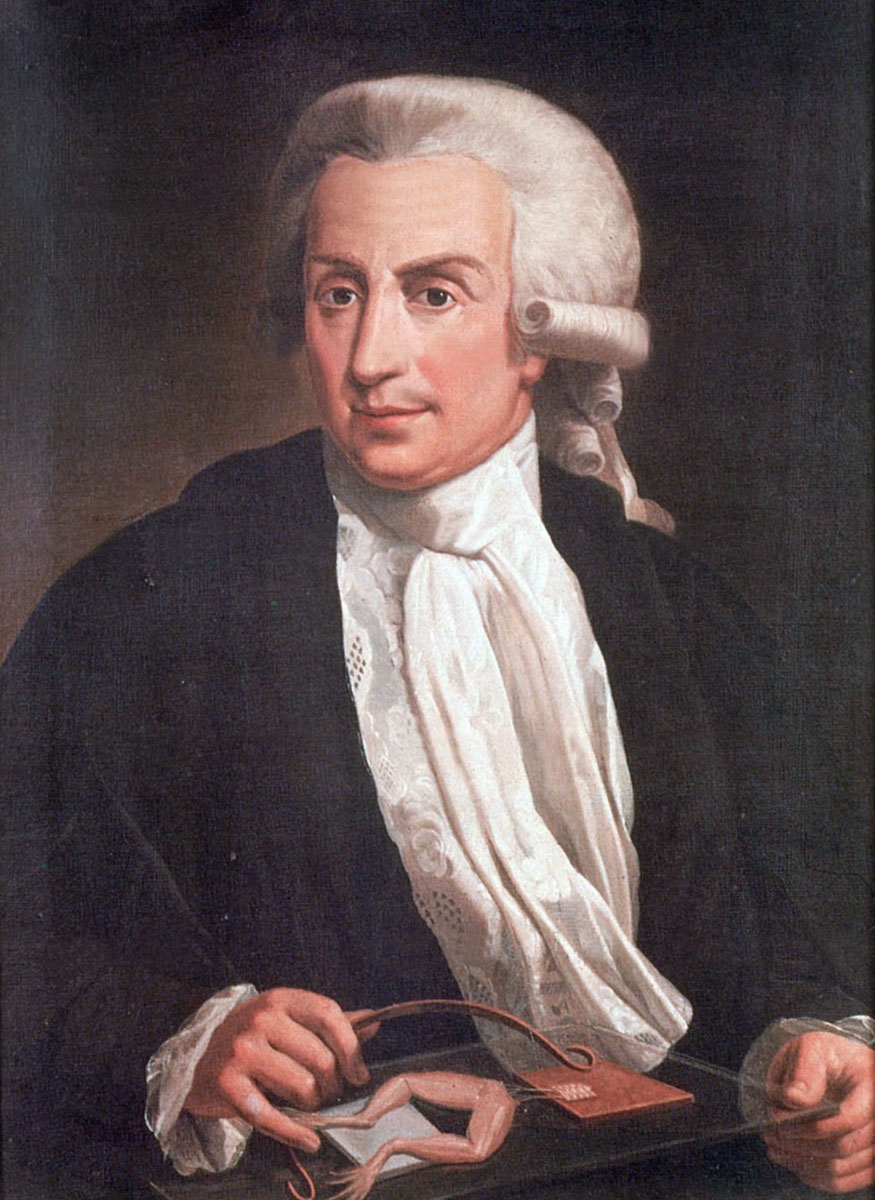
Galvani’s Frog Legs Spark a Debate About Electricity
Twitching muscles led to a dispute that helped produce the first battery.
In 1780, Luigi Galvani observed a striking physical reaction while conducting experiments in Bologna. When the nerve of a dissected frog was touched with a scalpel on a table used for electrical experiments, the dead animal's leg muscles suddenly contracted. Galvani, an Italian physician and professor who had studied medicine at the University of Bologna, interpreted these contractions as evidence of an intrinsic animal electric fluid. His observation built upon earlier mid-eighteenth-century inquiries into medical electricity and the physiological effects of shocks, including medical treatments that used the Leyden jar.
Galvani had established a long academic career in Bologna before these experiments attracted wider attention. After graduating in 1759, he stayed on at the university and earned a doctorate in 1762 with a thesis on the human skeleton. He then lectured at his alma mater, began teaching obstetrics at the Institute of Sciences a few years later, and in the early 1770s started lecturing on the anatomy of the frog. His scientific investigations unfolded alongside these sustained institutional duties in his home city.

Keep reading in Yester
Coming soon to the App Store
Keep following the story


Sources
- The Long Journey from Animal Electricity to the Discovery of Ion Channels and the Modelling of the Human Brain (Biomolecules, 2024, via PubMed Central)
- Electricity, Neurology, and Noninvasive Brain Stimulation: Looking Back, Looking Ahead (Neurology Research International, 2020, via PubMed Central)
- Luigi Galvani (National High Magnetic Field Laboratory, Magnet Academy)
- Alessandro Volta (National High Magnetic Field Laboratory, Magnet Academy)
- Luigi Galvani
Image: Unidentified painter