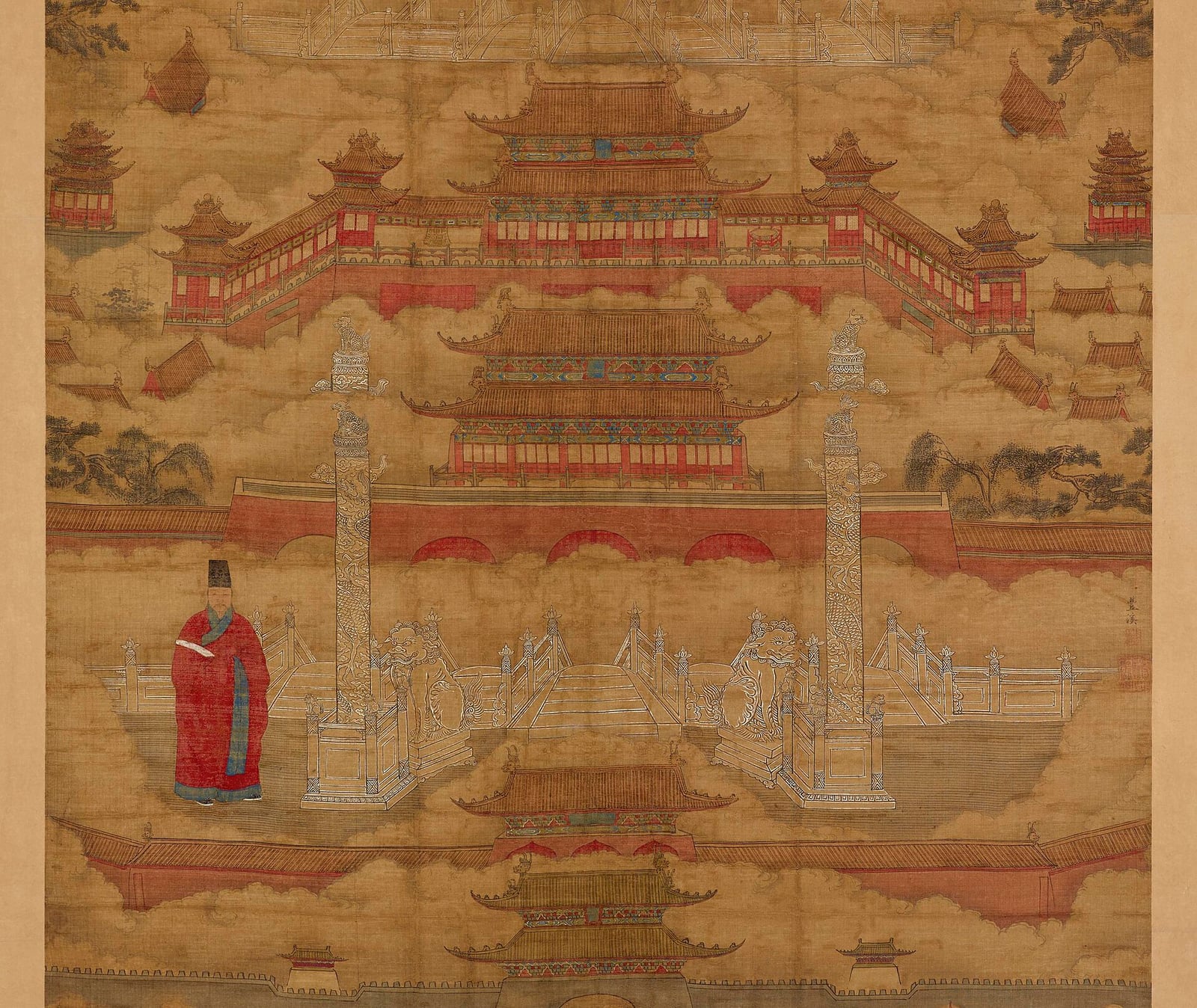
The Forbidden City Becomes the Seat of Ming Power
A walled palace complex organized imperial life for nearly five centuries.
In 1406, the Yongle Emperor, Zhu Di, ordered the construction of a vast imperial palace compound in Beijing after relocating the Ming capital from Nanjing. The endeavor took fourteen years and an enormous workforce to complete. Building crews gathered materials from across the empire, and massive stone blocks were hauled from quarries west of Beijing, some dragged on wooden sledges along roads of wet ice in winter. When the palace opened in 1420, it established the structural and symbolic center of imperial administration.
Formally known as Zijincheng, or the Purple Forbidden City, the complex derived its name from traditional astrology, in which the celestial Purple Enclosure around the North Star was regarded as the dwelling of the emperor of heaven. The earthly palace mirrored this cosmic order, organized strictly along a central axis with a symmetrical layout. High walls and a deep moat enclosed the compound, and access was severely restricted to the emperor, his family, and those who served them.

Keep reading in Yester
Coming soon to the App Store
Keep following the story
Sources
- Imperial Palaces of the Ming and Qing Dynasties in Beijing and Shenyang (UNESCO World Heritage Centre)
- About the Palace Museum (The Palace Museum, Beijing)
- The Inauguration of the Palace Museum and the Odyssey of Its Treasures (National Palace Museum, Taipei)
- Sliding heavy stones to the Forbidden City on ice (PNAS, via PMC)
- Beijing's Forbidden City Built on Ice Roads (National Geographic)
- Forbidden City
Image: Creator:朱邦 Zhu Bang