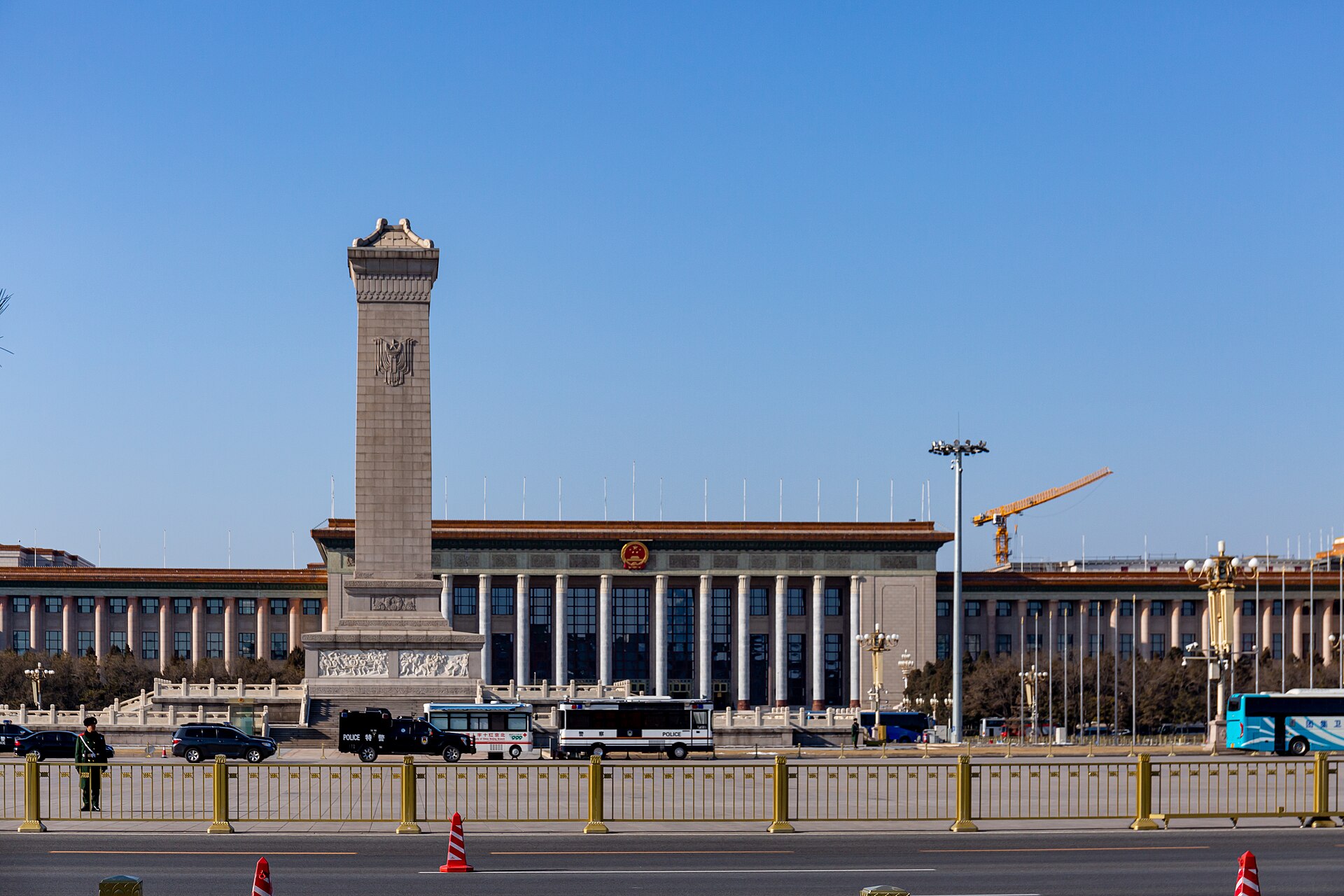
Protests in Tiananmen Square End in a Military Crackdown
Weeks of demonstrations in Beijing ended when troops cleared the square.
In the middle of April 1989, students gathered at Tiananmen Square in central Beijing to mourn the passing of Hu Yaobang, a former general secretary of the Chinese Communist Party who had been ousted after taking a conciliatory stance toward student demonstrations in 1986. Within days, spontaneous memorial meetings expanded into open expressions of broader popular frustration. The demonstrators voiced sharp concern over surging inflation, widespread administrative corruption, and the uncertain economic future caused by market-oriented reforms that dismantled Mao-era workplace guarantees like lifetime employment.
Student groups quickly articulated specific political demands, drafting appeals that called for freedom of speech, freedom of the press, constitutional due process, and official accountability. Workers joined the demonstrations, organizing independent bodies to protest price volatility, enterprise restructuring, and declining social protections. By May, the movement had gained immense momentum across China, spreading to cities across China. In Beijing, student activists began a hunger strike that attracted broad public sympathy, swelling the crowds in Tiananmen Square to around one million people at the height of the rallies on 17 May.

Keep reading in Yester
Coming soon to the App Store
Keep following the story
Sources
- Tiananmen Square, 1989: The Declassified History (National Security Archive, George Washington University)
- Tiananmen Square: What happened in the protests of 1989? (BBC News)
- One million protesters take to the streets in Beijing (HISTORY, A&E Television Networks)
- Tiananmen Square Protests (HISTORY, A&E Television Networks)
- The 'other' Tiananmen: 30 years ago, protests engulfed China (AFP via Philstar)
- 1989 Tiananmen Square protests and massacre
Image: Balon Greyjoy