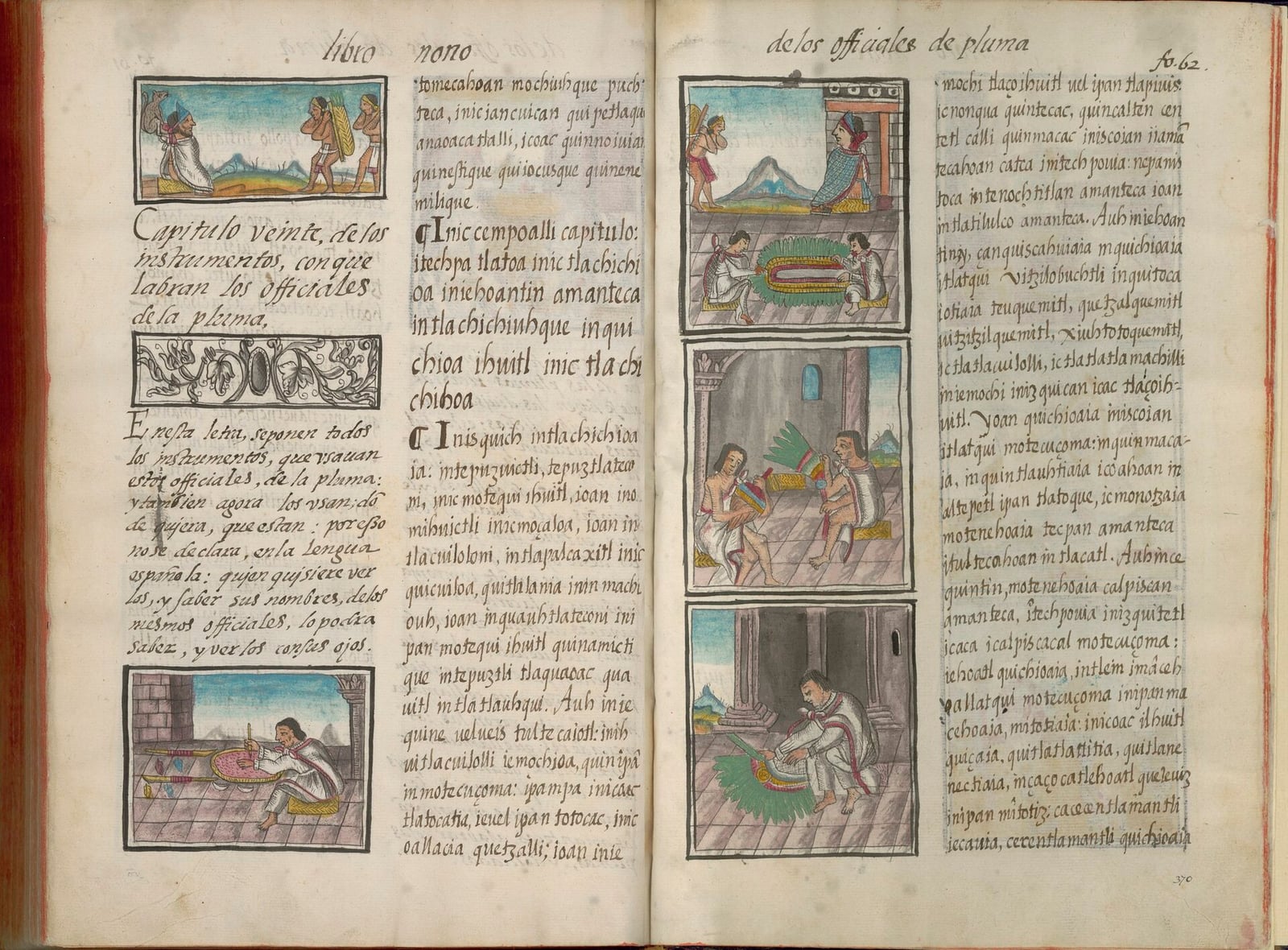
Sahagún and Nahua Scholars Finish the Florentine Codex
A twelve-book encyclopedia recorded Aztec life in Nahuatl, Spanish and pictures.
Beginning in 1545, the Franciscan friar Bernardino de Sahagún embarked on a sweeping effort to record the traditions, beliefs, and everyday practices of the Indigenous societies of central Mexico. Working from the Colegio de Santa Cruz in Tlatelolco, Sahagún sought to understand local culture primarily to facilitate Christian evangelization, comparing his ethnographic inquiry to a physician diagnosing a disease. To achieve this, he turned away from unilateral European narration, instead collaborating with Indigenous elders and literate Nahua assistants who had studied at the college. Over decades of systematic interviewing and recording, their collective inquiries grew into a monumental twelve-book compendium originally titled La Historia General de las Cosas de Nueva España.
The research methodology relied heavily on structured questionnaires and comparative questioning conducted entirely in the Nahuatl language. Sahagún and his bilingual assistants consulted elder community leaders recognized as cultural authorities, compiling direct testimonies on subjects ranging from civic governance and religious rituals to agriculture and trade. To document Nahua medical knowledge and botanical cures, the team gathered detailed reports directly from more than a dozen practicing Indigenous doctors. The assembled information, cross-checked against multiple informants, was transcribed into alphabetic Nahuatl by native scribes before Sahagún organized the findings into parallel topical chapters, often drafting accompanying summaries in Spanish.

Keep reading in Yester
Coming soon to the App Store
Keep following the story
Sources
Image: Bernardino de Sahagún.