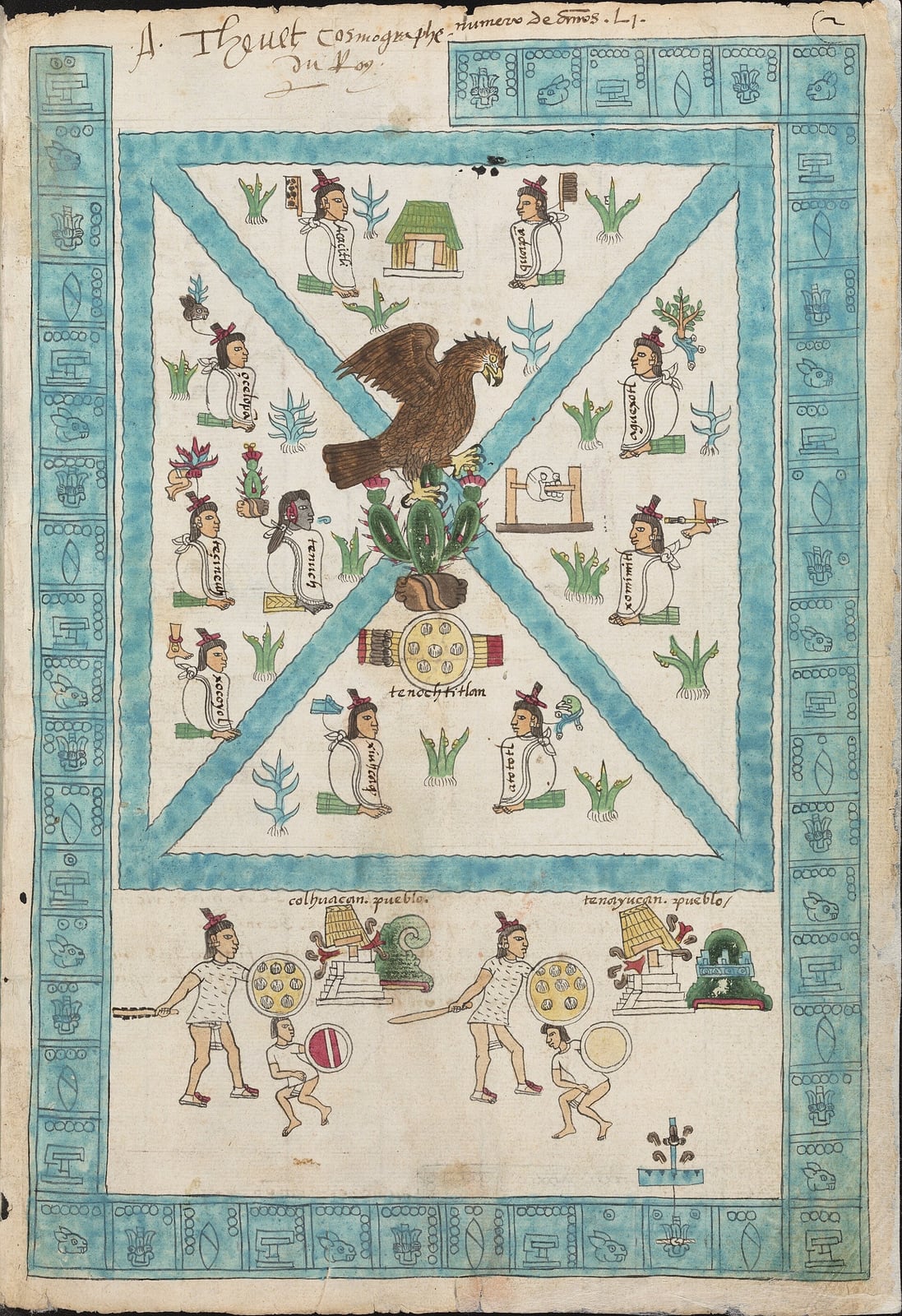
The Codex Mendoza Records Aztec Life for a Spanish King
Painted pages show tribute, history and daily life with Spanish notes.
Around 1541, Indigenous painters and Spanish commentators in the colonial capital of New Spain assembled a unique pictorial record known today as the Codex Mendoza. Created on seventy-one folios of imported Spanish paper measuring roughly 20.6 by 30.6 centimetres, the work united Mesoamerican pictographic traditions with alphabetic Spanish commentary. It was produced under the authority of Antonio de Mendoza, the first viceroy of New Spain, whom tradition credits with organizing a workshop of skilled native scribes to document Aztec imperial history and governance for Emperor Charles V. According to one hypothesis cited by Mexico's national institute of anthropology and history, the Indigenous master painter Francisco Gualpuyoguacal led the work, while the Spanish glosses were probably added by the canon Juan Gonzalez.
The physical manuscript combines Indigenous conventions with the form of a European codex, bound along a spine rather than folded in the screenfold manner typical of pre-conquest Mesoamerican books. Scholars establish that work on the manuscript must have started after July 1529, when Hernan Cortes received the title of Marques del Valle, a rank cited directly on folio 15r. While the traditional date of around 1541 relies in part on a testimony recorded around 1547 by the conquistador Jeronimo Lopez, historians note that Lopez's description of a pictorial book commissioned by Mendoza does not match the surviving codex in every detail. Nevertheless, the manuscript was completed in its current form prior to 1553.

Keep reading in Yester
Coming soon to the App Store
Keep following the story
Sources
Image: Unknown author Unknown author