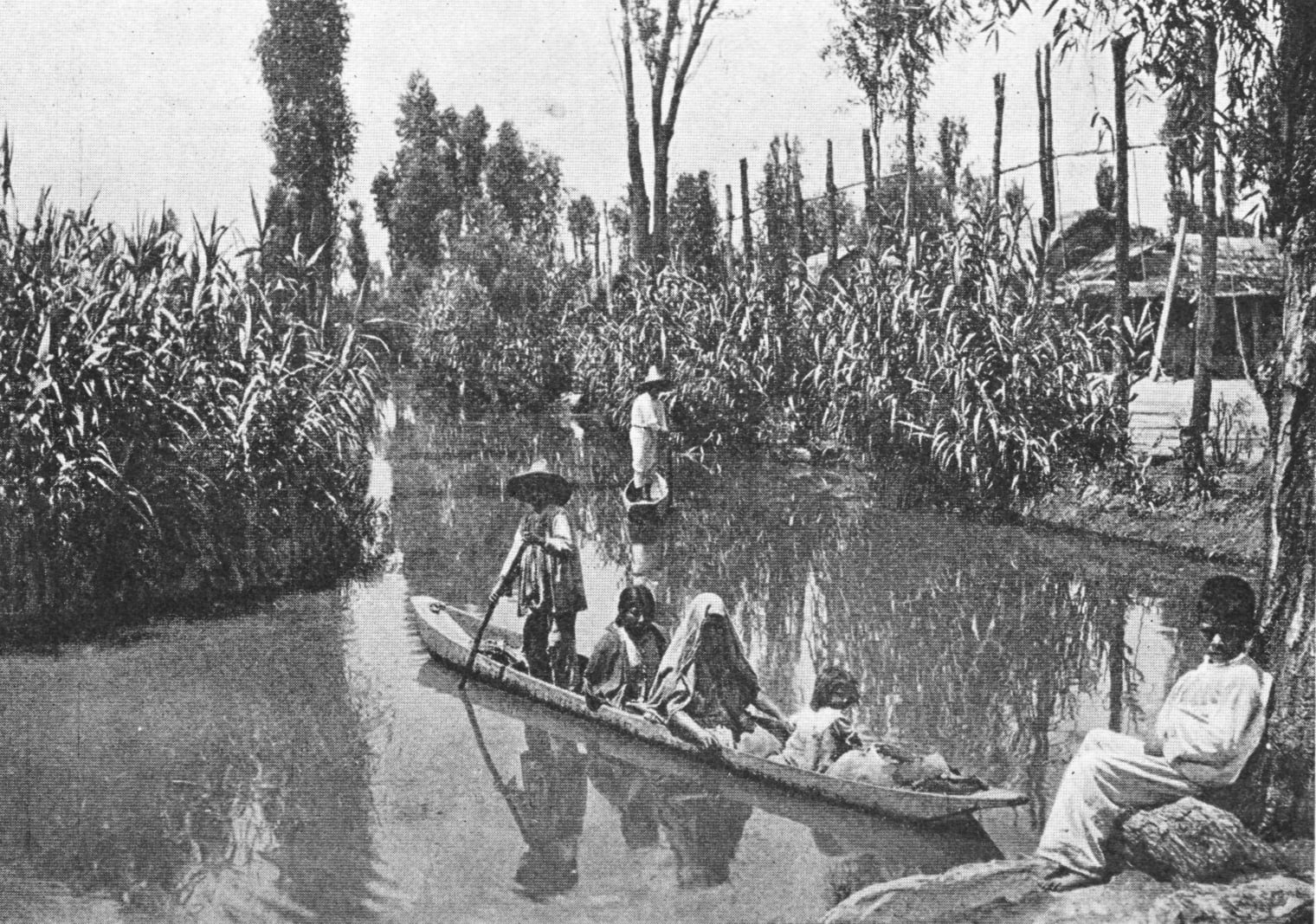
Aztec Farmers Grow Food on Floating Gardens
Raised fields built from lake mud fed Tenochtitlan and still survive in Xochimilco.
In the shallow freshwater lakes of the Valley of Mexico, Mesoamerican farming communities developed chinampas, narrow artificial islands engineered to cultivate crops on waterlogged lake beds. The word derives from the Nahuatl term chinamitl, meaning a square or enclosure of canes or reeds. Although frequently described in popular accounts as floating gardens, chinampas did not drift across the water. Instead, farmers drove wooden stakes into the lake bed to frame rectangular plots, wove wattle fencing between the posts beneath the surface, and filled the enclosed area with alternating layers of lake mud, aquatic vegetation, and sediment until the fertile surface rose above the water level.
The earliest securely dated chinampa fields originate from the Middle Postclassic period between 1150 and 1350 CE, with archaeological evidence suggesting that the Nahua settlement of Culhuacan constructed fields as early as 1100 CE. Farmers initially tended small plots along the freshwater springs of Lakes Xochimilco and Chalco. After the formation of the Aztec Triple Alliance, imperial expansion targeted these southern basin settlements. Rather than inventing the technology, the Aztecs scaled it up across large swathes of the basin, organizing extensive construction to feed an expanding realm.

Keep reading in Yester
Coming soon to the App Store
Keep following the story



Sources
Image: Karl Weule, †1926