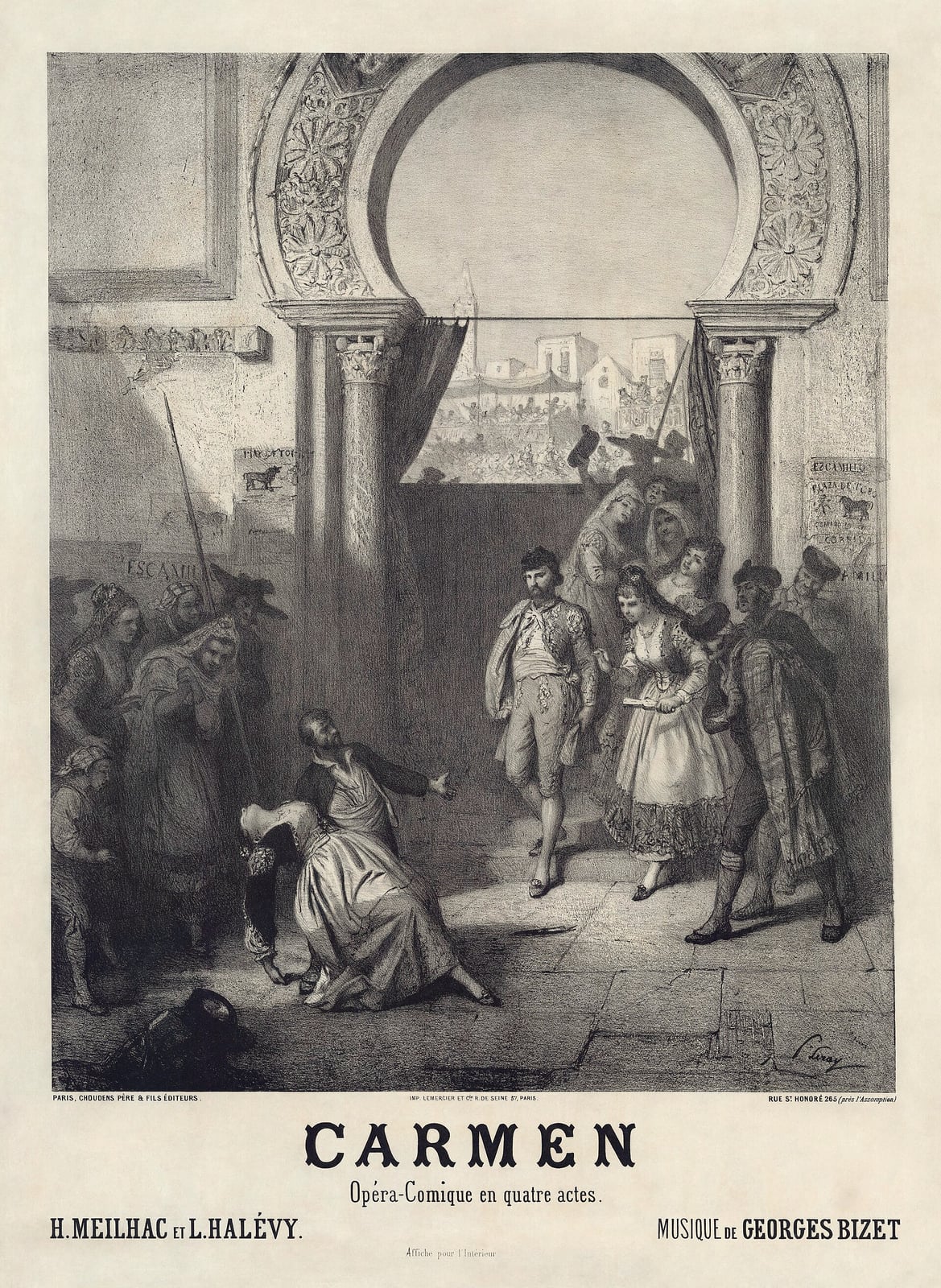
Carmen Shocks Its First Audience
Bizet’s opera put a defiant working woman at the center of the stage.
On 3 March 1875, the curtain rose at the Opera-Comique in Paris on the premiere of Georges Bizet's four-act opera Carmen. Adapted from Prosper Merimee's 1845 novella by librettists Henri Meilhac and Ludovic Halevy, the production was staged in a theater known for respectable family entertainment. Bizet had received the commission from the Opera-Comique in 1872. While the Opera-Comique format traditionally paired set musical numbers with spoken dialogue, the subject matter Bizet chose introduced themes rarely presented on that stage.
The opera follows Don Jose, an ordinary soldier who falls under the spell of Carmen, a worker at a Seville cigarette factory. Jose deserts his regiment and abandons Micaela, his virtuous childhood sweetheart, to join Carmen and a band of smugglers in the mountains. Carmen soon shifts her affections to the torero Escamillo. The plot concludes with Jose confronting Carmen outside the Seville bullring, where he stabs her to death after she spurns his pleas. The depiction of lawlessness, proletarian labor, and lethal jealousy unsettled expectations across Parisian theatrical culture.

Keep reading in Yester
Coming soon to the App Store
Keep following the story
Sources
Image: Prudent-Louis Leray (1820-1879); Restored by Adam Cuerden