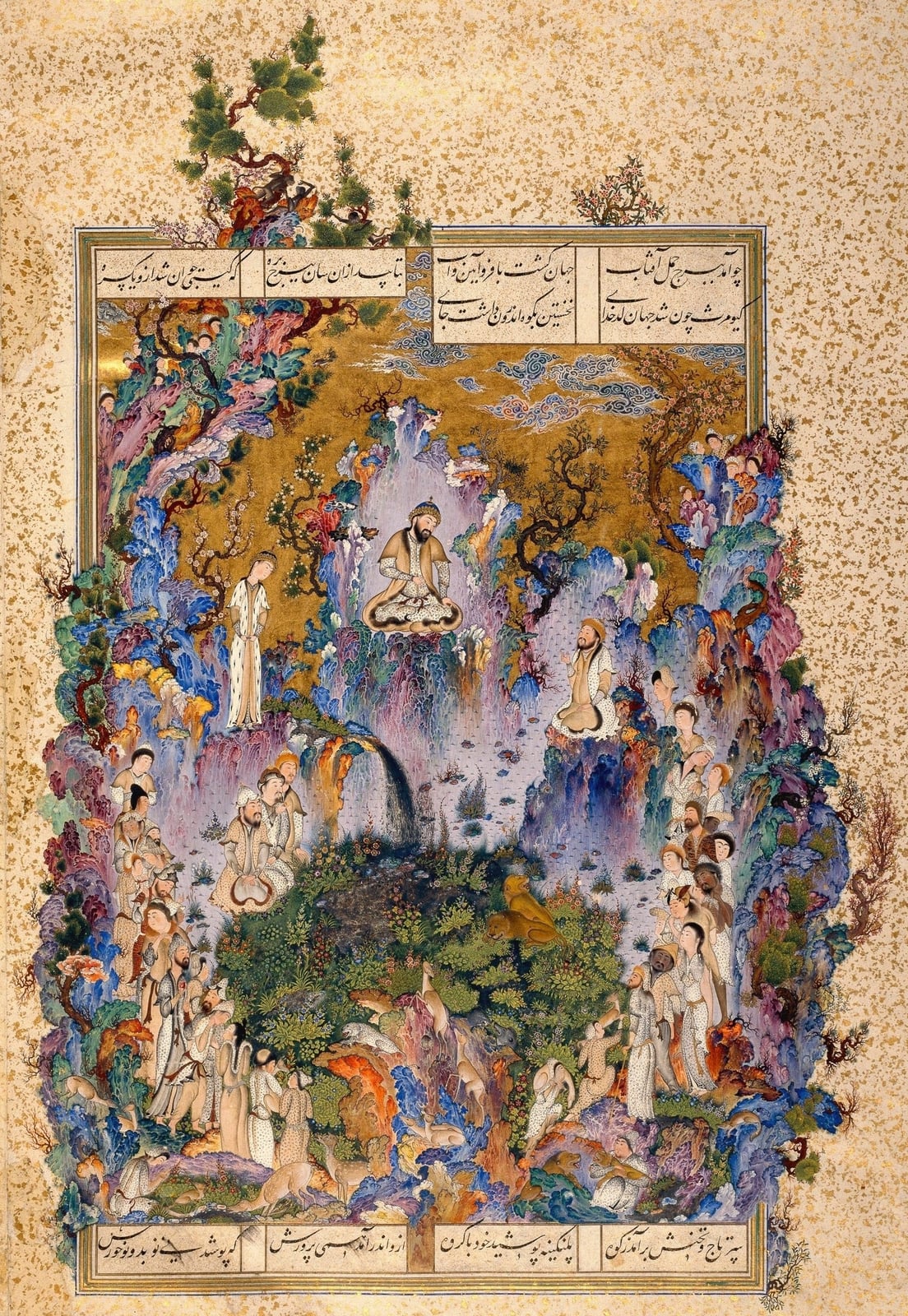
Ferdowsi Completes the Shahnameh
An epic poem gathered legendary and historical traditions into a major Persian work.
On 8 March 1010, the Persian poet Ferdowsi completed the Shahnameh, bringing to an end a literary project begun around 977. Composed in Early New Persian across roughly thirty-three years, the immense work consists of over fifty thousand rhyming couplets. It brought together legendary lore, dynastic traditions, and historical narratives spanning from the mythical creation of the world to the fall of the Sasanian Empire in the seventh century. The poet stated that the final version numbered around sixty thousand couplets, though surviving manuscripts contain a little over fifty thousand, and the work was sent to the court of Sultan Mahmud of Ghazni in seven volumes.
Ferdowsi worked largely from pre-existing accounts rather than inventing the material outright. His primary foundation was a prose compilation composed in his native Tus, which derived from the Khwaday-Namag, a late Sasanian collection chronicling Persian monarchs and heroes down to Khosrow II. Because this late Sasanian source offered little documentation for early Sasanian rulers, Ferdowsi drew upon additional Middle Persian texts such as the Kar-Namag i Ardashir i Pabagan to recount the rise of Ardashir I. Ferdowsi also incorporated around one thousand verses on the prophet Zoroaster written by Daqiqi, an earlier Samanid court poet who had begun versifying the chronicle before his violent death.

Keep reading in Yester
Coming soon to the App Store
Keep following the story
Sources
Image: Attributed to Sultan Muhammad