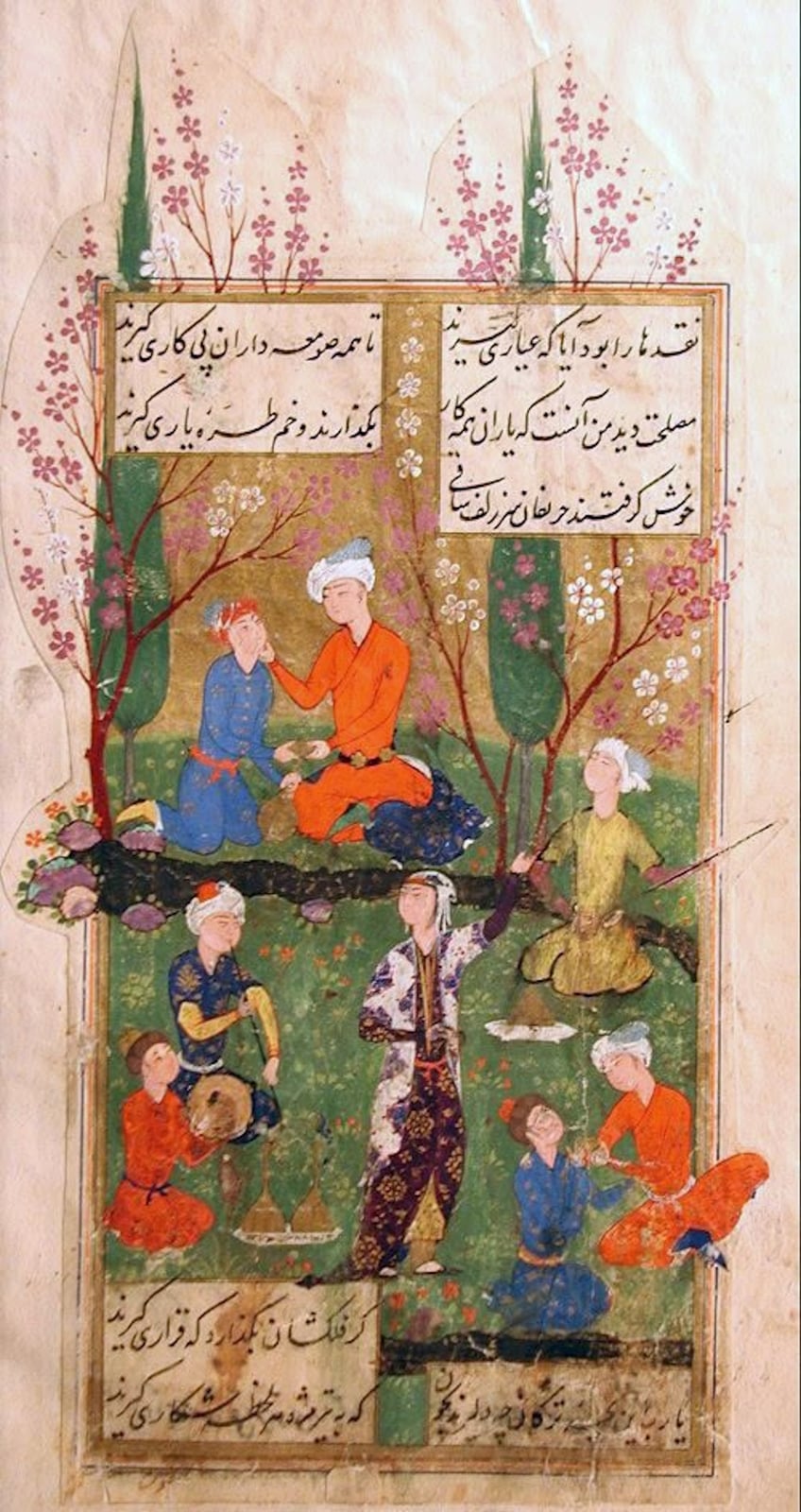
Hafez Writes the Ghazals of Shiraz
A poet’s collected lyrics became the most beloved book in Persian.
During the fourteenth century, the city of Shiraz supported an active literary culture amid shifting regional dynasties. Khajeh Shams-od-Din Mohammad Hafez Shirazi lived and composed poetry within this urban environment, and scholars still debate how closely he was tied to organized Sufism. Early biographical sketches of his career are generally viewed by modern historians as unreliable, and the documented details of his youth remain sparse. According to traditional accounts, he committed the entire Quran to memory at an early age, earning the honorific title of Hafez, which he adopted as his permanent literary pseudonym.
Modern scholars place his birth around 1315, 1317, or 1320. Across several decades in Shiraz, Hafez navigated volatile political currents while receiving support from successive regional rulers. He found an early patron in Abu Ishaq Inju, continued writing under the stricter sovereign Shah Mubariz ud-Din Muhammad, and saw his poetic output flourish most extensively during the long reign of Jalal ud-Din Shah Shuja. Toward the conclusion of his life, he lived under the overarching dominance of Timur. Unconfirmed reports suggest Hafez may have prepared a collection of his writings around 1368, but scholars generally agree that his definitive collection was assembled after his death, which occurred in either 1389 or 1390.

Keep reading in Yester
Coming soon to the App Store
Keep following the story
Sources
Image: Unknown author Unknown author