Lalibela Builds a Sacred Landscape by Cutting into Stone
Eleven churches carved from rock transformed an Ethiopian landscape. Their history belongs as much to continuing worship as to extraordinary construction.
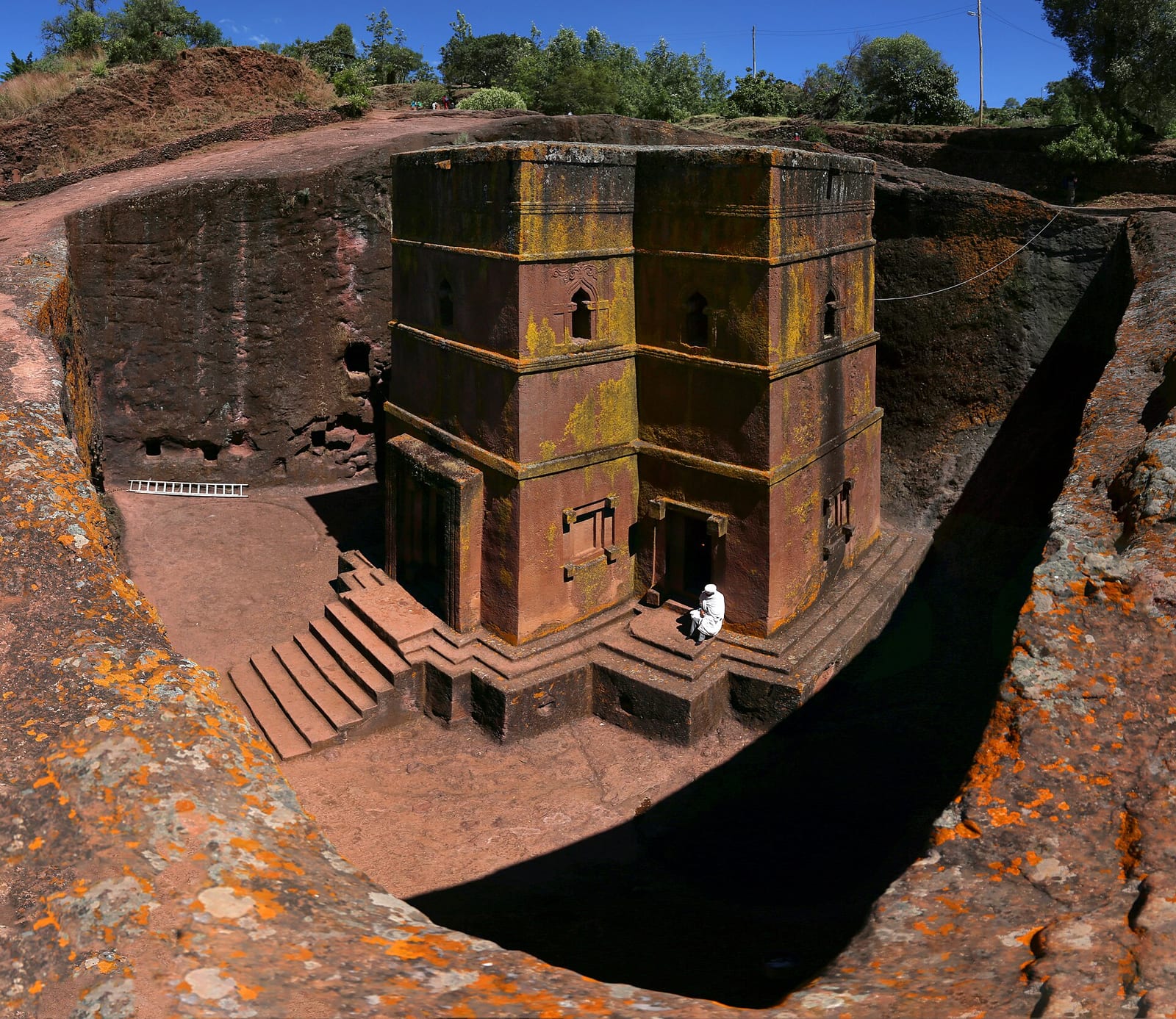
At Lalibela, a church can appear to emerge from the ground because its builders worked downward into the rock. The most familiar image is Biete Giyorgis, whose cross-shaped form stands within a deep excavated enclosure. It belongs to a larger group of eleven churches in the Ethiopian highlands. Their construction is associated with King Lalibela and the medieval Zagwe period, although the history of individual structures is more complicated than one ruler completing a single uniform project.
Cutting a building out of living rock demands a different understanding of space from assembling walls out of blocks. Builders had to consider what would remain while removing the material around and within it. Passages, drainage, entrances and interior supports made the result usable, not merely impressive. Looking only at the aerial outline misses that practical intelligence. The churches were spaces people needed to enter, maintain and occupy through recurring cycles of worship and everyday work.

Keep reading in Yester
Coming soon to the App Store
Keep following the story
Sources
Image: Sailko